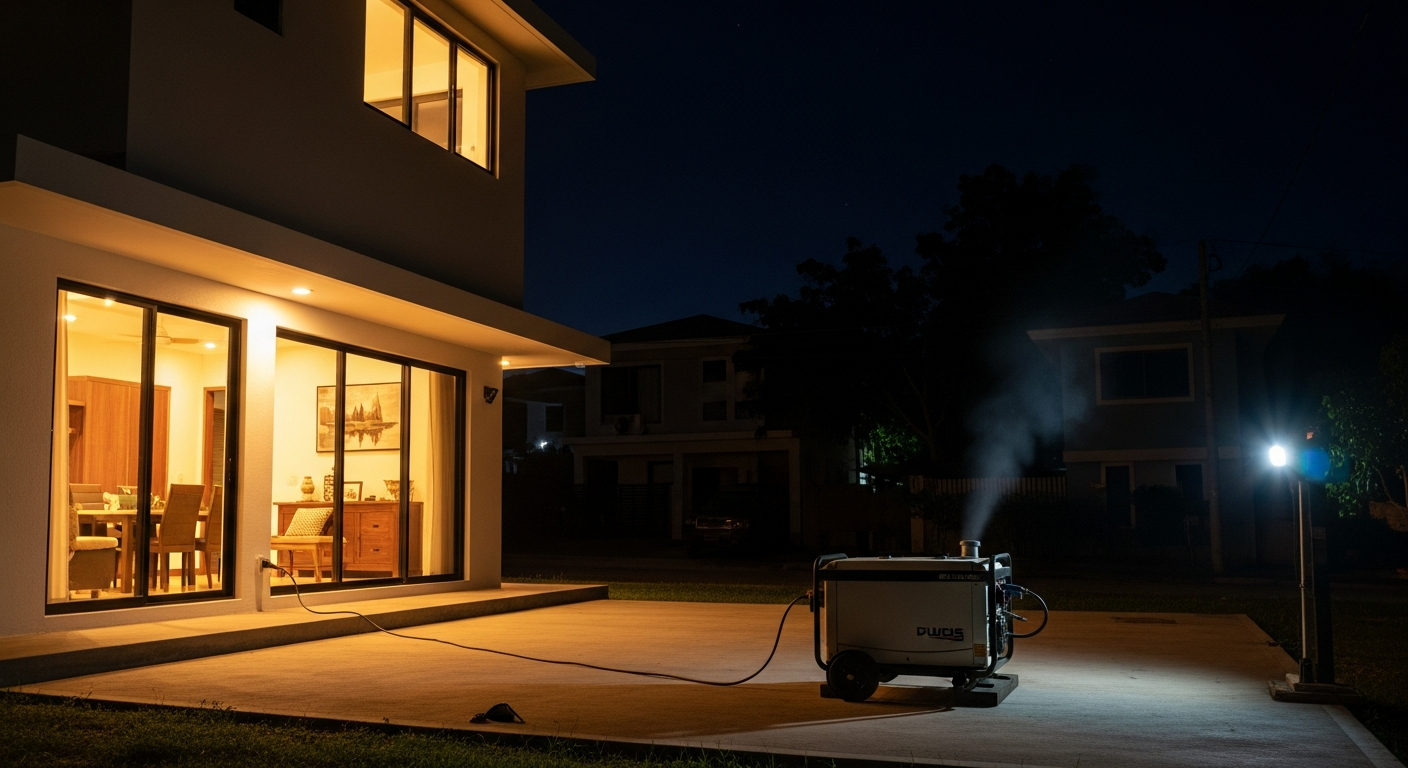
A whole-home propane generator system is the gold standard of backup power in Puerto Rico. When properly sized and installed, it provides complete energy independence from the AEE grid. When the power goes out, your home keeps running, automatically, whether you're home or not.
This is the complete guide to planning, sizing, and installing a whole-home propane generator system in Puerto Rico.
What Is a Whole-Home Generator System?
A whole-home generator system consists of four integrated components:
- The generator unit: A permanently installed standby generator, sized to power your entire home's electrical load. For most Puerto Rico homes, this means a 13 kW to 22 kW generator depending on your home's size, AC system, and appliances.
- The automatic transfer switch (ATS): Installed at your electrical panel, the ATS monitors the AEE grid connection continuously. When power goes out, it transfers your home to generator power in 10 to 30 seconds, automatically. When grid power returns, it transfers back automatically.
- The propane fuel system: A fixed propane tank, appropriately sized for your generator's consumption and your desired outage coverage duration, installed and serviced by Tropigas. Includes the regulator, gas line from tank to generator, and all safety components.
- The service program: Scheduled deliveries to keep your tank at optimal levels. Annual maintenance by certified technicians keeps your generator ready to perform.
Step 1: Determine Your Power Requirements
Before choosing a generator, you need to know how much power your home requires. Tropigas engineers perform this calculation during your free site evaluation, but here's the framework:
- Inventory your loads: List all appliances and circuits you want covered during an outage. For a whole-home system, this means everything, including central AC, water heater, kitchen appliances, lighting, security system, and medical equipment.
- Calculate your peak load: Your generator must handle the highest simultaneous demand including motor starting surges (AC compressors typically draw 2x to 3x their running wattage on startup).
- Apply the efficiency buffer: Size to 75% to 80% of generator rated capacity for optimal efficiency and longevity.
| Home Type | Typical Peak Load | Recommended Generator |
|---|---|---|
| 2 bedroom, 1,200 sq ft, 2 ton AC | 8,000 W peak | 13 kW |
| 3 bedroom, 1,800 sq ft, 3 ton AC | 12,000 W peak | 16 kW |
| 4 bedroom, 2,500 sq ft, 3 ton AC | 14,000 W peak | 20 kW |
| 4+ bedroom, 3,000+ sq ft, 5 ton AC | 18,000 W peak | 22 to 30 kW |
Step 2: Choose Your Propane Tank Size
Your tank size depends on your generator's consumption rate and how many days of independent operation you want before needing a Tropigas delivery.
For whole-home generator systems in Puerto Rico, Tropigas recommends:
- For 7-day independence (Category 1 to 2 hurricane scenarios): A 13 to 16 kW generator requires a 500-gallon tank for approximately 7 to 10 days of 50% load operation. A 20 kW generator requires a 1,000-gallon tank for approximately 7 to 8 days.
- For 3-day independence plus scheduled deliveries: A 500-gallon tank with any generator from 13 to 22 kW provides 3 to 6 days of operation before needing a delivery. We can schedule top-offs to ensure you don't run out.
Most Puerto Rico homeowners choose the 500-gallon tank as the practical balance of upfront cost, installation complexity, and fuel security.
Step 3: Plan Your Installation
A whole-home propane generator installation requires coordination of three separate scopes of work:
- Tropigas scope (propane fuel system): Tank delivery, placement, and anchoring per NFPA 58. Regulator installation. Gas line from tank to generator location. Flexible connector at generator fuel inlet. Leak test and certification.
- Electrical contractor scope: Automatic transfer switch installation at your electrical panel. Generator electrical connection. Permit application and electrical inspection.
- Generator installer scope: Generator placement on prepared concrete pad. Startup and commissioning. Control system configuration.
Tropigas coordinates all three scopes and can recommend licensed electrical contractors and generator installers in your area.
Step 4: Understand the Permitting Process
Whole-home generator installations in Puerto Rico typically require permits from your municipality. Requirements vary, but commonly include:
- A building permit for the generator pad and installation.
- An electrical permit for the transfer switch and panel work.
- Possible ARPE (Administración de Reglamentos y Permisos) permit for the propane tank installation depending on capacity and municipality.
Tropigas manages the propane system permitting and guides you through the overall permit process. Total permit processing time varies by municipality, typically 1 to 4 weeks.
Step 5: The Installation Process
- Day 1 to 2: Site preparation and tank installation. Tropigas delivers and installs your propane tank. The concrete pad for the generator is poured or confirmed ready.
- Day 2 to 3: Gas line installation. Tropigas certified technicians install the complete propane fuel system including gas line, regulator, safety valve, and flexible connector to the generator location.
- Day 3 to 4: Generator installation. The generator unit is set on the concrete pad, connected to the gas line by Tropigas technicians, and connected to the electrical system by the electrical contractor.
- Day 4 to 5: Transfer switch, testing, and commissioning. The automatic transfer switch is installed and tested. The complete system is commissioned, including a simulated outage test to verify automatic operation. Tropigas performs the final leak test and certification.
Total System Cost
A complete whole-home propane generator system in Puerto Rico involves:
| Component | Typical Cost Range |
|---|---|
| 13 to 20 kW generator unit | $3,500 to $8,000 |
| 500-gallon propane tank and installation | $1,500 to $2,500 |
| Gas line installation (Tropigas) | $500 to $1,500 |
| Automatic transfer switch | $800 to $1,500 |
| Electrical installation | $1,500 to $3,000 |
| Permits and inspections | $300 to $800 |
| Total installed | $8,100 to $17,300 |
These are ranges. Your specific cost depends on your home's electrical configuration, the distance from tank to generator, your municipality's permit fees, and the generator brand and model you select.
What to Expect During Operation
- Normal operation: Your generator sits idle, monitoring the grid. It runs a weekly or monthly self-test automatically to verify readiness. You do nothing.
- During an outage: Within 10 to 30 seconds of a power outage, your transfer switch activates and your generator starts automatically. Your home continues operating normally. The generator runs until AEE power is restored, then shuts down automatically.
- Fuel management: You can schedule deliveries with Tropigas. Before predicted major storms, we recommend ensuring maximum tank levels.
- Annual maintenance: Tropigas performs a comprehensive annual inspection each May before hurricane season, including the generator fuel system inspection, filter changes, and spark plug checks.
Ing. Rodolfo Leo Quiñones
Operations, Sales and Export Manager , Tropigas / Tropigas SXM
Expert in propane energy systems, NFPA compliance, and industrial gas logistics in Puerto Rico and the Caribbean.