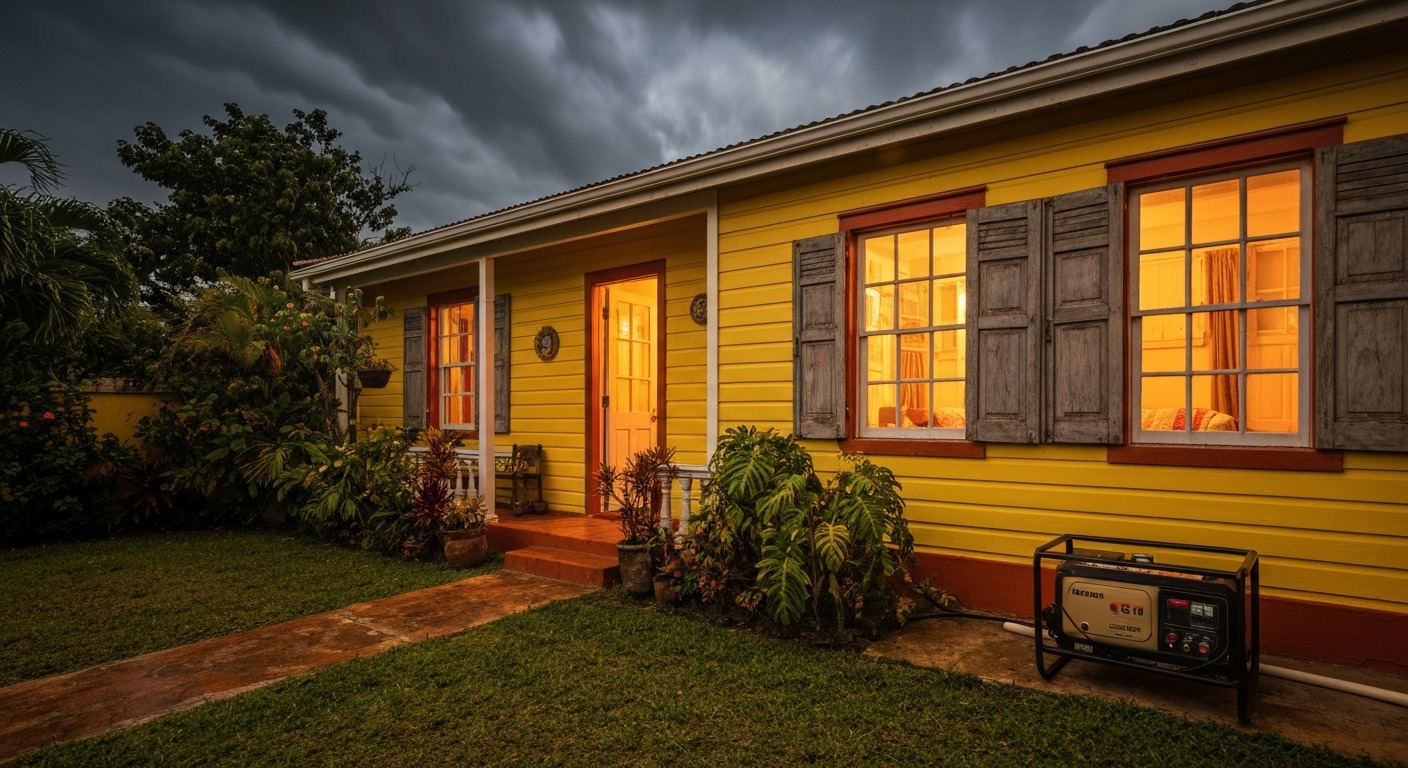
Hurricane María changed everything. Before September 2017, backup power was a nice-to-have for most Puerto Rico families. After the longest blackout in U.S. history, 3.4 million people without power, and months-long grid restoration that left some communities in the dark for nearly a year, backup power became essential infrastructure.
This guide is the complete hurricane backup power planning resource for Puerto Rico homeowners and businesses using propane generator systems.
Why Propane Is Puerto Rico's Best Hurricane Fuel
- Sealed storage immune to storm conditions: Your propane tank sits sealed on your property, completely unaffected by hurricane-force winds, flooding, or storm surge (above code-required elevation). The fuel inside is unchanged by storm conditions.
- No supply chain dependency: When a hurricane hits, gasoline stations lose power, roads get blocked, and fuel supply chains collapse. Your propane is already on your property, sealed and ready, requiring no supply chain access during or immediately after the storm.
- Indefinite shelf life: Propane filled in June is just as effective in November. You can fill your tank at the beginning of hurricane season and know it will be ready months later when a storm hits.
- Tropigas supply continuity: Tropigas's private Maritime Terminal in Guaynabo and network of 23 distribution plants maintained propane supply continuity during Hurricane María and Hurricane Fiona, providing emergency deliveries as soon as road access permitted.
The Three-Phase Hurricane Preparedness Plan
Phase 1: Before Hurricane Season (January to May)
This is when you make permanent infrastructure decisions. Waiting until a storm threatens means competing with thousands of other Puerto Rico residents for contractor availability, equipment, and fuel.
- Install your propane generator system. If you don't have one, the off-season is the time to plan and install. Permit processing, tank installation, electrical work, and generator commissioning take 3 to 6 weeks. Start in January or February for guaranteed completion before June 1.
- Choose the right generator size. A 10 to 20 kW whole-home standby generator provides complete coverage for most Puerto Rico residential applications. Commercial facilities should consult Tropigas's commercial team for appropriate sizing.
- Install a 500-gallon or larger propane tank. For generator applications in Puerto Rico's hurricane environment, 500 gallons is the minimum practical tank size. Larger tanks provide more days of operational independence without requiring a delivery.
- Set up scheduled deliveries. Scheduled delivery ensures your tank is never depleted during the months before a storm event.
- Schedule your May maintenance inspection. Annual propane system and generator maintenance should be completed before June 1 every year.
Phase 2: Storm Preparation (When a Hurricane Watch or Warning is Issued)
When the National Hurricane Center issues a watch or warning for Puerto Rico, activate your storm preparation protocol:
- Call Tropigas at 787-641-8002 immediately. Request an emergency top-off delivery to bring your tank to 80% capacity (the NFPA 58 maximum). The earlier you call, the better your delivery window.
- Run your generator self-test. If you have a standby system, manually trigger a test run to confirm everything is operational. Fix any issues before the storm arrives.
- Verify your transfer switch operates correctly. Test the transfer switch by briefly disconnecting from the AEE grid and confirming automatic generator activation.
- Clear the area around your generator and propane tank. Remove any debris, loose furniture, or materials that could become projectiles or obstruct the generator during operation.
- Document your propane tank level. Note the gauge reading so you can track consumption during the outage.
Phase 3: During and After the Storm
During the storm, your propane generator system operates automatically. There's nothing you need to do.
After the storm passes:
- Inspect your system before resuming operation. Walk around your generator and propane tank. Look for physical damage, dislodged components, or debris that could affect operation. If you see damage, call Tropigas at 787-641-8002 before operating the system.
- Monitor your fuel level daily. Keep track of consumption. If you expect an extended outage, contact Tropigas to assess delivery options as soon as roads are passable.
- Contact Tropigas for post-storm delivery assessment. Tropigas maintains emergency delivery protocols and coordinates with local emergency management for access to affected areas. Call 787-641-8002 to report your fuel status and needs.
Fuel Supply Strategy for Extended Outages
The Hurricane María experience provides the benchmark for extreme case planning in Puerto Rico. Some communities were without power for 9 to 11 months. While no residential tank provides fuel for that duration, propane generator users had far better outcomes than gasoline users:
Why propane users fared better: Propane stored pre-storm was still usable weeks and months later. Tropigas maintained emergency delivery capability and was among the first fuel suppliers to restore service in many areas. Propane's energy density means more fuel capacity in the same tank space compared to gasoline equivalents.
Practical extended outage strategy:
- For 1 to 2 week outages (Category 1 to 3 hurricane scenarios): A 500-gallon tank with a 10 to 16 kW generator provides 6 to 11 days of 50% load operation. Combined with Tropigas emergency delivery, this covers most extended outage scenarios.
- For 2 to 4 week outages (Category 4 to 5 hurricane scenarios): A 1,000-gallon tank with a 16 to 20 kW generator provides 8 to 14 days. Tropigas emergency delivery supplements for extended coverage.
- For multi-month outages (catastrophic scenarios like María): The practical solution is the largest practical tank (1,000 gallons for residential, bulk for commercial) combined with aggressive Tropigas delivery scheduling as soon as access permits.
⚡ Need to prepare?
Call 787-641-8002 to schedule your pre-hurricane season inspection and top-off delivery.
Call 787-641-8002Load Management During Extended Outages
Fuel conservation extends your operational independence. During extended hurricane outages, these load management strategies reduce propane consumption:
- AC temperature adjustment: Raising your thermostat from 72°F to 78°F reduces compressor runtime by 15% to 20%, meaningfully extending fuel supply.
- Selective circuit management: For non-critical circuits (pool pumps, decorative lighting, secondary appliances), consider shutting them down during extended outages to reduce generator load.
- Refrigerator and freezer management: Keep appliance doors closed as much as possible. Full freezers maintain temperature longer than partially full ones.
- Generator hours management: If you have a manual generator rather than an automatic standby unit, run it on a schedule (8 hours on, 4 hours off) rather than continuously to reduce consumption while maintaining essential loads.
The Pre-Hurricane Season Checklist: Complete by May 31
- Infrastructure: Propane generator system installed and operational. Generator sized for whole-home or critical load coverage. Propane tank minimum 500 gallons for generator applications. Transfer switch installed and tested.
- Maintenance: Annual propane system inspection completed by Tropigas. Annual generator maintenance completed. All fault codes cleared. Last auto-test successful.
- Fuel: Propane tank at maximum capacity (80% per NFPA 58). Scheduled delivery enrollment active. Tropigas account information current.
- Documentation: Tropigas emergency number (787-641-8002) posted. Last inspection certificate dated within 12 months. Insurance documentation current for generator and propane system.
Call 787-641-8002 to schedule your pre-hurricane season inspection and top-off delivery. Don't wait for storm season to call.
Ing. Rodolfo Leo Quiñones
Operations, Sales and Export Manager , Tropigas / Tropigas SXM
Expert in propane energy systems, NFPA compliance, and industrial gas logistics in Puerto Rico and the Caribbean.