Puerto Rico's energy reality demands a backup power solution that works when everything else fails. After Hurricane María left 3.4 million people without power for months — the longest blackout in U.S. history — the question of which generator fuel to choose became one of the most important decisions a Puerto Rico homeowner or business owner could make.
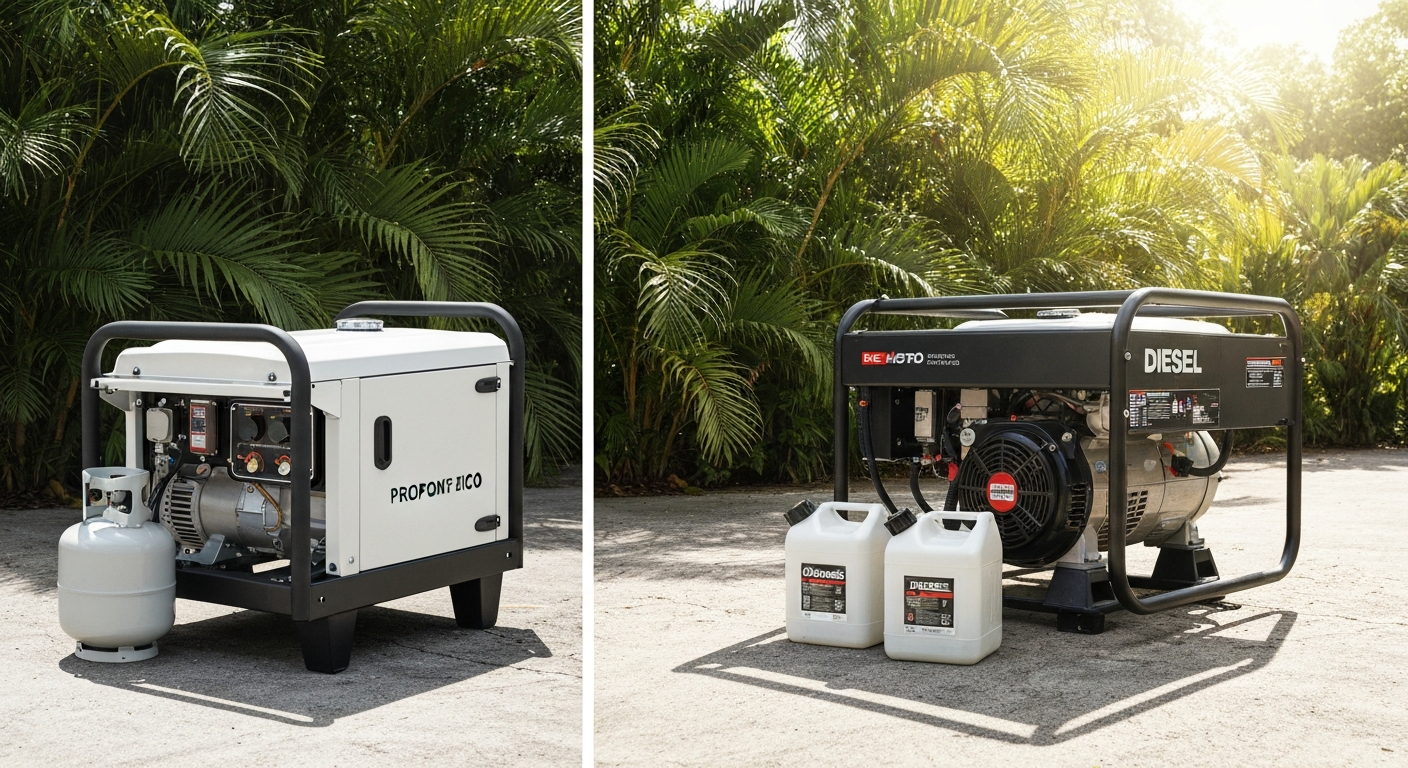
Two fuels dominate the conversation: propane and diesel. Both power reliable generators. Both are available on the island. But in Puerto Rico's specific context — tropical humidity, hurricane season, fuel supply chain vulnerabilities, and extended outage scenarios — the differences between them matter enormously.
This is the complete, honest comparison. No brand bias. Just the data that helps you make the right decision for your home or business.
The Core Difference: How Each Fuel Works
Before comparing performance, it helps to understand what you're actually dealing with.
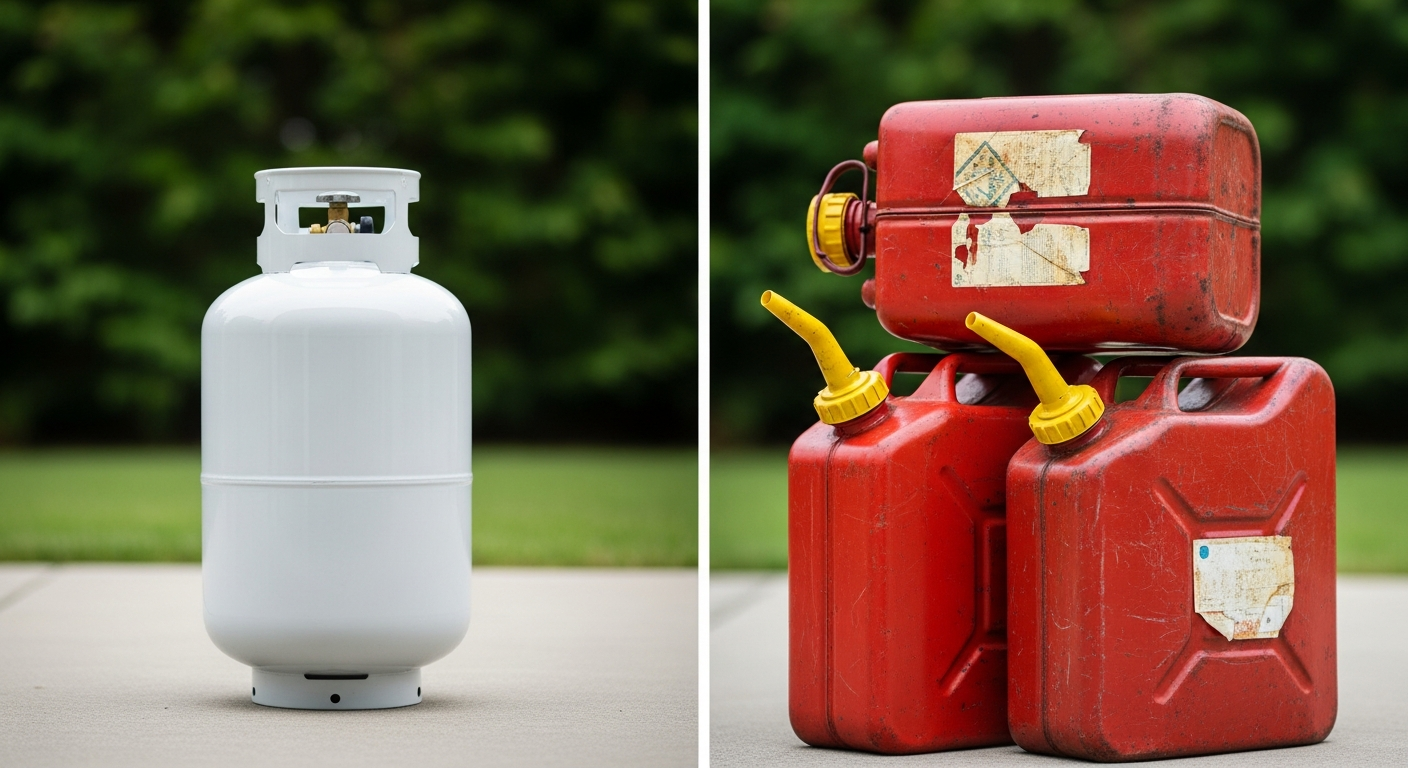
Propane is a liquefied petroleum gas stored under pressure in a sealed tank. It exists as a liquid in the tank and converts to gas when it exits the valve. It burns cleanly, produces no soot, and leaves no residue in the engine. Because it's stored in a sealed, pressurized container, it's completely isolated from the environment.
Diesel is a petroleum-based liquid fuel stored in vented tanks or containers. It's denser in energy than propane, which is why diesel generators are often marketed as more fuel-efficient. However, diesel interacts with its storage environment in ways that matter significantly in Puerto Rico's climate.
Round 1: Fuel Storage & Shelf Life
This is where the comparison starts to favor propane decisively for Puerto Rico.
Propane: Indefinite shelf life
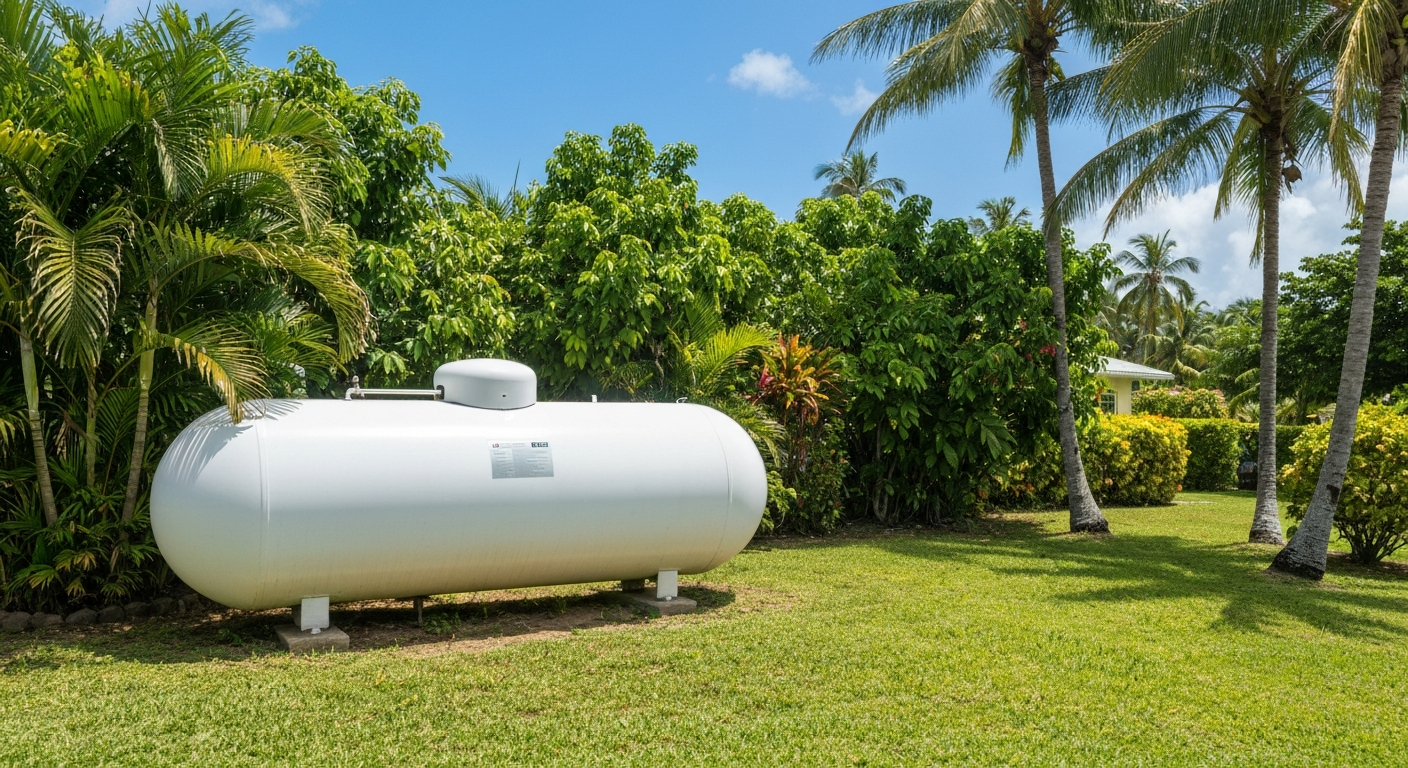
Propane stored in a properly sealed tank does not degrade. Ever. A tank filled today will contain fuel just as effective in five years as it is right now. This is critical for emergency preparedness — you fill your tank before hurricane season and the fuel is ready whenever you need it, whether that's in June or November.
Diesel: 6–12 months maximum
Diesel fuel begins to degrade within 6 to 12 months under normal storage conditions. In Puerto Rico's tropical climate — high humidity, temperature fluctuations, and exposure to condensation inside vented tanks — diesel degradation accelerates significantly. Degraded diesel produces sediment that clogs fuel filters and injectors, causing generators to fail precisely when they're needed most.
After Hurricane María, emergency management teams across Puerto Rico reported that a significant percentage of diesel generators failed to start due to fuel contamination from long-term storage. Propane generators didn't have this problem.
By a wide margin in Puerto Rico's climate.
Round 2: Cost Comparison
Fuel cost comparisons require nuance because they depend on current market prices, consumption rates, and total cost of ownership — not just the price per gallon.
Quick Stats (Approximate 2026 Puerto Rico Market)
- Propane: $3.50–$4.50 per gallon (91,500 BTU/gallon)
- Diesel: $4.00–$5.50 per gallon (137,000 BTU/gallon)
At first glance, diesel looks more efficient. A diesel generator burns less fuel per hour. But the total cost picture is more complex:
| Cost Factor | Propane | Diesel |
|---|---|---|
| Fuel cost per hour (10 kW) | ~$5.75 | ~$4.40 |
| Annual maintenance cost | Lower | Higher |
| Fuel degradation loss | Zero | Significant |
| Storage tank cost | Included with Tropigas | Additional |
| Emergency delivery availability | Guaranteed with Tropigas | Variable |
When you factor in the real cost of diesel degradation — wasted fuel, filter replacements, injector cleaning, and emergency service calls — propane's higher per-hour cost often becomes comparable or advantageous over a 3–5 year period.
For commercial operations running generators continuously during extended outages, diesel's fuel efficiency advantage becomes more significant. For residential use with intermittent operation, propane's lower maintenance burden typically offsets the higher fuel cost.
Depends on usage pattern. Diesel wins on per-hour fuel cost; propane wins on total cost of ownership.
Round 3: Performance in Puerto Rico's Climate
Puerto Rico's tropical climate creates specific challenges for generator fuel systems that mainland comparisons don't capture.
Humidity and condensation
Diesel tanks breathe — they have vents that allow pressure equalization as fuel is consumed. In Puerto Rico's humid environment, this means moisture enters the tank. Over time, water accumulates at the bottom of diesel tanks, creating conditions for microbial growth (diesel bug) that destroys fuel quality and clogs filters.
Propane tanks are completely sealed. No moisture enters. No degradation. No microbial growth.
Salt air and corrosion
Coastal properties in Puerto Rico face accelerated corrosion from salt air. Diesel fuel systems — with their vents, filters, and external fuel lines — have more exposed components susceptible to salt corrosion. Propane systems, with sealed tanks and fewer exposed fittings, generally have a lower corrosion-related maintenance burden in coastal environments.
Puerto Rico's specific climate conditions favor sealed propane storage.
Round 4: Emergency Availability During Hurricanes
This is the most critical comparison for Puerto Rico.
Propane during a hurricane
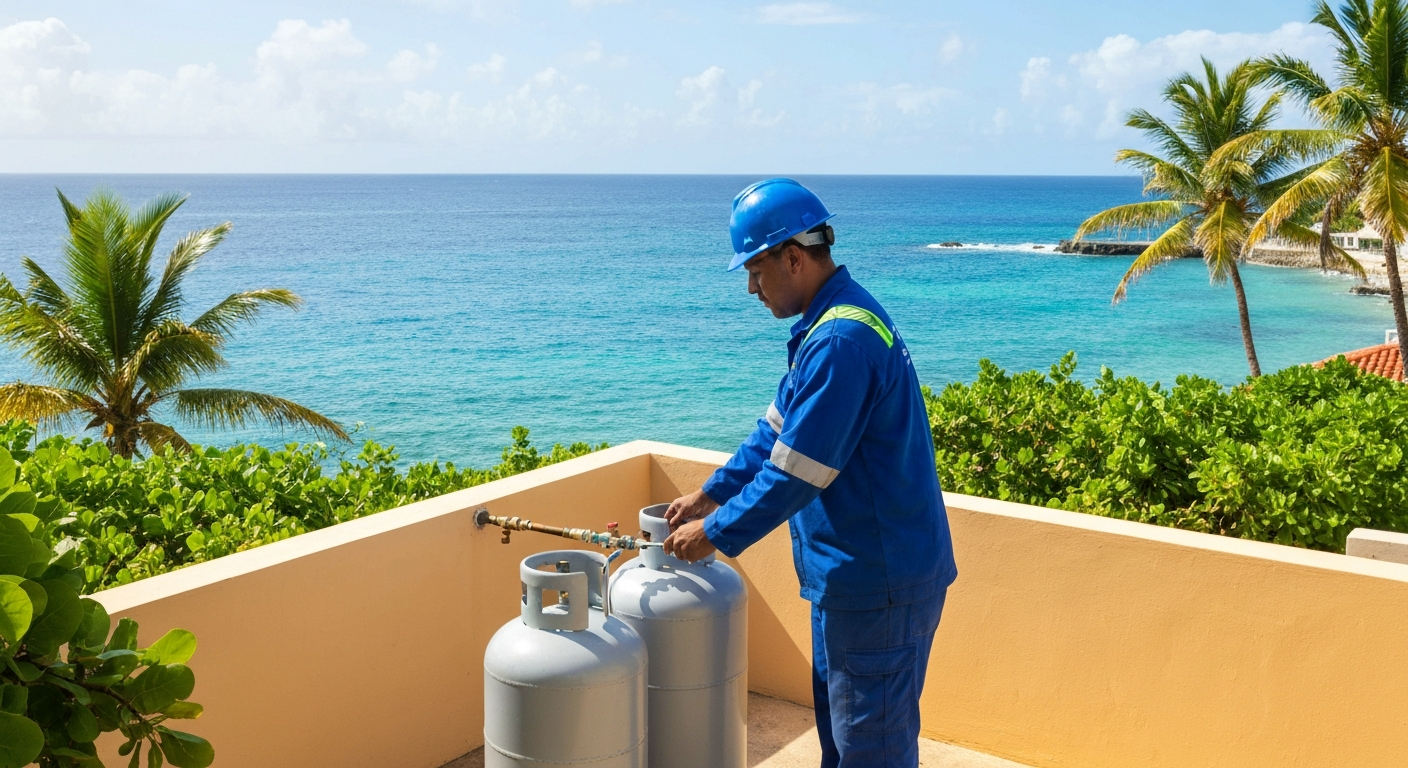
Your propane tank is filled before the storm. It sits sealed on your property, completely independent of supply chains, road conditions, or utility infrastructure. When the storm passes, your fuel is exactly where you left it — unaffected by flooding, wind, or power outages at fuel distribution points.
Tropigas maintains 23 distribution plants across Puerto Rico and a private Maritime Terminal in Guaynabo. Even during major hurricane events, Tropigas has maintained supply continuity — including during Hurricane María in 2017 and Hurricane Fiona in 2022.
Diesel during a hurricane
Diesel supply depends on functioning gas stations, tanker trucks that can navigate post-storm roads, and distribution infrastructure that may be compromised. After Hurricane María, diesel shortages were widespread and lasted weeks in some areas. Priority access went to hospitals and critical infrastructure, leaving residential and small commercial users without reliable supply.
Decisive advantage in hurricane scenarios.
Round 5: Environmental Impact
Both fuels are fossil fuels, but they're not equal in environmental impact.
| Impact Metric | Propane | Diesel |
|---|---|---|
| CO2 emissions | ~12.7 lbs per gallon | ~22.4 lbs per gallon |
| Particulate matter | Minimal | Significant |
| NOx emissions | Lower | Higher |
| EPA classification | Alternative clean fuel | Conventional petroleum |
For communities already dealing with air quality challenges, and for generators operating near occupied spaces, propane's significantly lower particulate emissions are a meaningful advantage.
Meaningfully cleaner combustion.
Round 6: Generator Engine Longevity & Maintenance
Propane engines
Propane burns cleanly and leaves no carbon deposits in the engine. This extends engine life and reduces maintenance requirements. Oil stays cleaner longer between changes. Spark plugs last longer. Combustion chambers stay cleaner.
Diesel engines
Diesel combustion produces carbon deposits over time. Diesel generators require more frequent oil changes, filter replacements, and injector maintenance. Commercial diesel generators are engineered for this — they're robust machines. But the maintenance burden is real, especially for residential units.
Lower maintenance burden, longer engine life.
Round 7: Installation & Safety
Propane installation: Tropigas installs the complete system — tank, regulator, fuel lines, safety valves, and generator connection — to NFPA 58 and NFPA 54 standards. The system is pressurized and sealed. Leak testing is performed before activation. The installation is documented and certified.
Diesel installation: Diesel generator installation is generally simpler — the generator has an onboard fuel tank or connects to an external tank. No pressurized system required. However, diesel fuel spills create environmental contamination risks, and above-ground diesel storage tanks have their own regulatory requirements for larger capacities.
Safety Comparison
Both are safe when properly installed and maintained.
The Bottom Line: Which is Right for You?
| Scenario | Recommended Fuel |
|---|---|
| Residential home with 10–20 kW generator | Propane |
| Seasonal or emergency use only | Propane |
| Extended post-hurricane operation | Propane |
| Coastal property | Propane |
| Commercial operation, continuous use | Evaluate both |
| Industrial, high-capacity (60+ kW) | Evaluate both |
| Budget-constrained, highest fuel efficiency priority | Diesel |
For the vast majority of Puerto Rico homeowners and small businesses, propane is the superior choice. The combination of indefinite shelf life, sealed storage immune to tropical humidity, guaranteed supply through Tropigas's island-wide network, and lower maintenance requirements make it the most reliable backup energy solution available on the island.

Ing. Rodolfo Leo Quiñones
Operations, Sales and Export Manager , Tropigas / Tropigas SXM
Expert in propane energy systems, NFPA compliance, and industrial gas logistics in Puerto Rico and the Caribbean.