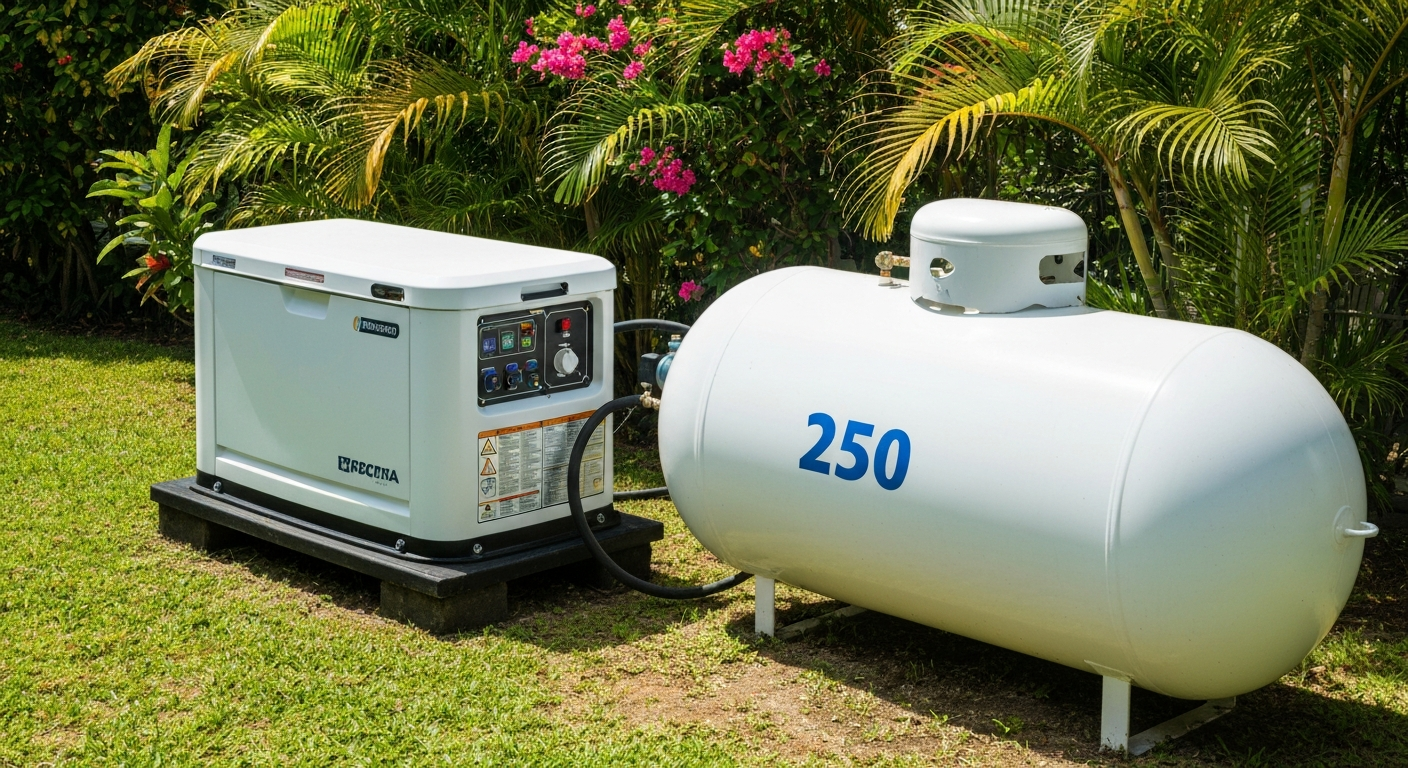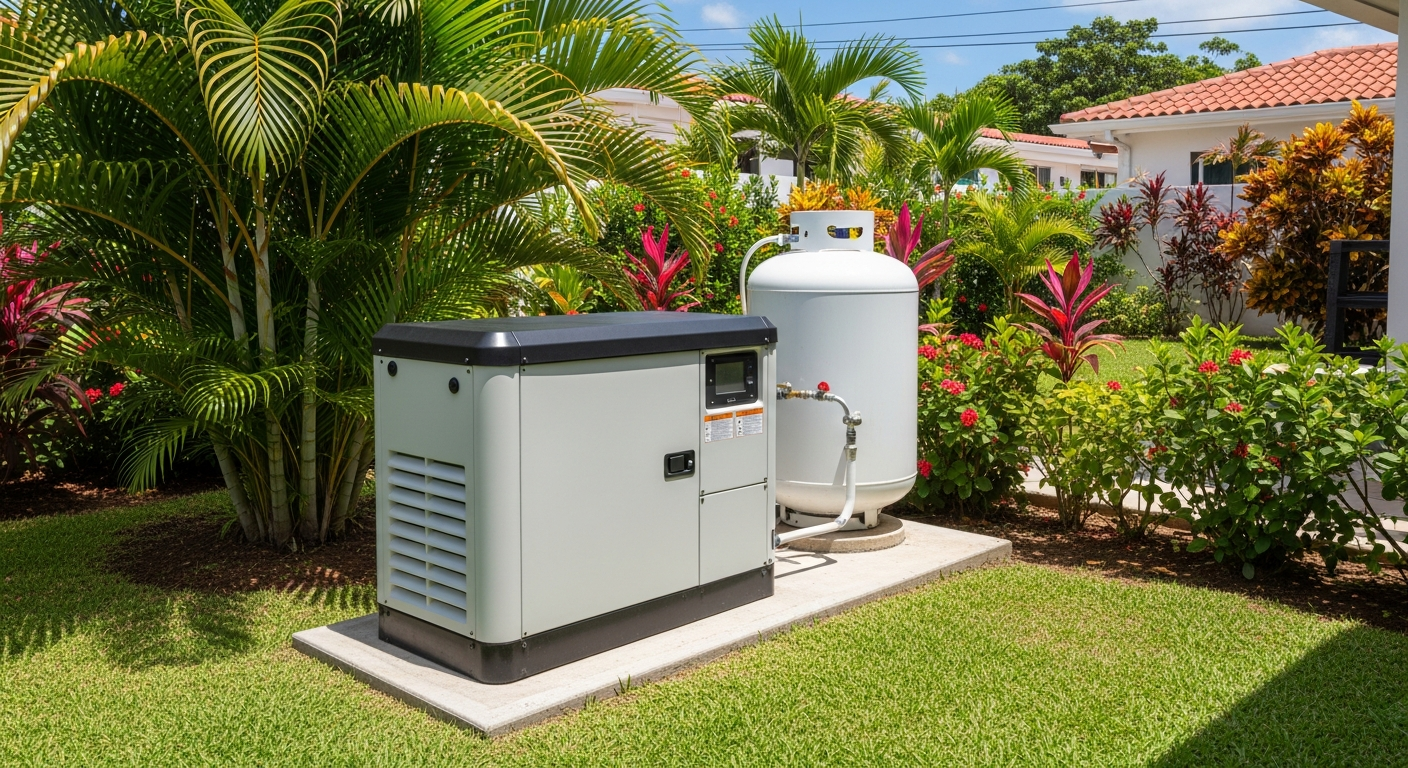
If you're shopping for a backup generator in Puerto Rico, you'll quickly find two dominant fuel options: propane and gasoline. Walk into any hardware store on the island and you'll see portable gasoline generators stacked in rows — affordable, familiar, and widely available. But are they actually the right choice for Puerto Rico's specific energy reality?
The answer, for most Puerto Rico homeowners and businesses, is no. This comparison breaks down exactly why — and where gasoline generators do make sense.
The Core Difference
Gasoline generators are the most common backup power solution in Puerto Rico. They're affordable to purchase, easy to find, and most people already know how to use them. A 5,000-watt gasoline generator from a hardware store costs $400 to $800 and can power essential appliances during a short outage.
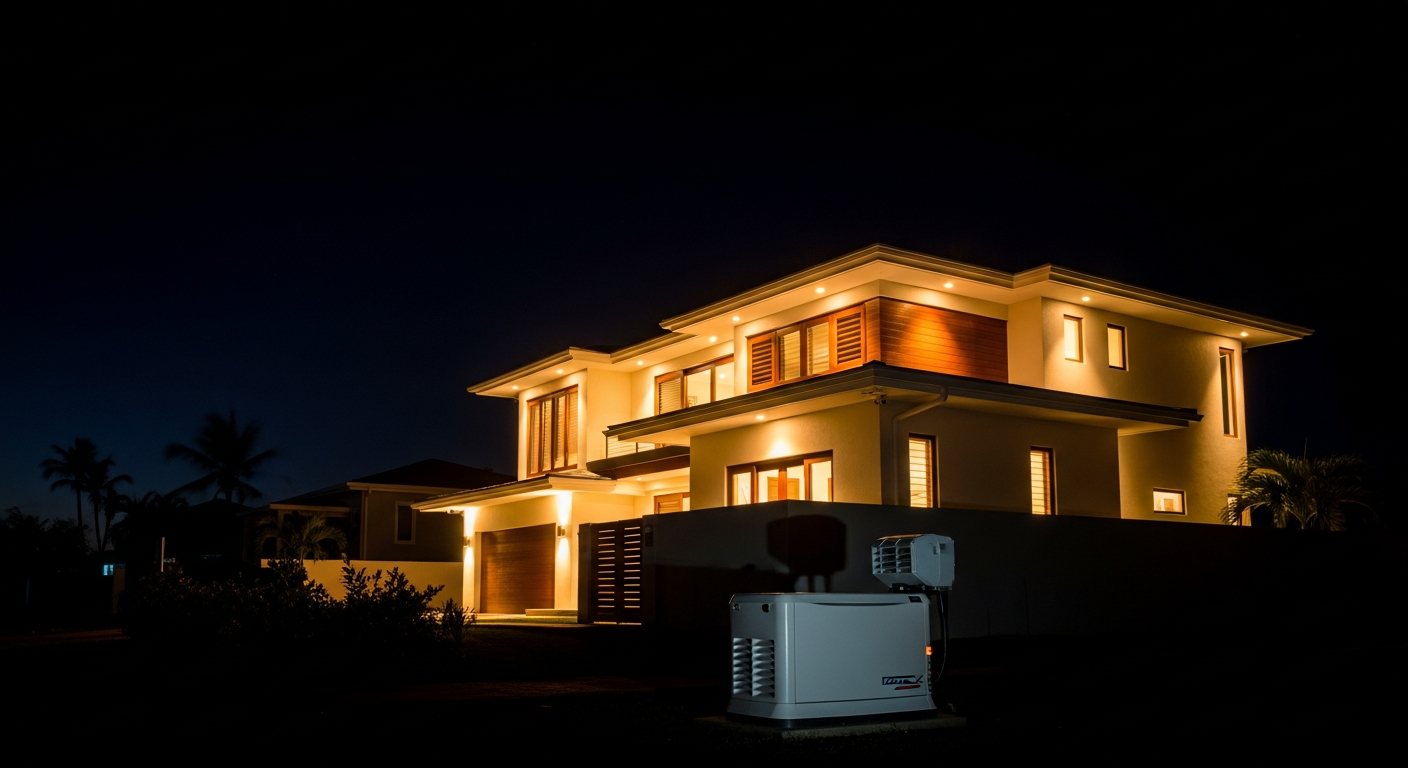
Propane generators connect to a fixed propane tank installed on your property — or to a large cylinder. They cost more upfront but deliver significant advantages in Puerto Rico's specific context: frequent outages, hurricane season, and the critical need for fuel that's ready when you need it.
Round 1: Fuel Storage & Shelf Life
This is where the comparison shifts decisively in propane's favor for Puerto Rico.
Propane: Indefinite shelf life
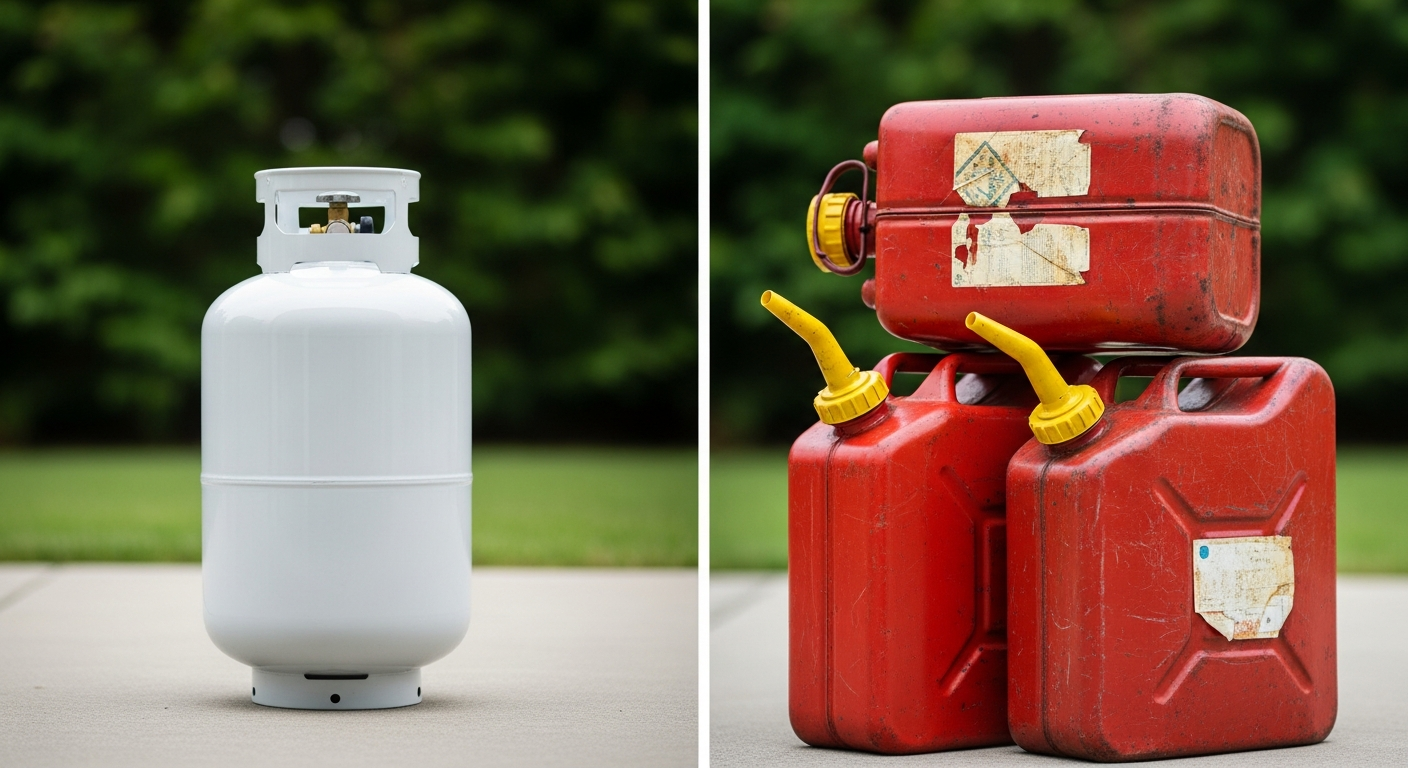
Propane stored in a sealed tank does not degrade. A tank filled today contains fuel just as effective in five years. This matters enormously in Puerto Rico, where generators may sit unused for months between outages — then be needed urgently when a hurricane hits.
Gasoline: 30 to 90 days maximum
Gasoline begins degrading within 30 days without a fuel stabilizer. In Puerto Rico's tropical heat and humidity, degradation accelerates. Old gasoline gums up carburetors, clogs fuel filters, and causes generators to fail to start — precisely when you need them most.
⚡ Key Fact
This is not theoretical. After Hurricane María in 2017, a significant percentage of gasoline generators across Puerto Rico failed to start because their stored fuel had degraded. Propane generators didn't have this problem.
Winner: Propane ✓
Decisive advantage.
Round 2: Safety
Gasoline safety risks:
Gasoline is highly flammable with a low flash point. It produces flammable vapors at room temperature. Storing gasoline in your home, garage, or near your generator creates significant fire and explosion risk. After a hurricane, when people are stressed and not following normal safety protocols, gasoline storage accidents spike dramatically.
⚠️ Warning
Gasoline generators also produce carbon monoxide — an odorless, colorless gas that kills. After every major hurricane in Puerto Rico, carbon monoxide poisoning from improperly operated gasoline generators results in deaths and hospitalizations. Generators must never be operated inside homes, garages, or enclosed spaces.
Propane safety advantages:
Propane has a significantly higher flash point than gasoline and a narrow flammability range of 2.4% to 9.5% concentration in air. When propane escapes from a leak, it dissipates rapidly into the air rather than pooling on the ground like gasoline vapors. Propane also has a distinctive odor additive that makes leaks immediately detectable.
Propane is stored in a sealed, pressurized tank on your property — away from your home, properly grounded, and installed to NFPA 58 safety standards by Tropigas certified technicians. There's no fuel handling, no spillage risk, and no storage containers inside your home.
Winner: Propane ✓
Significantly safer storage and operation.
Round 3: Cost Comparison
Upfront cost: A portable gasoline generator costs $400 to $1,500 for residential use. A propane-connected standby generator costs $3,000 to $10,000 installed — significantly more upfront.
Fuel cost per hour (approximate 2026 Puerto Rico prices):
| Generator Size | Gasoline Cost/hr | Propane Cost/hr |
|---|---|---|
| 5 kW portable | ~$3.50 | ~$4.00 |
| 10 kW home standby | ~$5.00 | ~$5.75 |
| 20 kW whole-home | ~$8.00 | ~$9.50 |
Gasoline has a lower per-hour fuel cost. But total cost of ownership tells a different story.
Total cost factors:
| Cost Factor | Gasoline | Propane |
|---|---|---|
| Generator purchase | Lower | Higher |
| Fuel per hour | Lower | Slightly higher |
| Annual maintenance | Higher | Lower |
| Fuel degradation loss | Significant | Zero |
| Emergency fuel availability | Unreliable post-storm | Guaranteed with Tropigas |
| Carbon monoxide risk | High | None |
| Fuel storage equipment | Required | None |
For occasional short outages, gasoline's lower upfront cost can make sense. For Puerto Rico's extended hurricane-season outage scenarios, propane's total cost over 3 to 5 years typically equals or beats gasoline when you factor in maintenance, wasted degraded fuel, and the cost of emergency gasoline during post-storm shortages.
Winner: Tie
Gasoline on upfront cost. Propane on total cost of ownership.
Ready to install a reliable backup power system?
Get a free site evaluation from Tropigas certified technicians.
Call 787-641-8002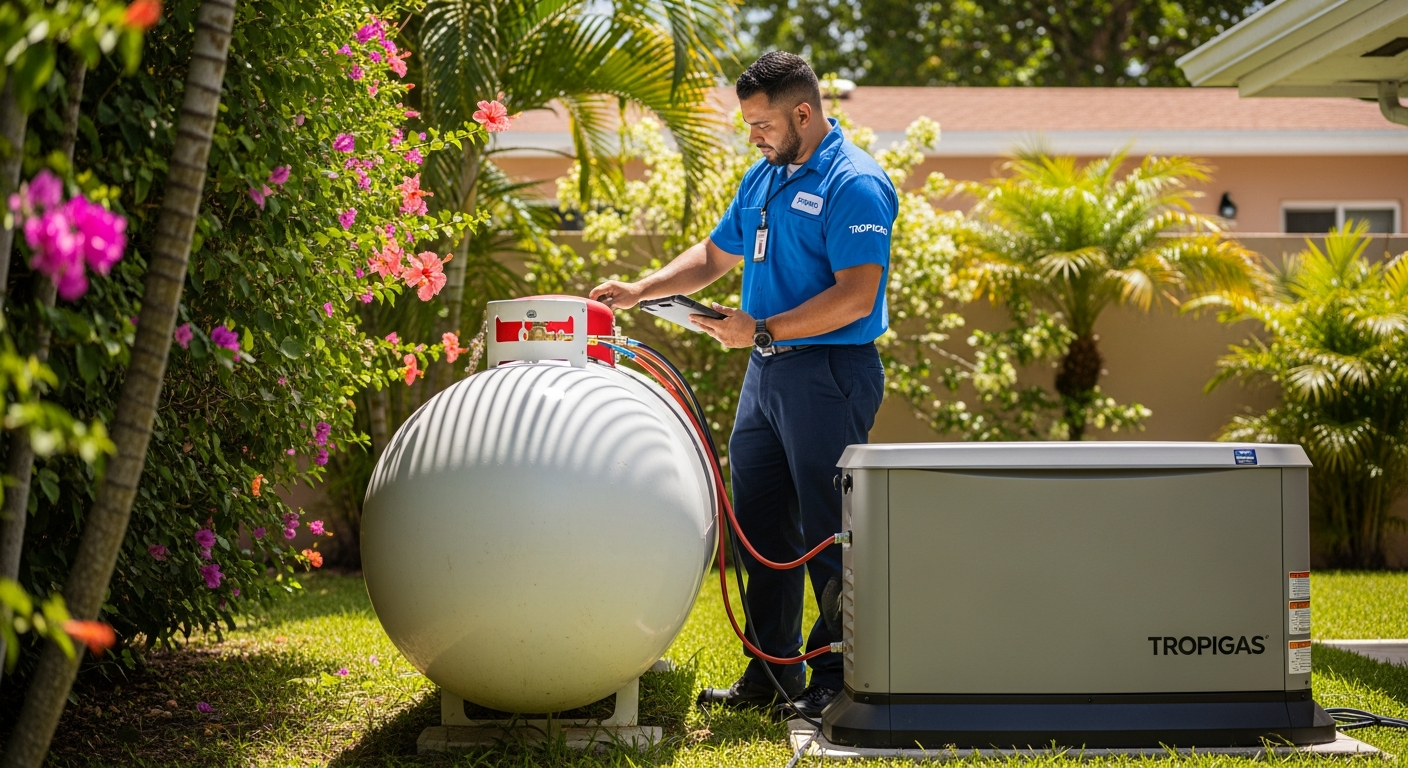
Round 4: Reliability During Hurricane Season
This is the most critical comparison for Puerto Rico — and it's not close.
Gasoline during a hurricane:
Before the storm hits, everyone on the island is buying gasoline simultaneously. Gas stations run out. Lines stretch for hours. Price gouging occurs. You may not be able to fill your containers before the storm.
After the storm, the situation is worse. Gas stations need electricity to run their pumps. Roads may be blocked. Supply trucks can't get through. The gasoline you stored may have degraded. And if you can find gasoline, you're competing with everyone else who didn't prepare. After Hurricane María, gasoline shortages in Puerto Rico lasted weeks in many areas. Some communities waited months.
Propane during a hurricane:
Your propane tank is filled before the storm — at 80% capacity per NFPA 58 standards. It sits sealed on your property, completely immune to storm conditions. No pump needed. No road access required. No supply chain dependency.
Tropigas maintains 23 distribution plants across Puerto Rico and a private Maritime Terminal in Guaynabo with direct supply chain control. Even during major hurricane events, Tropigas has maintained supply continuity — including after Hurricane María and Hurricane Fiona.
Winner: Propane ✓
Decisive advantage in hurricane scenarios.
Round 5: Convenience & Maintenance
Gasoline generator maintenance:
Gasoline generators require regular maintenance — oil changes every 100 hours of operation, air filter cleaning, spark plug replacement, and carburetor cleaning. Degraded gasoline can cause significant carburetor damage that requires professional repair. Most gasoline generators need to be run periodically (at least monthly) to prevent fuel system issues from sitting idle.
Propane generator maintenance:
Propane burns cleanly and leaves no carbon deposits or fuel residue. Oil stays cleaner longer. Spark plugs last longer. The fuel system doesn't require the same level of maintenance as gasoline. Propane generators can sit unused for extended periods without fuel system degradation.
Fuel handling:
With gasoline, you're handling fuel every time you need to refuel — pouring from containers, managing spills, dealing with the smell. With propane connected to a fixed tank, fuel delivery happens seamlessly through Tropigas scheduled deliveries. You never touch the fuel.
Winner: Propane ✓
Lower maintenance burden and zero fuel handling.
Round 6: Environmental Impact
Gasoline emissions:
Gasoline combustion produces significant carbon monoxide, hydrocarbons, nitrogen oxides, and fine particulate matter. Gasoline generators running in Puerto Rico neighborhoods during extended outages create meaningful air quality issues — particularly for elderly residents, children, and people with respiratory conditions.
Propane emissions:
Propane is classified by the EPA as an alternative clean fuel. It produces significantly lower carbon monoxide, virtually no particulate matter, and lower overall emissions than gasoline. Propane generators operate more cleanly in residential neighborhoods during extended outages.
Winner: Propane ✓
Meaningfully cleaner combustion.
Round 7: Portability
Gasoline generators:
Portable gasoline generators are exactly that — portable. You can move them to wherever you need power, take them camping, lend them to a neighbor, or use them for job sites. This flexibility has real value.
Propane generators:
Standby propane generators are permanently installed — they're not portable. If portability is a core requirement, a propane solution requires a portable generator with a large propane cylinder, which is less common and less convenient than a standard gasoline portable.
Winner: Gasoline ✓
Portability is a genuine advantage.
The Bottom Line: Which is Right for You?
| Scenario | Recommended Fuel |
|---|---|
| Occasional short outages (under 8 hours) | Gasoline may be adequate |
| Extended hurricane-season outages | Propane |
| Whole-home standby generator | Propane |
| Budget-constrained, occasional use | Gasoline portable |
| Family with medical equipment needs | Propane |
| Coastal or remote property | Propane |
| Need portability for job sites | Gasoline |
| Long-term reliability priority | Propane |
For the vast majority of Puerto Rico homeowners who need reliable backup power through hurricane season and beyond, propane is the superior choice. The combination of indefinite fuel shelf life, safer storage, lower maintenance, and guaranteed supply through Tropigas's island-wide network makes it the most dependable backup energy solution available.
Gasoline portable generators have their place — for occasional short outages, temporary job site power, or as a budget-conscious entry point. But for a primary backup power solution in Puerto Rico, propane wins on every metric that matters in an actual emergency.
Ing. Rodolfo Leo Quiñones
Operations, Sales and Export Manager , Tropigas / Tropigas SXM
Expert in propane energy systems, NFPA compliance, and industrial gas logistics in Puerto Rico and the Caribbean.