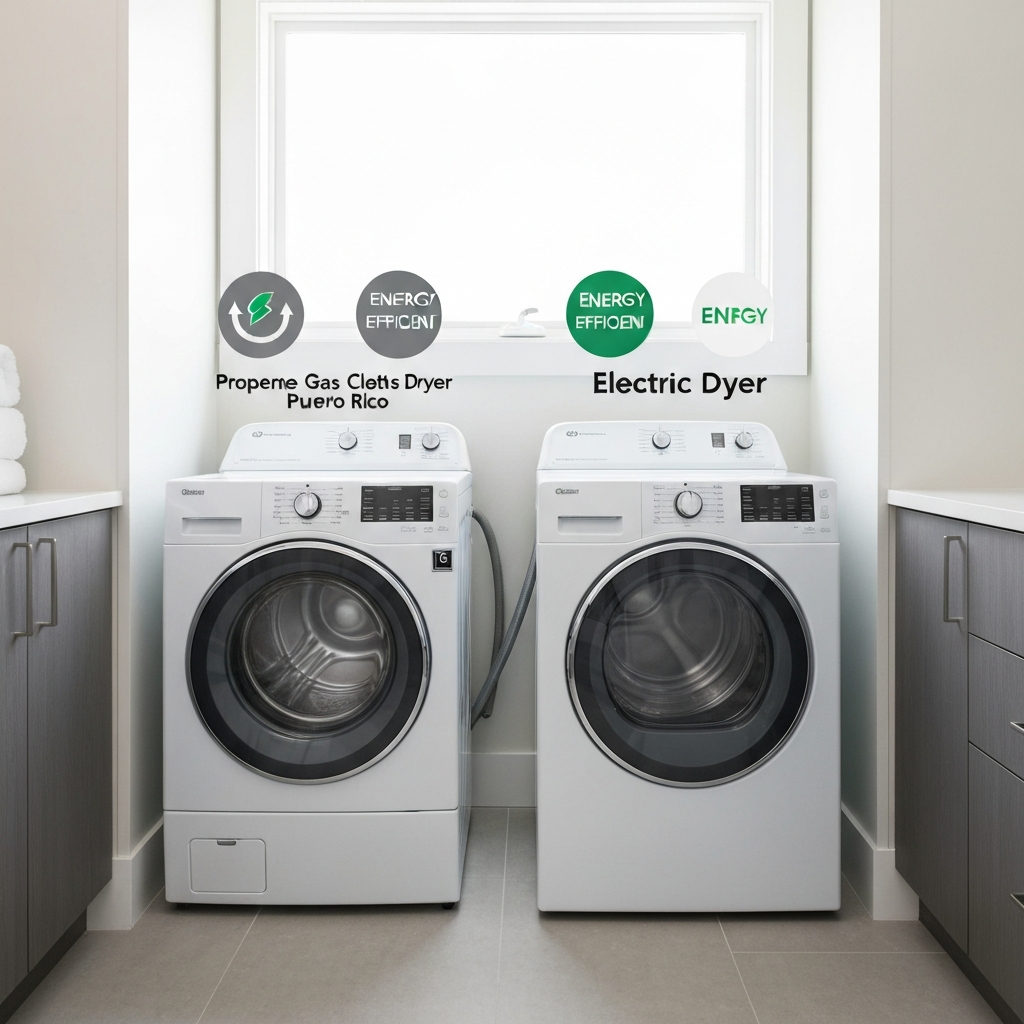
In Puerto Rico's high-humidity climate, efficient clothes drying matters more than in most places. Damp clothes that don't dry quickly develop mildew odor in the island's tropical conditions. A dryer that dries faster, more thoroughly, and at lower cost is not just a convenience, it's a practical necessity for many Puerto Rico families. Propane dryers deliver on all three counts.
Round 1: Drying Speed
Propane dryer:
Gas dryers heat up faster and maintain higher drum temperatures than electric models. The result is drying cycles that are 20% to 30% shorter than comparable electric dryers for the same load. A load that takes 45 to 50 minutes in an electric dryer typically takes 30 to 35 minutes in a comparable gas dryer.
Electric dryer:
Electric dryers heat more slowly and generally operate at lower temperatures than gas models. Drying cycles are longer for comparable loads.
Winner: Propane. 20% to 30% faster drying cycles.
Round 2: Fabric Care
Propane dryer: The higher heat of gas dryers combined with faster cycle times actually results in gentler fabric treatment overall. Clothes spend less time in the drum tumbling against each other.
Electric dryer: Electric dryers with lower temperatures take longer to dry clothes, meaning fabrics spend more time tumbling. Extended tumbling contributes to lint production (fabric breakdown) and static buildup.
Winner: Slight edge to propane on fabric care due to shorter cycle times.
Round 3: Operating Cost in Puerto Rico
Electric dryer annual operating cost: A standard electric dryer running 5 to 8 loads per week in Puerto Rico uses approximately 600 to 900 kWh per year. At AEE electricity rates of $0.27 per kWh average, that's $162 to $243 per year.
Propane dryer annual operating cost: A comparable gas dryer for the same number of loads uses approximately 25 to 35 gallons of propane per year. At $4.00 per gallon, that's $100 to $140 per year.
⚡ Key Fact: Annual savings from switching are $60 to $103 per year. The strongest financial case for propane in the laundry room is when you combine the dryer switch with a water heater switch as part of a complete home conversion.
Winner: Propane. 35% to 42% lower annual operating cost.
Round 4: Performance During Power Outages
Propane dryer during an outage:
Propane dryers require a small amount of electricity for the motor, drum rotation, and controls. Unlike a propane stove that can be lit manually, a propane dryer cannot operate without electricity for the motor. During a complete power outage, your propane dryer will not run.
Electric dryer during an outage:
Also completely inoperable. Both dryer types require electricity for motor operation.
Winner: Tie. Neither dryer type operates during a complete power outage.
Round 5: Purchase Cost and Installation
Purchase cost: A standard 7.0 cubic foot propane dryer costs $600 to $1,000. A comparable electric dryer costs $500 to $900. Propane models are slightly more expensive at comparable quality levels.
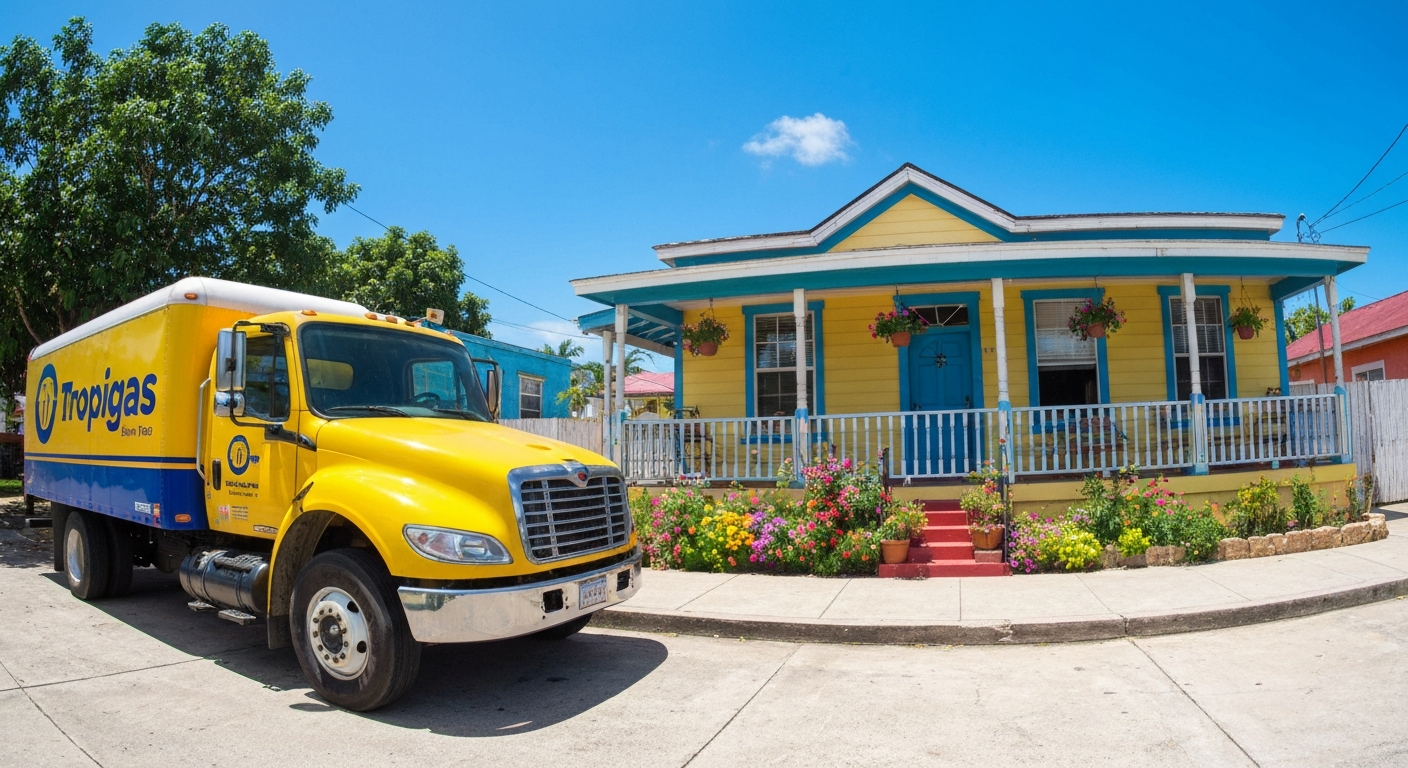
Installation: Electric dryers require a 240-volt outlet. Propane dryers require a gas line connection to your propane supply. If a gas line doesn't already reach your laundry area, Tropigas installs the branch line for $300 to $600.
Winner: Electric on upfront cost simplicity. Propane on long-term total cost.
Round 6: Humidity and Puerto Rico's Climate
Puerto Rico's high ambient humidity creates a specific advantage for gas dryers that doesn't exist in mainland markets. In humid environments, electric dryers with slower drying cycles leave clothes partially damp for longer periods. Gas dryers' faster cycles remove moisture more completely in less time, reducing the risk of mildew odor developing in laundry.
Winner: Propane. Particularly relevant in Puerto Rico's humid climate.
The Bottom Line
| Factor | Propane | Electric |
|---|---|---|
| Drying speed | ✓ 20 to 30% faster | Slower |
| Annual operating cost | ✓ $100 to $140 | $162 to $243 |
| Works during outages | ✗ Motor needs power | ✗ Motor needs power |
| Fabric care | ✓ Gentler | More tumbling |
Installing a Propane Dryer in Puerto Rico
Call 787-641-8002 to schedule your free evaluation and get a complete installation quote.
Call 787-641-8002Frequently Asked Questions
Ing. Rodolfo Leo Quiñones
Operations, Sales and Export Manager , Tropigas / Tropigas SXM
Expert in propane energy systems, NFPA compliance, and industrial gas logistics in Puerto Rico and the Caribbean.