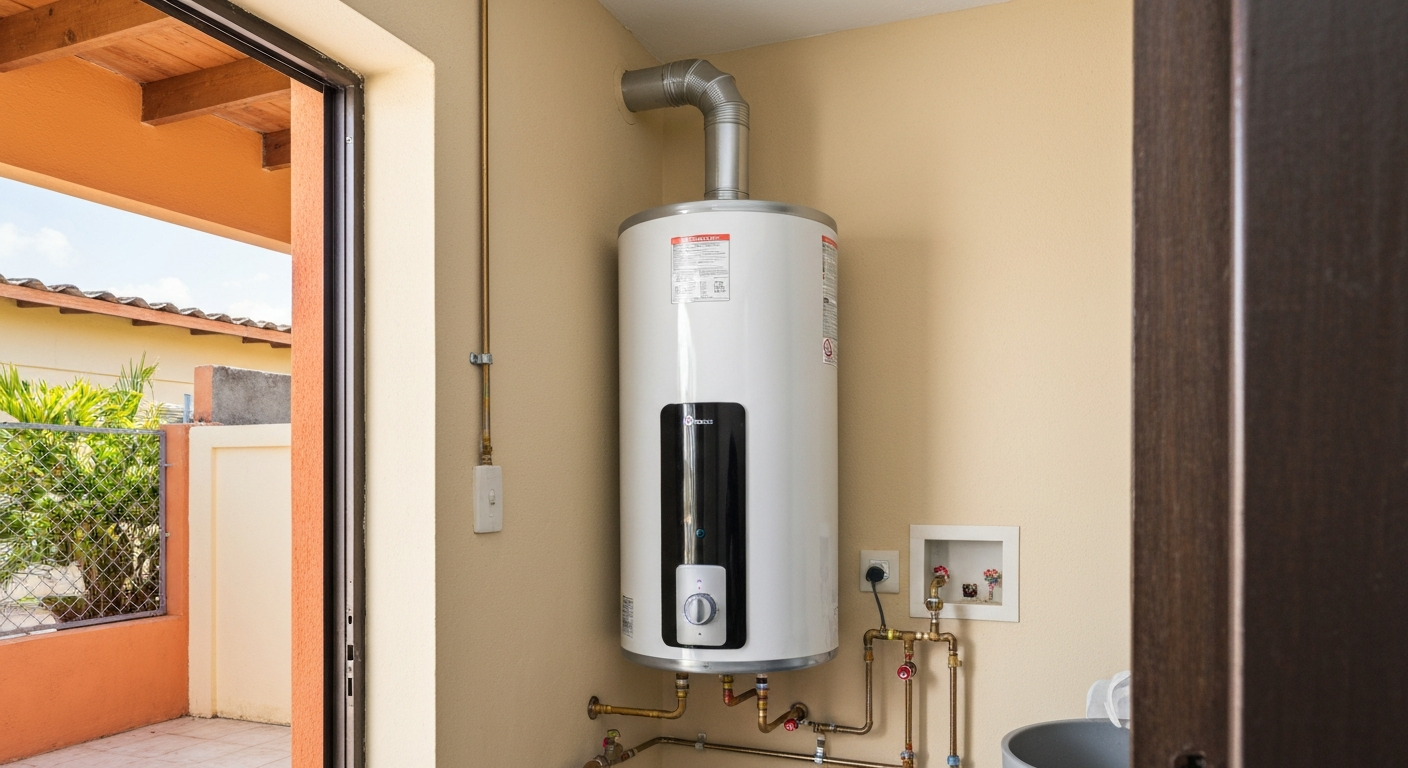
Propane Water Heaters in Puerto Rico
Faster, more efficient, and works during outages. Professional installation by Tropigas.
Hot water is not optional. It's the first thing your family misses when the power goes out, the first comfort that disappears when the AEE grid fails for the third time this month, and the expense that most Puerto Rico homeowners don't realize they can dramatically reduce.
Propane water heaters heat water approximately twice as fast as electric models, cost significantly less to operate given Puerto Rico's high AEE electricity rates, and work completely independently of the electrical grid. When your neighbor's electric water heater sits cold and dark during an extended outage, your propane water heater runs exactly as it always has.
Switching your water heater to propane is consistently the single highest-return energy investment a Puerto Rico homeowner can make.
Propane Water Heater Sizing Guide
| Household Size | Daily Hot Water Use | Recommended Tank Size |
|---|---|---|
| 1 to 2 persons | 30 to 40 gallons | 30-gallon tank |
| 3 to 4 persons | 50 to 60 gallons | 40-gallon tank |
| 5 to 6 persons | 60 to 80 gallons | 50-gallon tank |
| 7+ persons or high demand | 80+ gallons | 50-gallon tank or tankless |
Why Propane Water Heaters Outperform Electric in Puerto Rico
Speed:
A 40-gallon propane water heater recovers (reheats a full tank of cold water) in approximately 30 to 40 minutes. A comparable electric water heater takes 60 to 80 minutes. For a family of four with high hot water demand, this difference eliminates the dreaded cold shower when someone uses all the hot water.
Cost:
This is where the advantage is most significant in Puerto Rico. AEE electricity rates of $0.22 to $0.32 per kWh make electric water heating one of the most expensive ways to heat water in any U.S. jurisdiction. Propane at $3.50 to $4.50 per gallon delivers the same hot water at 30% to 50% lower annual cost. For a typical Puerto Rico family of four, this translates to $280 to $350 in annual savings on water heating alone.
Grid independence:
Propane water heaters with a standing pilot light or battery-powered electronic ignition operate completely independently of the AEE grid. No electricity required. During outages, whether from routine grid instability or post-hurricane extended blackouts, your hot water continues without interruption.
Longevity:
Propane water heaters typically last 2 to 5 years longer than electric models because gas heating creates less sediment buildup and scale formation inside the tank compared to electric resistance elements.
Types of Propane Water Heaters Available in Puerto Rico
For most Puerto Rico residential applications, a standard 40-gallon propane storage tank water heater provides the best balance of upfront cost, operating cost, and simplicity of installation.
Standard storage tank water heaters:
The most common type. A propane burner heats water stored in an insulated tank (typically 30 to 50 gallons for residential use) and maintains it at your set temperature. When hot water is used, cold water enters the tank and the burner fires to reheat. Available in natural draft and power-vent configurations.
Tankless (on-demand) water heaters:
Propane tankless water heaters heat water instantly as it flows through the unit, eliminating the standby heat loss of maintaining a tank at temperature. They provide unlimited hot water (as long as propane supply continues) and are more energy efficient than storage tanks. However, they have a higher upfront cost and require adequate gas line sizing for their higher BTU input.
High-efficiency condensing water heaters:
Advanced propane water heaters that capture additional heat from the exhaust gases for higher efficiency ratings (up to 0.95 energy factor). Best choice when maximum efficiency is the priority. Higher upfront cost, potentially higher installation complexity.
The Installation Process
What Tropigas installs:
Your propane water heater installation involves more than connecting the unit. A complete Tropigas installation includes: Gas line from your propane tank to the water heater location. If you have an existing propane tank, we run the gas line to your water heater. If you're also installing a new propane tank, that happens in the same project. Regulator sizing verification to ensure your existing regulator provides adequate pressure for the water heater's BTU demand, especially if other gas appliances are also connected. Shutoff valve installation at the water heater connection point for safe maintenance and emergency shutoff access. Flexible connector between the rigid gas line and the water heater connection, required by NFPA 54 to accommodate any minor movement or vibration. Water connections from your home's hot and cold water lines to the water heater inlet and outlet. Ventilation assessment and installation if required. Natural draft water heaters require proper venting to exhaust combustion gases. Power-vent models use a fan to force exhaust gases out and offer more flexibility in placement. Pressurized leak test of all gas connections before activation. System activation and temperature setting. Complete installation documentation.
Timeline:
For a standard residential installation with an existing propane tank, the water heater gas line installation and commissioning typically takes 2 to 4 hours. If a new propane tank is also being installed, add 1 to 2 days for the complete project.
Converting from Electric to Propane Water Heating
Converting your hot water system from electric to propane involves selecting and purchasing a new propane water heater (the electric unit stays or is removed), running a gas line from your propane tank to the water heater location, and completing the installation and certification.
What you need for a conversion:
An existing propane tank, or a new tank installation as part of the same project. If you already have propane service for a stove or other appliance, the existing tank may be adequate depending on its size and current load. Tropigas evaluates your existing system during the site visit. A new propane water heater unit. Tropigas can recommend appropriate models for your household size and hot water demand. You purchase the unit from your preferred appliance retailer, and Tropigas handles the complete gas line installation and connection. A gas line from your tank to the water heater location. This is Tropigas's primary scope of work for a conversion. We run the gas line, install all required valves and fittings, connect to the water heater, and perform the leak test and certification.
Conversion cost:
The gas line installation for a water heater conversion typically costs $400 to $900 depending on the distance from your propane tank to the water heater location and the complexity of the routing. The water heater unit itself costs $400 to $900 for a standard residential model.
Total conversion investment:
$800 to $1,800 including unit and installation.
Annual savings:
$280 to $350 for a family of four.
Payback period:
2.5 to 6 years, then savings continue indefinitely.
Propane Water Heaters During Outages
This is the advantage that Puerto Rico homeowners consistently cite as the most valuable after they make the switch.
During an AEE power outage, an electric water heater is immediately inoperable. The heating element requires electricity. The hot water in the tank gradually cools. Within 6 to 8 hours, you have cold water. During extended outages of days or weeks, you have no hot water for the duration.
A propane water heater with a standing pilot light continues operating without any interruption during a power outage. If your unit uses electronic ignition (which requires a small amount of electricity to ignite the burner), most models can be lit manually using the pilot light procedure described in the owner's manual, or with a battery backup for the ignition.
Practical result: The morning after a hurricane hits Puerto Rico and knocks out the grid, your family showers in hot water. Your neighbor with an electric water heater does not. This is not a theoretical advantage, it's the daily experience of Tropigas customers throughout Puerto Rico who've lived through María, Fiona, and dozens of extended outages in between.
Maintenance and Longevity
Propane water heaters require simple annual maintenance to maintain efficiency and extend service life. Tropigas recommends:
Annual inspection:
Your propane system annual inspection, performed each May by Tropigas, includes inspection of the water heater gas connection, flexible connector, and shutoff valve. The water heater unit itself should be inspected annually for proper burner operation, pilot light condition (if applicable), and anode rod condition.
Anode rod replacement:
The sacrificial anode rod inside the tank protects against corrosion. It should be inspected every 2 to 3 years and replaced when significantly depleted. In Puerto Rico's mineral-rich water, anode rods may deplete faster than in areas with softer water.
Tank flushing:
Annual or biennial flushing of sediment from the tank bottom maintains heating efficiency and extends tank life. This is particularly important in areas with hard water.
Service life:
A well-maintained propane storage water heater typically lasts 10 to 15 years in Puerto Rico. Tankless models can last 15 to 20 years with proper maintenance.
Frequently Asked Questions
¿Listo para instalar tu sistema de propano?
Evaluación gratuita · Sin compromiso · Técnicos certificados NFPA