If you're choosing between a propane and an electric stove for your Puerto Rico home, you're making a decision that affects your daily cooking experience, your monthly energy bill, and your ability to cook during the power outages that are a fact of life on the island. The short answer: for most Puerto Rico homeowners, propane wins on every metric that matters. Here's the complete comparison.
Round 1: Cooking Performance
Propane:
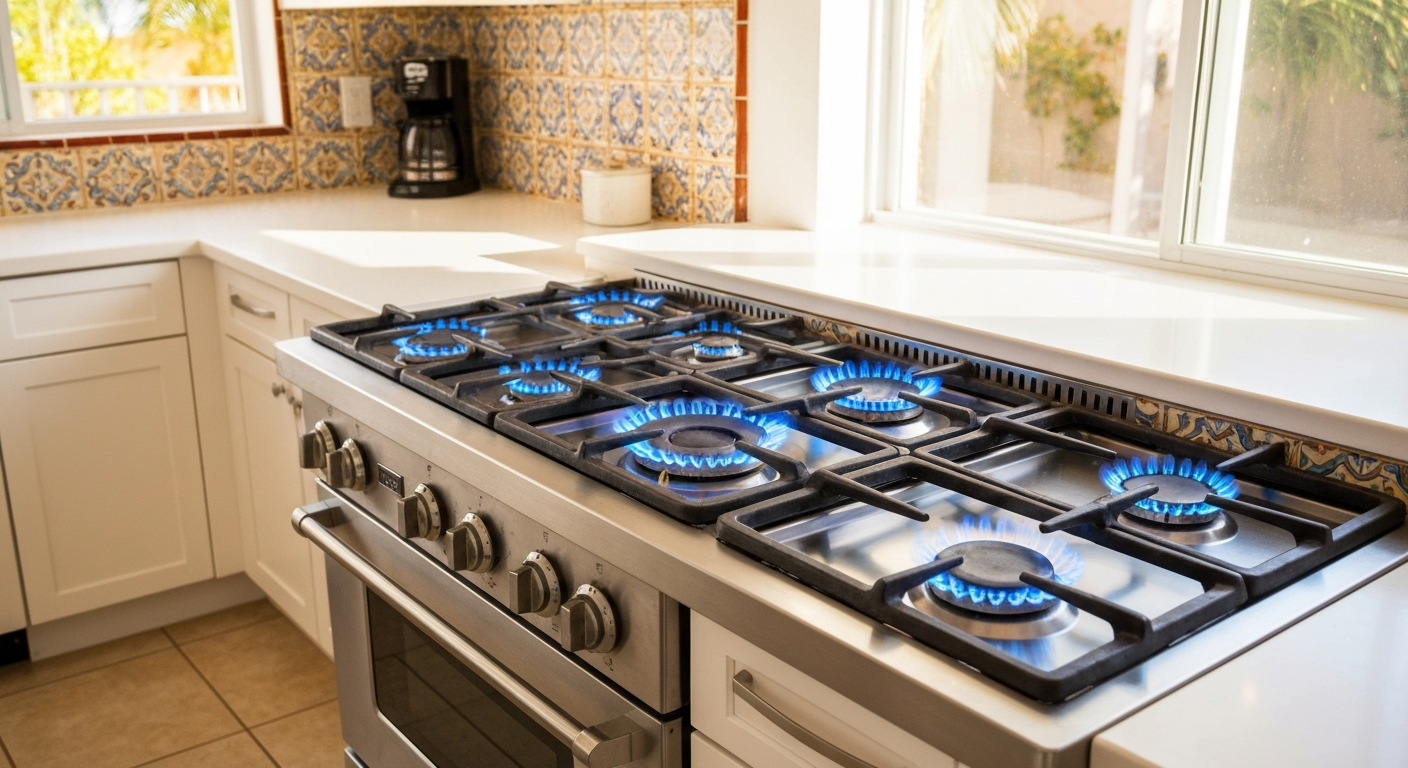
Gas cooking delivers immediate, precise temperature control. Turn the knob and the heat responds instantly. High-BTU gas burners can achieve temperatures that electric ranges cannot, essential for techniques like high-heat searing, wok cooking, and rapid boiling. The visible flame gives you intuitive feedback about heat intensity that no electric stove can replicate. Professional chefs overwhelmingly prefer gas cooking for these reasons. Restaurant kitchens in Puerto Rico run on propane. That preference is based on real performance differences, not tradition.
Electric:
Electric coil and smooth-top ranges heat more slowly and retain heat longer than gas burners. Temperature adjustment is less immediate. The lack of visible flame means you're estimating heat rather than seeing it. Induction electric ranges offer faster response than coil or radiant elements, but still don't replicate gas cooking feel.
Winner: Propane. Immediate response, higher heat ceiling, intuitive control.
Round 2: Cost , Purchase and Operation
Purchase cost: A standard 4-burner propane range costs $400 to $1,200. A comparable electric range costs $350 to $1,100. Purchase prices are essentially equivalent across comparable quality tiers.
Operating cost in Puerto Rico: This is where propane's advantage is clear. AEE electricity rates of $0.22 to $0.32 per kWh make electric cooking expensive. A household cooking daily on an electric range uses approximately 500 to 700 kWh per year for cooking, costing $110 to $224 per year at AEE rates.
The same household on a propane range uses approximately 35 to 50 gallons of propane per year for equivalent cooking. At $4.00 per gallon, that's $140 to $200 per year.
Winner: Tie on purchase cost. Slight edge to propane on operating cost.
Round 3: Outage Resilience , The Puerto Rico Factor
This is the comparison that matters most in Puerto Rico, and it's not close.
Propane stove during a power outage:
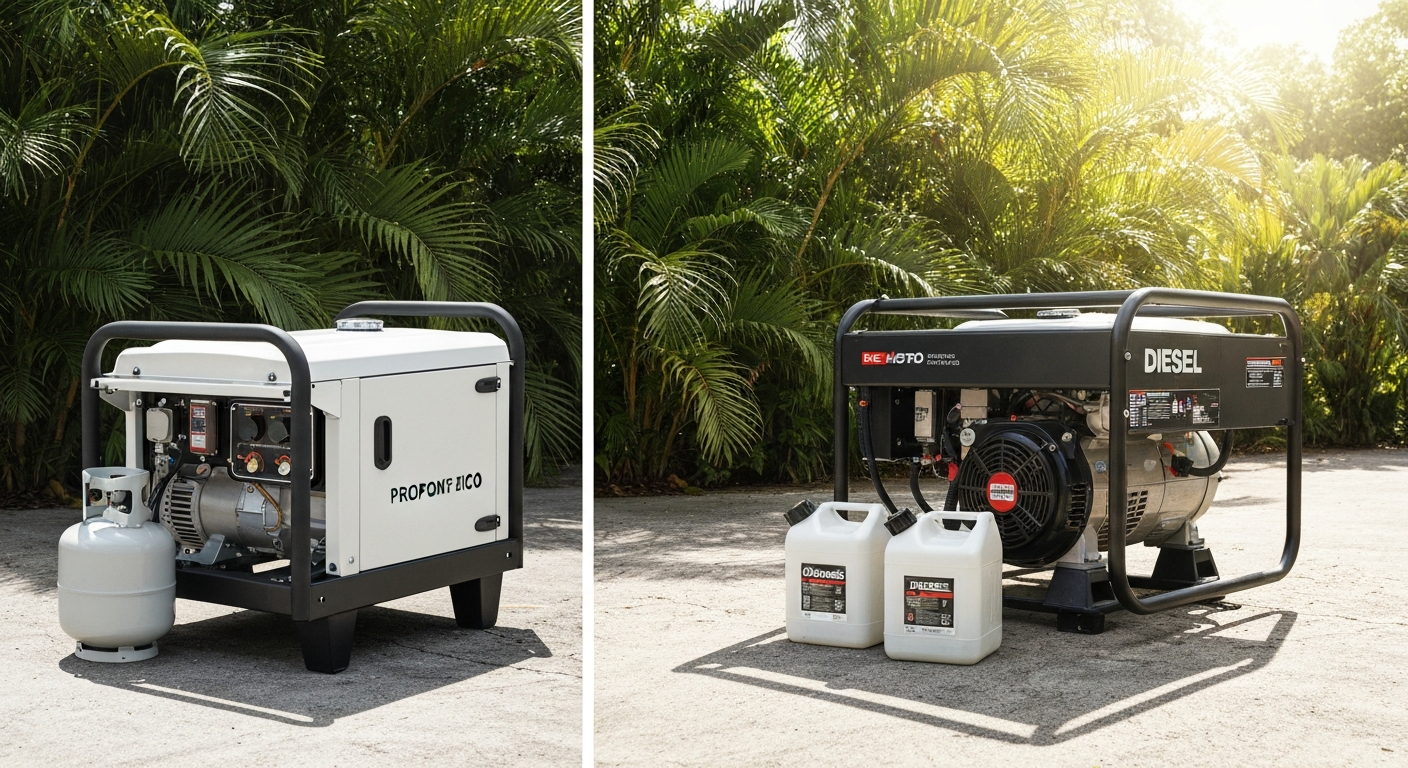
Your propane range operates completely independently of the AEE grid. When the power goes out, your stove keeps cooking. You light the burner with a match or lighter if the electronic ignition is out, and you cook exactly as normal. During extended post-hurricane outages that last days or weeks, your propane kitchen is fully operational.
Electric stove during a power outage:
Your electric stove is completely inoperable without grid power. No electricity means no cooking. During an extended outage, you're limited to a portable camping stove, a charcoal grill outside, or whatever neighbors with propane will share.
Winner: Propane. Decisive advantage in Puerto Rico's outage environment.
Round 4: Installation Requirements
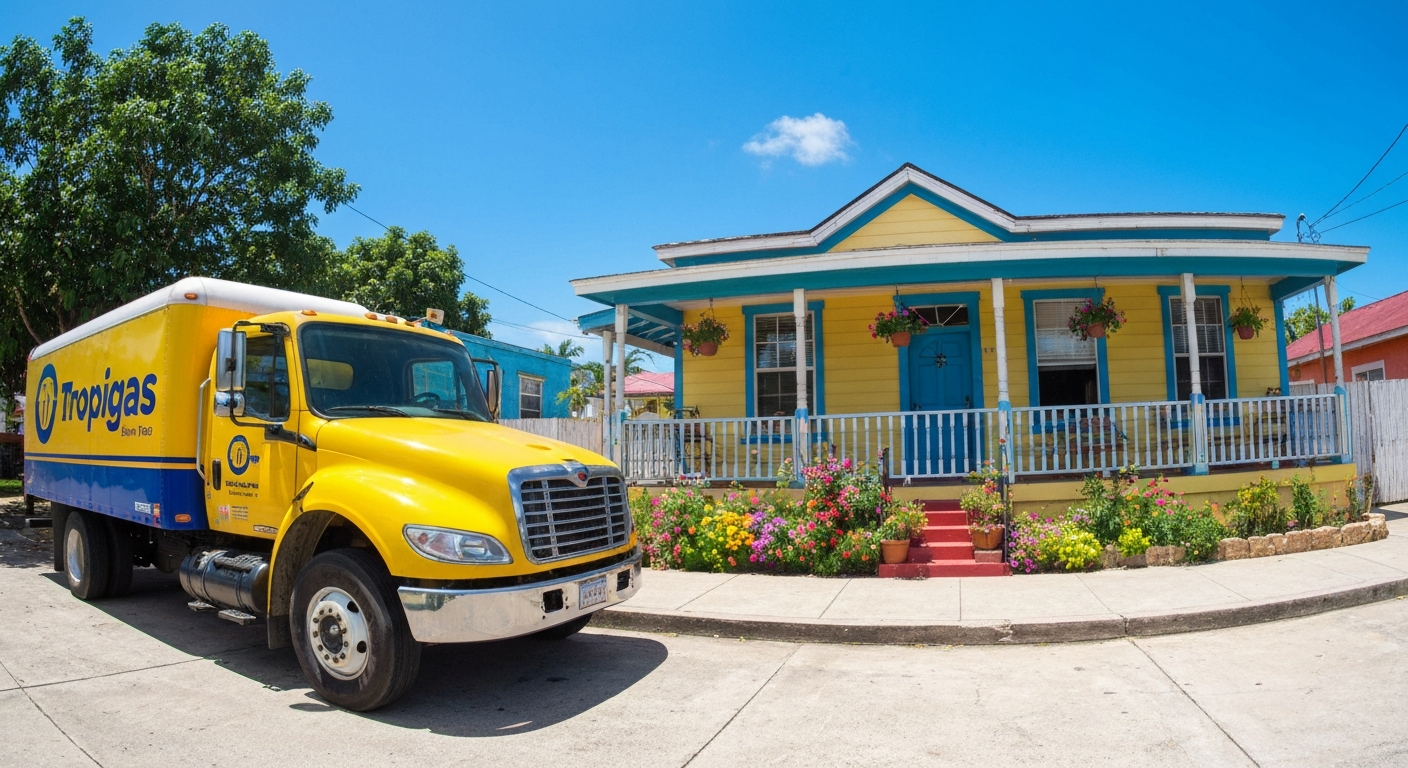
Propane stove installation: If you have existing propane service, adding a range requires running a gas line from your supply to the kitchen location, installing a shutoff valve, and connecting the range with a flexible connector. Tropigas installs this complete connection for $300 to $700 depending on gas line length and complexity. A pressurized leak test certifies the installation before first use.
Electric stove installation: A standard 240-volt outlet is required for an electric range. Most Puerto Rico homes already have this. If the outlet is present, an electric range is essentially plug-and-play.
Winner: Electric for simplicity if no propane system exists. Propane if a system is already in place.
Round 5: Maintenance and Longevity
Propane range maintenance: Gas ranges have fewer electronic components than modern electric ranges. The burners, grates, and ignitors are the primary maintenance items. Cleaning gas grates requires more effort than wiping a smooth-top electric surface, but gas ranges are generally more durable and easier to repair when something goes wrong.
Electric range maintenance: Smooth-top electric ranges are easy to clean but can crack if a heavy object is dropped on the surface. Electric coil elements are inexpensive to replace. Modern electric ranges with extensive electronic controls can have higher repair costs.
Winner: Tie. Both require similar maintenance effort over a typical appliance lifespan.
The Bottom Line
| Factor | Propane | Electric |
|---|---|---|
| Cooking performance | ✓ Superior | Adequate |
| Purchase cost | Equal | Equal |
| Operating cost | ✓ Slightly lower | Higher |
| Works during outages | ✓ Yes, always | ✗ No |
| Installation complexity | Requires gas line | Plug-and-play |
| Maintenance | Similar | Similar |
| Chef preference | ✓ Strongly preferred | Less preferred |
Making the Switch to Propane Cooking
Call 787-641-8002 to schedule your free evaluation and get a complete cost estimate for switching your kitchen to propane.
Call 787-641-8002Frequently Asked Questions
Ing. Rodolfo Leo Quiñones
Operations, Sales and Export Manager , Tropigas / Tropigas SXM
Expert in propane energy systems, NFPA compliance, and industrial gas logistics in Puerto Rico and the Caribbean.