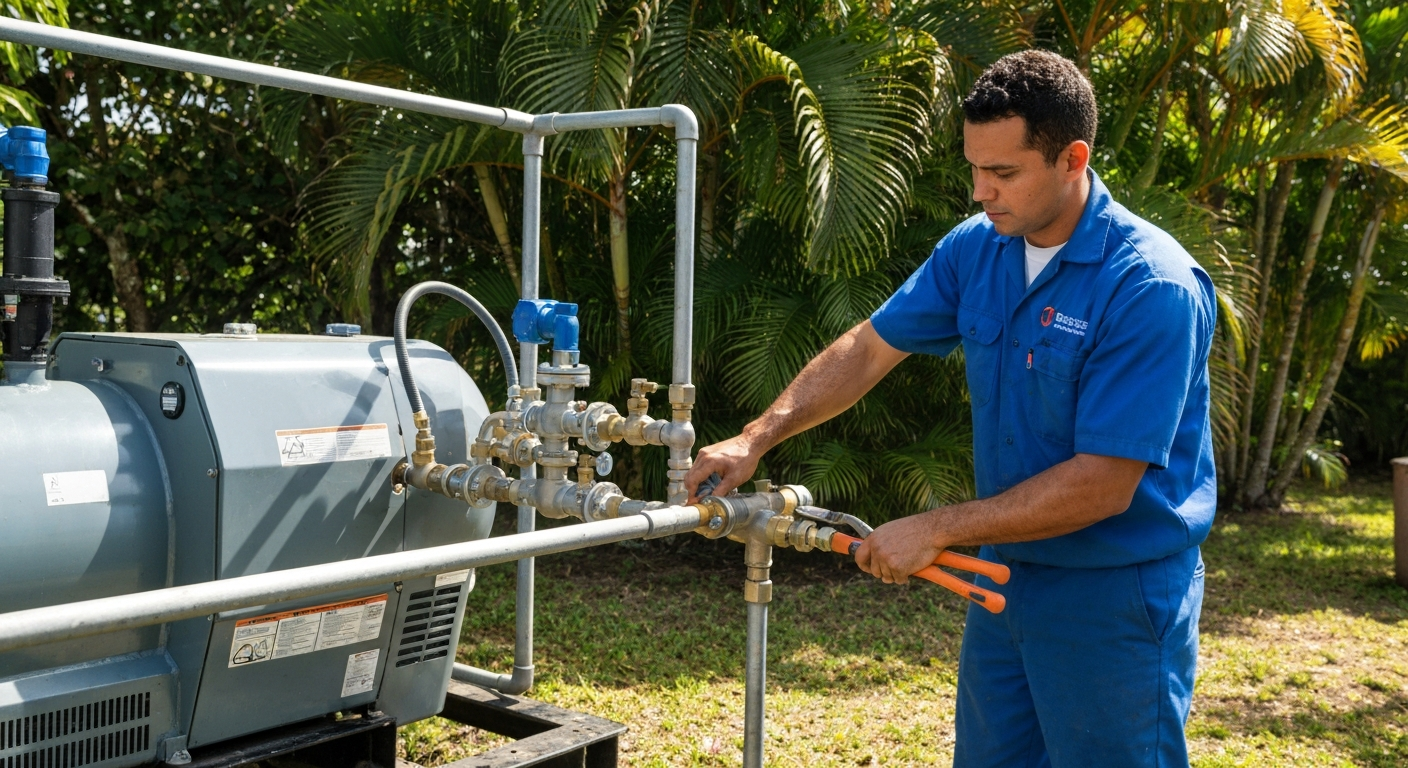
The gas line connecting your propane tank to your generator is one of the most critical components of your backup power system. Get it right and you have a safe, reliable fuel supply that works every time. Get it wrong and you have a safety hazard, a failed inspection, and a generator that may not start when you need it.
This guide covers what's involved in a propane gas line installation for generators in Puerto Rico, what the NFPA 54 code requires, and why this work should be performed by Tropigas certified technicians rather than as a DIY project.
Why Professional Installation Is Required
In Puerto Rico, gas line installation for propane systems must comply with NFPA 54 (National Fuel Gas Code). This code governs the design, materials, installation, and testing of all gas piping systems.
Beyond code compliance, there are practical safety reasons for professional installation:
- Improperly sized gas lines restrict fuel flow, causing your generator to run lean and potentially damaging the engine or causing unexpected shutdowns during an outage.
- Improper connections can create leaks that may not be immediately detectable but represent ongoing fire and explosion risk.
- Without a certified pressurized leak test (prueba de hermeticidad), you cannot know whether your system is properly sealed before you rely on it during an emergency.
What a Propane Line Installation for a Generator Involves
Step 1: System design and pipe sizing
The gas line must be sized to deliver adequate fuel flow to your generator at the correct pressure. Undersized pipe creates excessive pressure drop, starving the generator of fuel under load.
Tropigas engineers calculate the required pipe diameter based on your generator's BTU input rating, the length of the gas line run from tank to generator, and the number of bends and fittings in the line. These calculations follow NFPA 54 pipe sizing tables.
Step 2: Materials selection
For exterior propane gas lines in Puerto Rico's tropical environment, Tropigas uses materials appropriate for the island's climate:
- Black steel pipe with appropriate coatings for corrosion resistance in Puerto Rico's salt air environment.
- Corrugated stainless steel tubing (CSST) for flexible runs where steel pipe would be difficult.
- Approved fittings, valves, and connection hardware rated for LP gas service.
Step 3: Route planning
The gas line route from your propane tank to your generator must comply with NFPA 54 requirements, including adequate support and spacing, protection from physical damage, required clearances from electrical equipment, and protection where the line passes through walls or foundations.
Step 4: Installation
Certified Tropigas technicians install the complete gas line system, including all pipe runs, fittings, shutoff valves, flexible connectors at the generator, and connection to the generator's fuel inlet port.
Step 5: Pressurized leak test
Before your system is activated, a complete pressurized leak test verifies that every connection, fitting, and joint is properly sealed. The system is pressurized and monitored for pressure drop. This is the certification step that must be completed before your first delivery and generator startup.
Step 6: Documentation
Tropigas provides complete documentation of the installation, including materials used, as-built line routing, test results, and certification. This documentation is required for fire department inspections and building permits in most Puerto Rico municipalities.
Key NFPA 54 Requirements for Generator Gas Lines
- Pipe sizing: Gas lines must be sized to deliver adequate flow at proper operating pressure. Tropigas engineers calculate this for your specific generator and line length.
- Shutoff valve: A readily accessible manual shutoff valve must be installed in the gas line within 6 feet of the generator, upstream of the flexible connector.
- Flexible connector: A listed flexible metallic connector must be used between the rigid gas piping and the generator's fuel connection. This connector accommodates vibration from the generator without stressing the rigid piping.
- Support and protection: Gas piping must be supported at adequate intervals, protected from physical damage, and identified as a gas line where it passes through areas shared with other utilities.
- Leak test requirement: All new gas piping must be tested for leaks before being placed in service.
Common Installation Mistakes to Avoid
Using incorrect materials:
Not all piping materials are rated for LP gas service. PVC pipe, for example, is not approved for propane service. Using incorrect materials creates leaks and fails inspection.
Undersizing the pipe:
A gas line that's too small restricts fuel flow, causing your generator to underperform or fail under load precisely when you need full power.
Missing the shutoff valve:
Omitting the required manual shutoff valve near the generator is a code violation and a safety hazard.
Skipping the leak test:
Without a certified leak test, you don't know whether your installation is safe. Don't operate a propane system that hasn't been leak tested by a certified technician.
No flexible connector:
Connecting rigid pipe directly to the generator without a flexible connector allows engine vibration to stress rigid connections, potentially causing leaks over time.
How Long Does Installation Take?
For a straightforward residential generator gas line installation, where the propane tank is already in place and the generator is positioned nearby, the gas line installation typically takes 2 to 4 hours.
If the tank installation is also required, add 1 to 2 days for the complete tank and gas line installation. Permit processing adds additional time in municipalities that require permits, typically 3 to 10 business days.
Tropigas provides a complete installation timeline during your free site evaluation.
Get Your Free Installation Evaluation
Call 787-641-8002 to schedule your free site evaluation. A Tropigas engineer will visit your property, assess the optimal gas line route, calculate the correct pipe sizing, and provide a complete installation quote with no obligation.
Call 787-641-8002 to ScheduleIng. Rodolfo Leo Quiñones
Operations, Sales and Export Manager , Tropigas / Tropigas SXM
Expert in propane energy systems, NFPA compliance, and industrial gas logistics in Puerto Rico and the Caribbean.