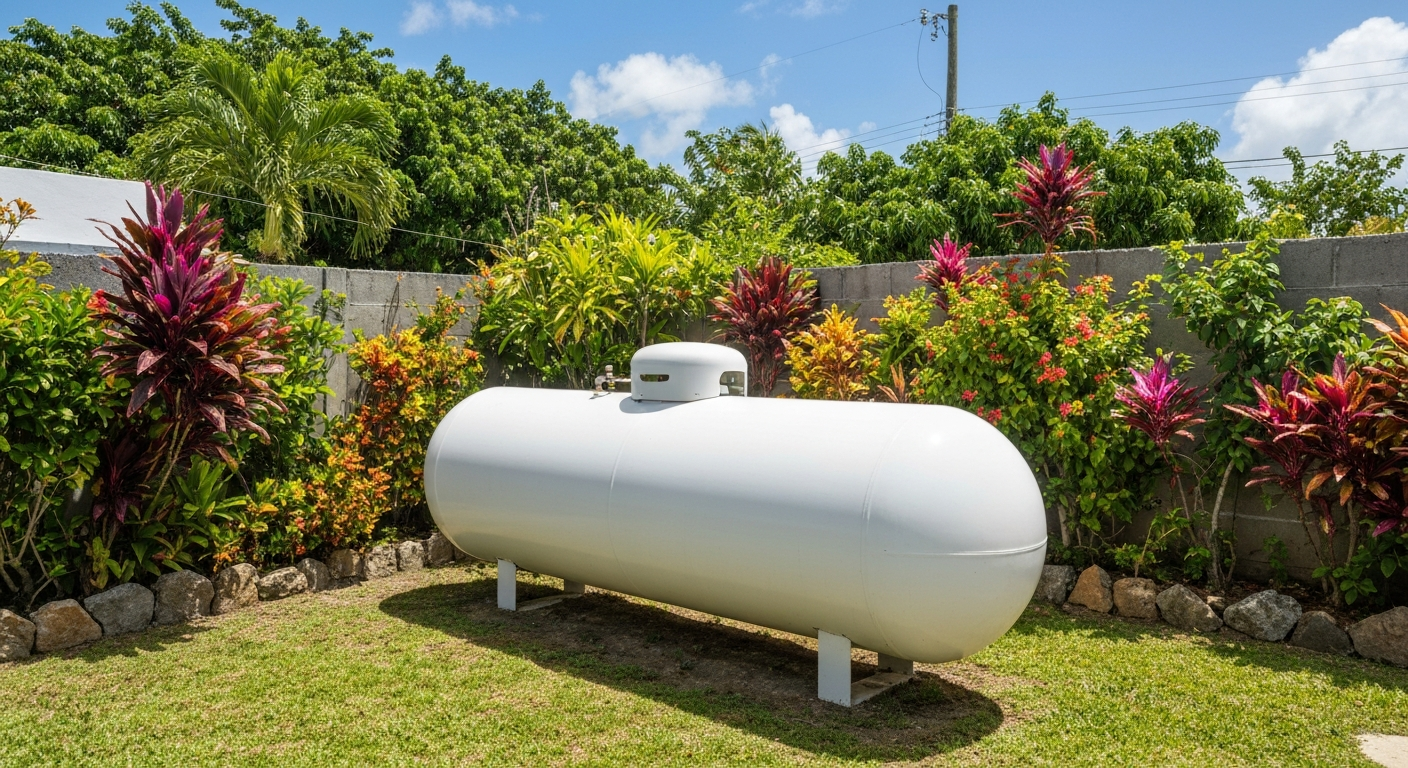
Short answer: No. Propane does not go bad.
This is one of propane's most significant advantages over gasoline and diesel, and it's particularly critical for Puerto Rico homeowners planning for hurricane season.
The Science: Why Propane Doesn't Degrade
Propane is a simple hydrocarbon molecule, C3H8. It's stored as a liquid under pressure in a sealed, airtight container. Because it's completely isolated from oxygen, moisture, and environmental contaminants, it cannot undergo the oxidation, moisture absorption, or microbial growth processes that degrade gasoline and diesel.
There is no chemical process that causes propane to break down or lose potency over time under normal storage conditions. A propane tank filled in 2020 contains propane that is just as effective as propane filled in 2026.
Comparing Shelf Life: Propane vs Other Fuels
| Fuel | Shelf Life | Degradation Risk in Puerto Rico's Climate |
|---|---|---|
| Propane | Indefinite | None — sealed container |
| Gasoline | 30 to 90 days | High — tropical heat accelerates degradation |
| Diesel | 6 to 12 months | High — humidity causes microbial growth |
| Ethanol-blended gas | 30 days | Very high — absorbs moisture rapidly |
Puerto Rico's tropical climate, high humidity, and temperature variation accelerate fuel degradation for liquid fuels stored in vented containers. Propane is completely immune to these effects.
What the 2017 Hurricane María Experience Proved
After Hurricane María, emergency management teams across Puerto Rico documented widespread generator failures. A significant cause, particularly for gasoline generators, was degraded fuel. Homeowners who had stored gasoline in advance discovered it had broken down during the months of normal generator inactivity preceding the storm.
Propane users didn't have this problem. A tank filled in May 2017 contained perfectly usable propane in September 2017 when María struck, and continued to provide fuel throughout the months-long outage that followed.
⚠️ The One Caveat: Tank Integrity
While propane itself doesn't degrade, the tank and valve system it's stored in requires maintenance. Old or corroded tanks, damaged valves, and faulty regulators can develop leaks, compromising your fuel supply regardless of the propane's quality. This is why Tropigas recommends annual system inspections before hurricane season every May. Your propane is fine. Your tank infrastructure needs regular checking.
Practical Implications for Puerto Rico Hurricane Preparedness
Because propane doesn't degrade, you can fill your tank at any time and know it will be ready when needed. Tropigas recommends:
- Fill before June 1 every year. Don't wait for a storm warning. Fill your tank to maximum capacity (90% standard in Puerto Rico, 80-85% in summer) at the beginning of hurricane season. The propane will be just as good in November as it is in June.
- Don't let storms drive your fill schedule. The worst time to try to fill your propane tank is in the 48 hours before a hurricane. Tropigas plants serve thousands of customers at once during storm warnings. Fill early, fill often.
- Set up scheduled deliveries. Tropigas scheduled delivery program keeps your tank at optimal levels year-round without any action on your part.
Ready for Hurricane Season?
Call 787-641-8002 to schedule your pre-hurricane season fill and to enroll in scheduled deliveries.
Call 787-641-8002Ing. Rodolfo Leo Quiñones
Operations, Sales and Export Manager , Tropigas / Tropigas SXM
Expert in propane energy systems, NFPA compliance, and industrial gas logistics in Puerto Rico and the Caribbean.