Yes, in most cases you can, and for Puerto Rico homeowners, it's often one of the smartest upgrades you can make to your existing backup power system.
Converting a gasoline generator to propane eliminates the fuel degradation problem that caused so many generator failures during Hurricane María. It gives you propane's indefinite shelf life, cleaner combustion, and safer storage without replacing your entire generator.
This guide explains what's involved, which generators can be converted, what it costs, and when replacement makes more sense than conversion.
How a Gasoline-to-Propane Conversion Works
Gasoline and propane are both hydrocarbons that power internal combustion engines. Converting a gasoline generator to propane means modifying the fuel delivery system so the engine receives propane vapor instead of atomized gasoline.
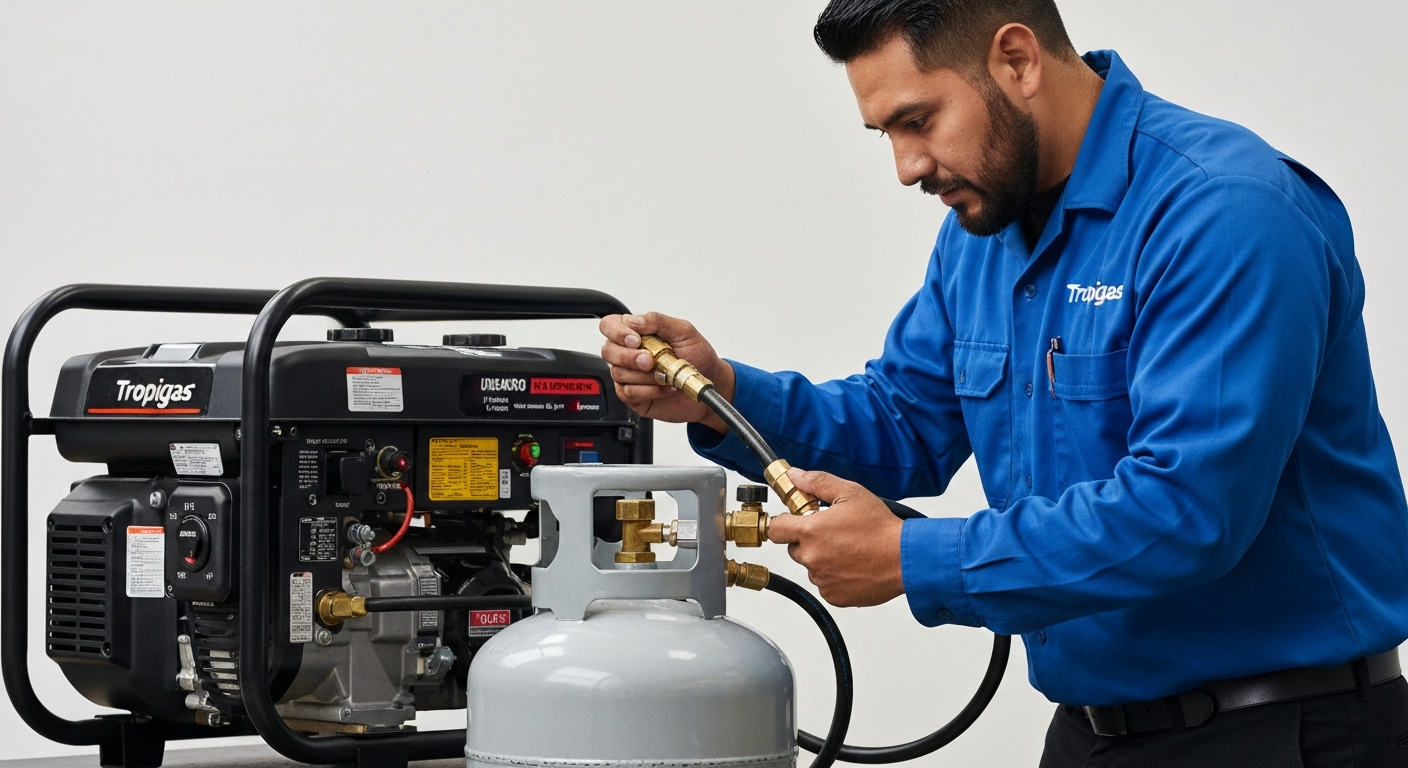
What a conversion kit includes:
A standard gasoline-to-propane conversion kit for a portable generator typically includes a propane carburetor or fuel mixer, a propane regulator, a hose connecting the regulator to your propane cylinder, and all necessary fittings and hardware.
For larger standby generators, conversion kits are more complex and typically include an electronically controlled gas valve, a dedicated propane regulator sized for the generator's BTU demand, and connections compatible with a fixed propane tank system.
Which Generators Can Be Converted?
Portable gasoline generators (most common in Puerto Rico):
Most standard portable generators, including Honda, Generac, Champion, and DuroMax models commonly sold in Puerto Rico, can be converted to propane using aftermarket dual-fuel kits. These kits are designed for specific engine families and are widely available.
A dual-fuel conversion makes your generator capable of running on either gasoline or propane, giving you maximum fuel flexibility. This is popular in Puerto Rico because it provides propane's storage advantages while retaining the ability to use gasoline if needed.
Standby generators:
Most standby generators designed for natural gas can be converted or reconfigured for propane operation with a factory-approved conversion kit. Generators already designed for LP (liquefied petroleum) gas, including propane, need no conversion.
⚠️ What cannot be converted:
Some generators have engine designs that are not compatible with propane conversion, particularly very old or heavily worn engines. Generators with electronic fuel injection systems designed specifically for gasoline may be difficult or impractical to convert.
Dual-Fuel vs Propane-Only Conversion
Dual-fuel conversion:
Your generator runs on either gasoline or propane, switchable with a valve. This is the most popular conversion type for portable generators in Puerto Rico because it provides propane's storage advantages while retaining gasoline as a backup option.
Propane-only conversion:
Some conversions replace the gasoline carburetor entirely with a propane-specific unit. This typically provides better propane performance but eliminates gasoline as a backup fuel.
For most Puerto Rico homeowners, dual-fuel conversion is the practical choice, giving maximum flexibility for different emergency scenarios.
Performance After Conversion
It's important to understand that propane conversion typically results in a slight reduction in power output, generally 5% to 15% compared to gasoline operation. This occurs because propane has a different energy density than gasoline per unit of air-fuel mixture.
For most residential backup power applications in Puerto Rico, this power reduction is not meaningful. A generator rated at 5,000 watts on gasoline may produce 4,400 to 4,750 watts on propane, still sufficient for essential home backup loads.
For applications where maximum power output is critical, consider whether a propane-optimized generator might be a better option than converting an existing gasoline unit.
The Cost of Conversion
- DIY dual-fuel kit for portable generator: $100 to $300
Most reputable conversion kits for common portable generator models include detailed installation instructions and can be installed by a mechanically inclined homeowner in 1 to 2 hours. - Professional installation of conversion kit: $200 to $500 labor
For homeowners who prefer professional installation or have generators with more complex fuel systems, Tropigas can evaluate your generator and recommend a certified technician for the conversion. - Complete propane fuel system (tank, regulator, lines): $800 to $2,500
Once your generator is converted, you need a propane fuel supply, either a fixed tank installed by Tropigas or portable cylinders. A fixed tank system provides the most reliable and cost-effective fuel supply for regular use.
When Replacement Makes More Sense Than Conversion
Converting your gasoline generator to propane makes sense if your generator is in good mechanical condition, less than 8 to 10 years old, and sized appropriately for your current power needs.
Consider replacing rather than converting if:
- Your generator is aging and showing mechanical problems. Converting a failing generator adds cost without solving the underlying reliability problem.
- Your generator is undersized for your current needs. A 3,500-watt generator that can't power your central AC system won't meet your needs after conversion either.
- You want automatic standby operation. Portable generators, converted or not, require manual operation. A propane standby generator with automatic transfer switch provides the hands-free backup that many Puerto Rico homeowners ultimately prefer.
The Tropigas Connection
Whether you convert an existing generator or install a new propane standby system, Tropigas provides the complete fuel infrastructure: tank installation, gas line runs, regulator sizing, and ongoing scheduled deliveries.
Call 787-641-8002 for a free evaluationIng. Rodolfo Leo Quiñones
Operations, Sales and Export Manager , Tropigas / Tropigas SXM
Expert in propane energy systems, NFPA compliance, and industrial gas logistics in Puerto Rico and the Caribbean.