You've decided propane is the right generator fuel for Puerto Rico. Smart decision. Now comes the next question: should you install a permanent standby generator system — or use a portable propane generator?
Both options run on propane. Both can provide backup power during Puerto Rico's frequent outages. But they're designed for very different situations, and choosing the wrong one can mean the difference between a true whole-home backup solution and a partial fix that leaves you frustrated during the next extended outage.
This guide breaks down exactly what each option provides — and which one makes sense for your home and budget.
What Is a Standby Generator?
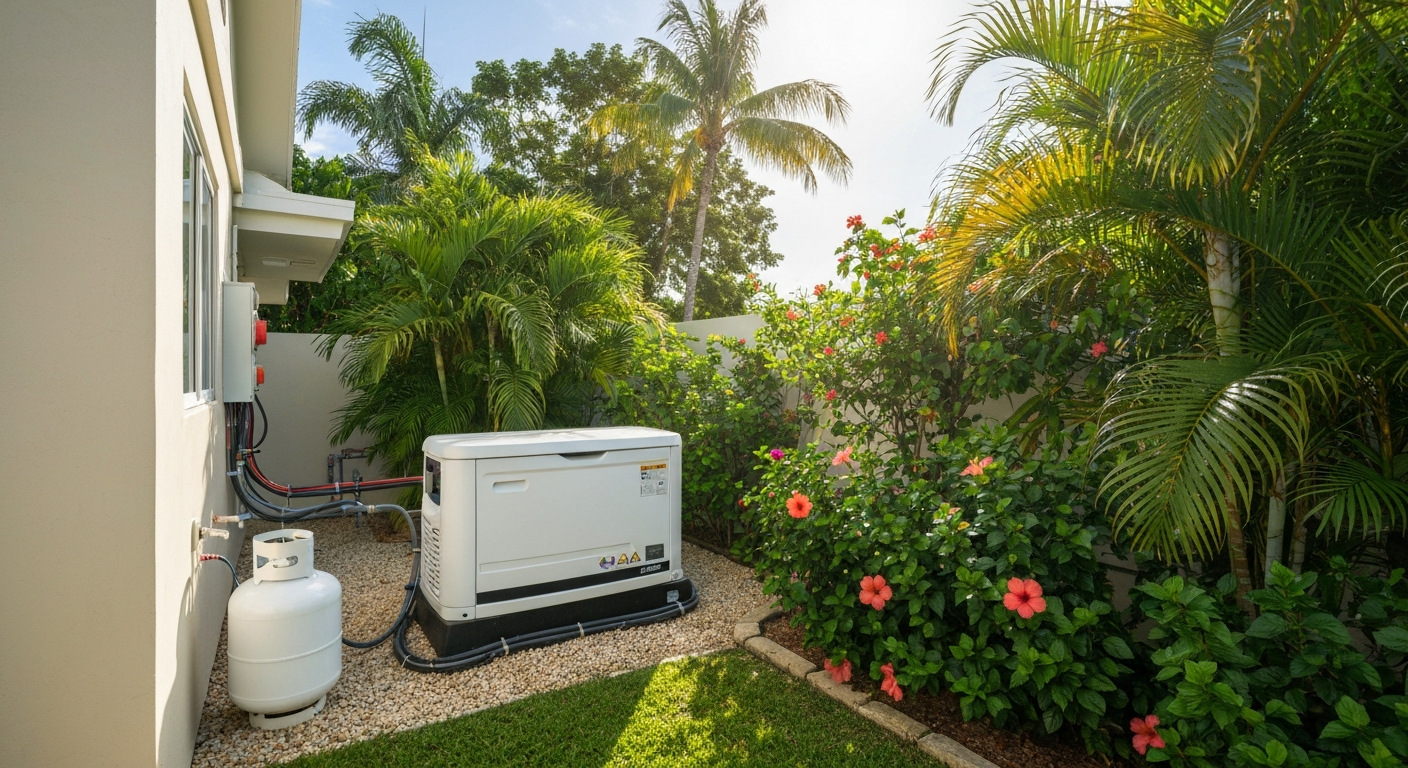
A standby generator is a permanently installed backup power system connected directly to your home's electrical panel and your propane fuel supply. It sits outside your home — typically on a concrete pad next to your propane tank — and monitors your electrical supply continuously.
When the power goes out, the standby generator detects the outage within seconds and automatically starts up, switching your home to generator power without any action on your part. When grid power returns, it automatically shuts down and returns your home to AEE power.
Key characteristics:
- Permanently installed on your property
- Automatically starts during outages — no action required
- Connected to your fixed propane tank
- Powers your entire home or selected circuits
- Capacities from 7 kW to 20+ kW for residential use
- Requires professional installation by certified technicians
- Higher upfront cost — $3,000 to $15,000+ installed
What Is a Portable Propane Generator?
A portable propane generator is a movable unit that runs on propane cylinders — typically 20-pound or 100-pound cylinders. You connect the cylinder, pull a cord or push a button to start it, and run extension cords to the appliances you want to power.
Key characteristics:
- Movable — can be used anywhere
- Manual start required during outages
- Powered by portable propane cylinders
- Powers selected appliances via extension cords or transfer switch
- Capacities from 3,500 watts to 10,000 watts
- Can be purchased without professional installation
- Lower upfront cost — $500 to $2,000
The Key Differences — Side by Side
| Factor | Standby Generator | Portable Generator |
|---|---|---|
| Activation | Automatic — seconds after outage | Manual — you must start it |
| Power coverage | Whole home or selected circuits | Selected appliances only |
| Fuel source | Fixed propane tank | Portable propane cylinders |
| Capacity | 7–20+ kW | 3.5–10 kW |
| Installation | Professional required | DIY possible |
| Upfront cost | $3,000–$15,000+ | $500–$2,000 |
| Noise level | Lower — enclosed unit | Higher — open frame |
| Weather protection | Yes — permanent enclosure | No — must store indoors |
| Maintenance | Annual professional service | User-performed |
| Hurricane readiness | Highest — automatic, sealed fuel | Moderate — manual, cylinder supply |
Round 1: Automatic vs Manual Operation
Standby: Fully automatic
When your AEE power goes out — whether you're home, at work, or asleep at 3 AM — your standby generator starts automatically within 10 to 30 seconds. No action required. Your lights, air conditioning, refrigerator, and medical equipment keep running without interruption.
This matters enormously in Puerto Rico, where outages happen without warning at any hour. A standby system means your family never wakes up to a dark, hot house with a dead refrigerator.
Portable: Manual start required
When the power goes out, you need to be home, go outside, connect your cylinder if it isn't already connected, and start the generator manually. In a post-hurricane scenario — rain, debris, darkness, stress — this is harder than it sounds. If you're not home when the power goes out, nothing happens until you return.
Round 2: Power Coverage
Standby: Whole-home power
A properly sized standby generator — typically 10 kW to 20 kW for a Puerto Rico home — can power your entire home simultaneously: air conditioning, refrigerator, lights, water heater, washer, medical equipment, and security systems. Life continues normally during an outage.
Portable: Selective appliance power
A portable generator powers whatever you connect to it via extension cords — up to its wattage limit. A 5,000-watt portable can run a refrigerator, a few lights, a fan, and phone chargers simultaneously. It cannot power central air conditioning, an electric water heater, or multiple large appliances at once.
For a family with medical equipment, a home business, or simply the expectation of normal comfort during an extended outage, a portable's selective coverage is a significant limitation.
Round 3: Fuel Supply During Hurricane Season
Standby: Fixed tank — sealed and ready
Your standby generator connects to a fixed propane tank — 250, 500, or 1,000 gallons — installed on your property. Before hurricane season, Tropigas fills your tank to maximum capacity (80% per NFPA 58). When the storm hits, your fuel is sealed on your property, completely independent of supply chains.
A 500-gallon tank running a 20 kW generator at moderate load provides approximately 7 to 10 days of continuous operation — enough for the longest post-hurricane outage scenarios Puerto Rico has experienced.
Portable: Cylinder supply — vulnerable post-storm
Portable propane generators run on 20-pound or 100-pound cylinders. Before a major storm, you're competing with every other Puerto Rico resident trying to fill cylinders simultaneously. Post-storm, getting cylinders refilled requires functioning roads and open Tropigas plants.
You can pre-fill multiple cylinders — but storing multiple large propane cylinders on your property has its own safety considerations, and the supply is still finite.
Ready to install a reliable backup system?
Our experts can help you determine the exact system size and tank required for your home.
Call 787-641-8002Round 4: Cost Comparison
Portable propane generator — total cost:
- Generator purchase: $500–$2,000
- Cylinders (100 lb x 3): ~$150
- Transfer switch (recommended): $500–$1,500
- Installation of transfer switch: $300–$800
- Total: $1,450–$4,450
Standby propane generator — total cost:
- Generator unit: $2,000–$8,000
- Propane tank (250 gal): $800–$1,500
- Professional installation: $1,000–$3,000
- Electrical panel connection: $500–$1,500
- Total: $4,300–$14,000+
The standby system costs significantly more upfront. But consider what you get: automatic whole-home protection, professional installation, certified leak testing, a multi-year warranty on the generator, and Tropigas's ongoing service relationship.
For Puerto Rico homeowners who have experienced multiple extended outages, the cost of a standby system is frequently justified by the value of what it protects — food inventory, business continuity, comfort and safety of family members with medical needs, and peace of mind.
Round 5: Installation & Safety
Standby installation:
Standby generators require professional installation by certified technicians. The electrical connection to your home's panel requires a licensed electrician and a transfer switch. The propane system requires NFPA 58 and NFPA 54 compliant installation by Tropigas certified technicians. Permits may be required depending on your municipality.
This professional installation process also means your system is inspected, tested, and certified — significantly reducing the risk of improper operation.
Portable safety considerations:
Portable generators — propane or gasoline — must be operated outdoors in well-ventilated areas. Even propane portables produce combustion gases that require ventilation. They should never be operated in garages, enclosed porches, or near windows.
⚠️ Warning: Without a transfer switch, running a portable generator without proper electrical isolation creates backfeed risk — a serious hazard for utility workers restoring power after a storm.
Which Is Right for You?
Choose a standby generator if:
- ✓ You need whole-home backup power
- ✓ You have family members with medical equipment
- ✓ You run a home business that requires continuous power
- ✓ You're frequently away from home
- ✓ You've experienced multiple extended outages and want a permanent solution
- ✓ Budget allows for higher upfront investment
Choose a portable propane generator if:
- ✓ You need selective appliance backup for occasional short outages
- ✓ Budget is the primary constraint
- ✓ You rent your home or plan to move
- ✓ You need portability for job sites or outdoor use
- ✓ You want propane's fuel advantages with a lower initial investment
The hybrid approach:
Some Puerto Rico homeowners use both — a standby system for whole-home protection plus a portable for flexibility. This is particularly common for properties with outbuildings, boats, or job site requirements.
Tropigas Serves Both Solutions
Whether you choose a standby or portable propane solution, Tropigas has you covered:
- For standby systems: Complete installation of the propane fuel system — tank, regulator, gas lines, and generator connection — by certified technicians to NFPA 58 and NFPA 54 standards. Scheduled deliveries ensure your tank is always ready.
- For portable systems: Propane cylinder sales and refills at all 23 Tropigas plants across Puerto Rico. Fast, convenient cylinder exchange so your portable is always fueled when you need it.
Call 787-641-8002 to discuss which solution is right for your home. Our team provides free consultations and site evaluations with no obligation.
Ing. Rodolfo Leo Quiñones
Operations, Sales and Export Manager — Tropigas / Tropigas SXM
Expert in propane energy systems, NFPA compliance, and industrial gas logistics in Puerto Rico and the Caribbean.