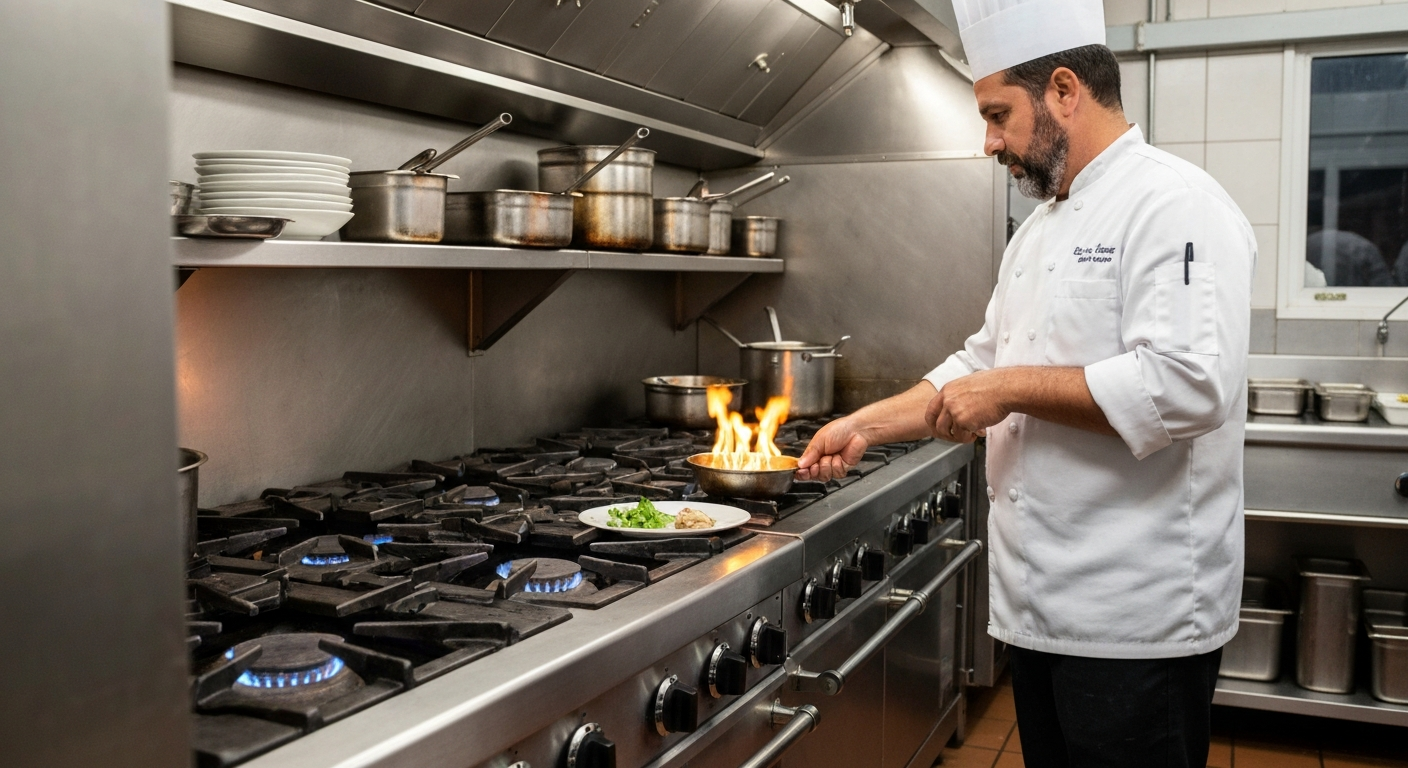
Propane Systems for Restaurants in Puerto Rico
Complete propane systems for restaurant kitchens. Superior cooking performance and business continuity during outages.
Ask any professional chef in Puerto Rico what fuel they prefer for their kitchen, and the answer is almost always gas. Immediate temperature response. Visible flame for intuitive cooking adjustments. Superior high-heat performance for searing, wok cooking, and flash sauteeing. The cooking characteristics that professional kitchens demand are characteristics that only gas delivers.
In Puerto Rico, where the AEE grid averages over 100 outages per year and where a power outage during dinner service means hundreds of dollars in lost revenue and a dining room full of disappointed guests, propane adds a second critical advantage: your kitchen keeps cooking when the grid goes down.
Tropigas has equipped Puerto Rico restaurants with propane systems for over 60 years. From the smallest neighborhood fonda to the largest hotel banquet kitchen, we design, install, and supply complete propane fuel systems that keep professional kitchens running.
How Much Propane Does a Restaurant Kitchen Use?
| Kitchen Type | Typical Daily Consumption | Recommended Tank |
|---|---|---|
| Small restaurant, 6-burner range + oven | 5 to 15 gallons/day | 250 gallons |
| Medium restaurant, full commercial kitchen | 15 to 30 gallons/day | 500 gallons |
| Large restaurant, high-volume production | 30 to 60 gallons/day | 500 to 1,000 gallons |
| Hotel restaurant, banquet kitchen | 50 to 100 gallons/day | 1,000 gallons or bulk |
| Fast casual, limited kitchen | 3 to 10 gallons/day | 250 gallons |
Why Puerto Rico Restaurants Choose Propane
Superior cooking performance:
Professional chefs prefer gas for reasons that home cooks understand intuitively. The visible flame lets you see and feel the heat. Temperature changes are immediate. High-BTU commercial burners can achieve temperatures that electric ranges cannot, essential for wok cooking, searing, and high-volume production cooking.
Business continuity during outages:
This is the advantage that separates Puerto Rico restaurant operations with propane from those without it. When the AEE grid goes out, a restaurant with propane cooking equipment keeps cooking. The burners work. The ovens work. The fryers work. Your kitchen stays open while the restaurant across the street goes dark.
Reliability of supply:
Tropigas's scheduled delivery programs ensure your kitchen never runs out of fuel during service because of a miscalculated delivery schedule. For high-volume restaurants during peak season, this supply reliability is non-negotiable.
Lower operating cost:
Commercial kitchen propane costs are consistently lower than AEE electricity for cooking applications. Given the volume of cooking in a commercial kitchen operating 10 to 16 hours per day, the per-BTU cost advantage of propane over electricity translates to meaningful operational savings.
What a Complete Restaurant Propane System Includes
The propane tank:
Sized for your kitchen's daily consumption and your desired supply independence. Most restaurant operations require a 250-gallon minimum tank, with high-volume kitchens requiring 500 gallons to 1,000 gallons.
The regulator and pressure system:
Tropigas installs commercial-grade regulators sized for your kitchen's total BTU demand, ensuring every burner receives the pressure it needs even when all equipment is running simultaneously.
The gas line system:
Tropigas runs the complete gas line from your propane tank into your kitchen, sized per NFPA 54 specifications for your total BTU load. The system includes a main shutoff valve accessible from outside the kitchen.
Appliance connections:
Every piece of commercial cooking equipment is connected to the gas line with certified connections, individual shutoff valves, and flexible connectors. Each connection is leak-tested before commissioning.
Restaurant Propane and AEE Outages - The Business Case
The cost of closing during an outage:
A restaurant doing $3,000 per dinner service loses that revenue completely when forced to close due to an electric kitchen. At 3 extended outages per year, that's $9,000 in direct lost revenue. Add food spoilage, staff costs, and reputational impact, and the annual outage cost easily exceeds $15,000 for a mid-sized Puerto Rico restaurant.
The cost of staying open:
A propane system installation for a restaurant typically costs $3,000 to $8,000 depending on tank size, kitchen layout, and gas line length. Adding a propane generator for full business continuity adds $8,000 to $15,000. Total investment: $11,000 to $23,000.
The payback:
At $9,000 in recovered lost revenue per year from outage resilience alone, plus $200 to $500 per month in energy cost savings from propane vs. AEE electricity for cooking, a complete propane system pays back in 2 to 3 years.
Health Department and Fire Department Compliance
Health Department:
Commercial kitchen propane systems must be properly installed and certified. Health department inspectors in Puerto Rico verify propane system certification as part of food service facility inspections. Tropigas provides the certification documentation your health department requires.
Fire Department:
Propane systems above certain capacities require fire department inspection and approval in most Puerto Rico municipalities. Tropigas coordinates fire department inspections and provides all required documentation.
NFPA 58 and NFPA 54:
All Tropigas restaurant installations comply with both codes, and we provide complete documentation of compliance for your records and regulatory requirements.
Restaurant Propane Frequently Asked Questions
¿Listo para instalar tu sistema de propano?
Evaluación gratuita · Sin compromiso · Técnicos certificados NFPA