Quick answer
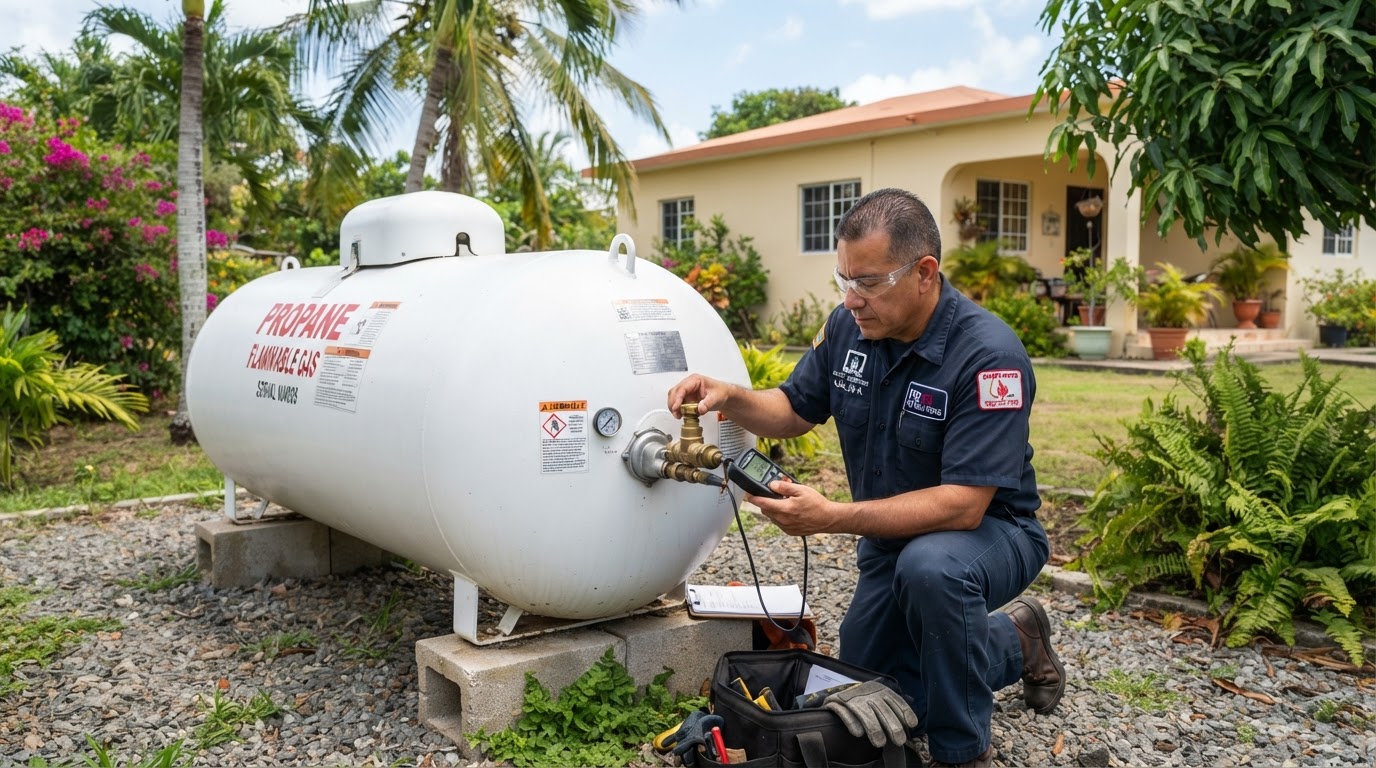
A propane tank safety inspection confirms the tank and system are safe and compliant: it includes a leak and pressure test, a check of the valve head and valves, a corrosion check, and, for cylinders, the date and requalification review. Tropigas performs it with NFPA certified technicians to NTSP regulation. Call 787-641-8002.
Tropigas de Puerto Rico is a propane distributor with more than 60 years of history and 23 plants across the island that performs safety inspections on residential and commercial tanks. The safety inspection is the formal check that certifies your system is fit to operate, distinct from the routine propane tank inspection.
- What it certifies
- That the tank and system are safe and compliant
- What it includes
- Leak and pressure test, valve head and valves, corrosion, cylinder requalification
- Standard / regulator
- NFPA 58 and 54, under NTSP regulation
- How often
- At least once a year; for cylinders, by date before refilling
- Who performs it
- NFPA certified technicians
- Phone
- 787-641-8002
What is a safety inspection and how does it differ from the routine one?
The safety inspection is the formal check that confirms the tank and system comply and are fit to operate, with a leak and pressure test and cylinder requalification where it applies. The routine propane tank inspection is the periodic maintenance check. Both matter: the routine one catches wear early, and the safety one certifies compliance.
What the safety inspection includes
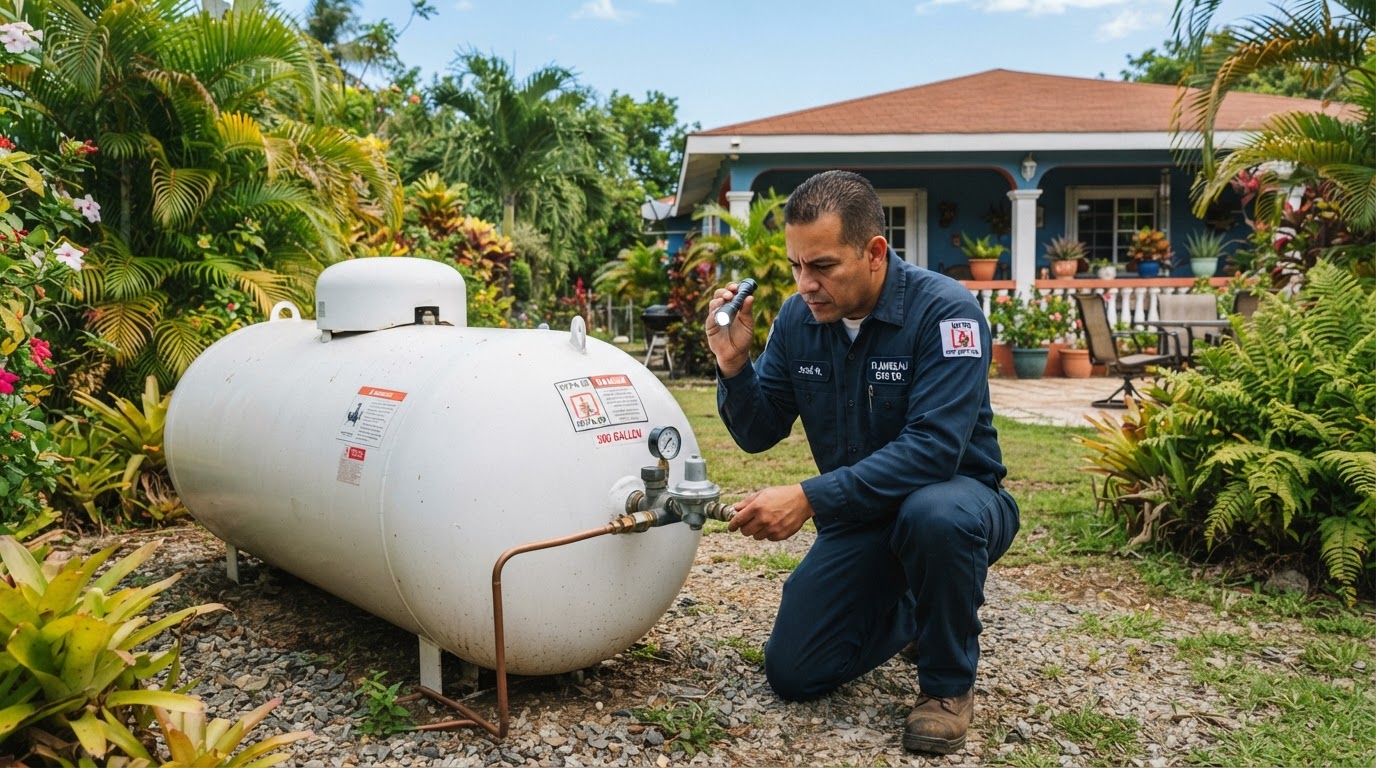
- Leak test at the tank, the lines, and the connections.
- Pressure test of the system to confirm it holds and does not drop.
- Check of the valve head, the regulator, and the valves, verifying condition and pressure.
- Corrosion check on the tank and fittings, critical because of salt air.
- For cylinders, review of the manufacture date and requalification per code before refilling.
- Verification of NFPA 58 safety clearances and compliance with NTSP regulation.
How often it is done
We recommend a safety inspection at least once a year for any propane system, and more often near the coast because of salt air corrosion. Portable cylinders are checked by their date and requalified per code before refilling. If you have a generator, add a check before hurricane season.
Why it matters
A system that does not pass the safety inspection is a fire and poisoning risk, and it can also affect your insurance and your compliance with the NTSP. The safety inspection gives you certainty that your tank is fit, and documents that it complies.
Schedule your safety inspection
- Call 787-641-8002 or email lquinones@tropigaspr.com.
- An NFPA certified technician performs the safety inspection of your tank and system.
- We report the findings and complete what you approve.
- We set recurring inspections to keep compliance.
If you smell gas, leave the area and call us right away at 787-641-8002.
Free evaluation, no commitment, NFPA certified technicians. Back to Propane Tank Services or call 787-641-8002 to begin.
Frequently asked questions about propane tank safety inspection

Ing. Rodolfo Leo Quiñones
Operations, Sales & Export Manager, Tropigas de Puerto Rico
Expert in propane energy systems, NFPA compliance, and industrial gas logistics in Puerto Rico and the Caribbean.