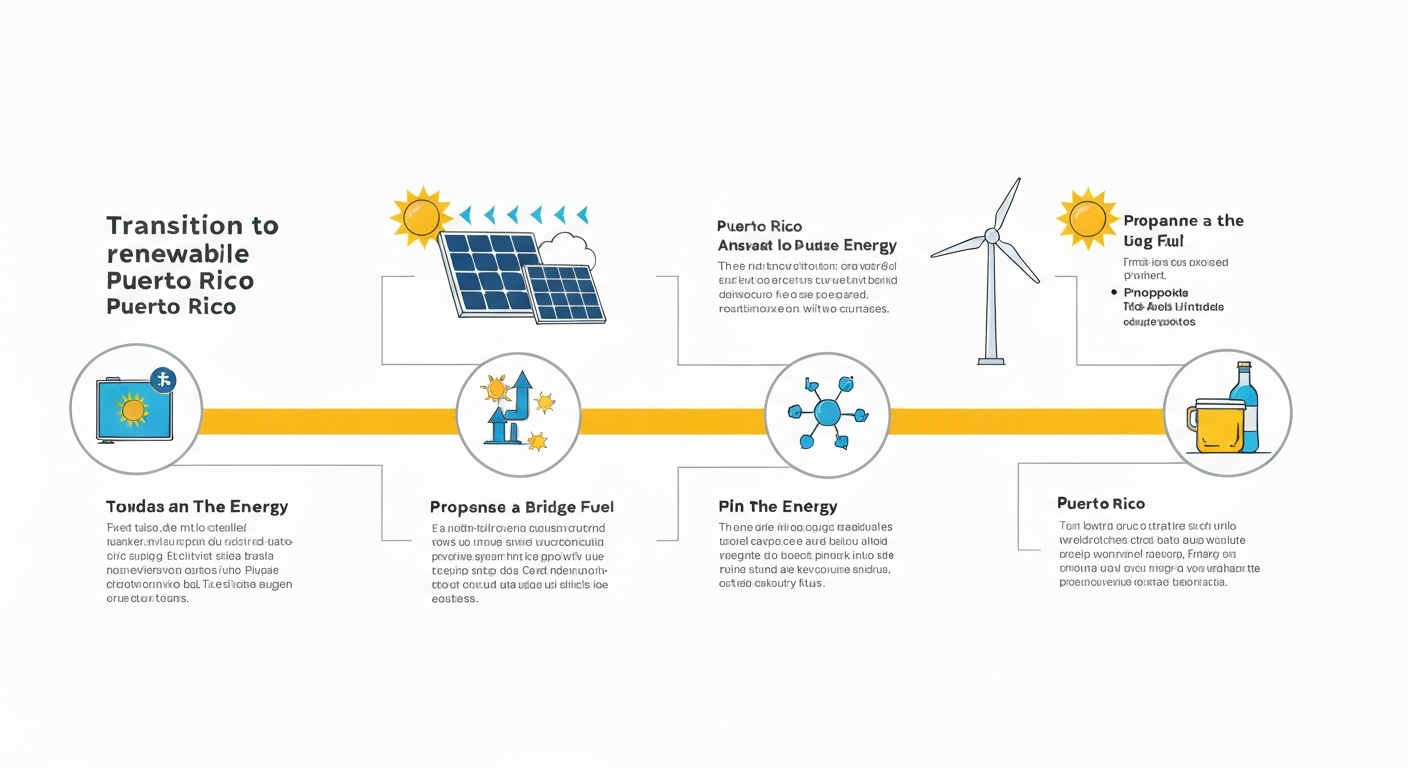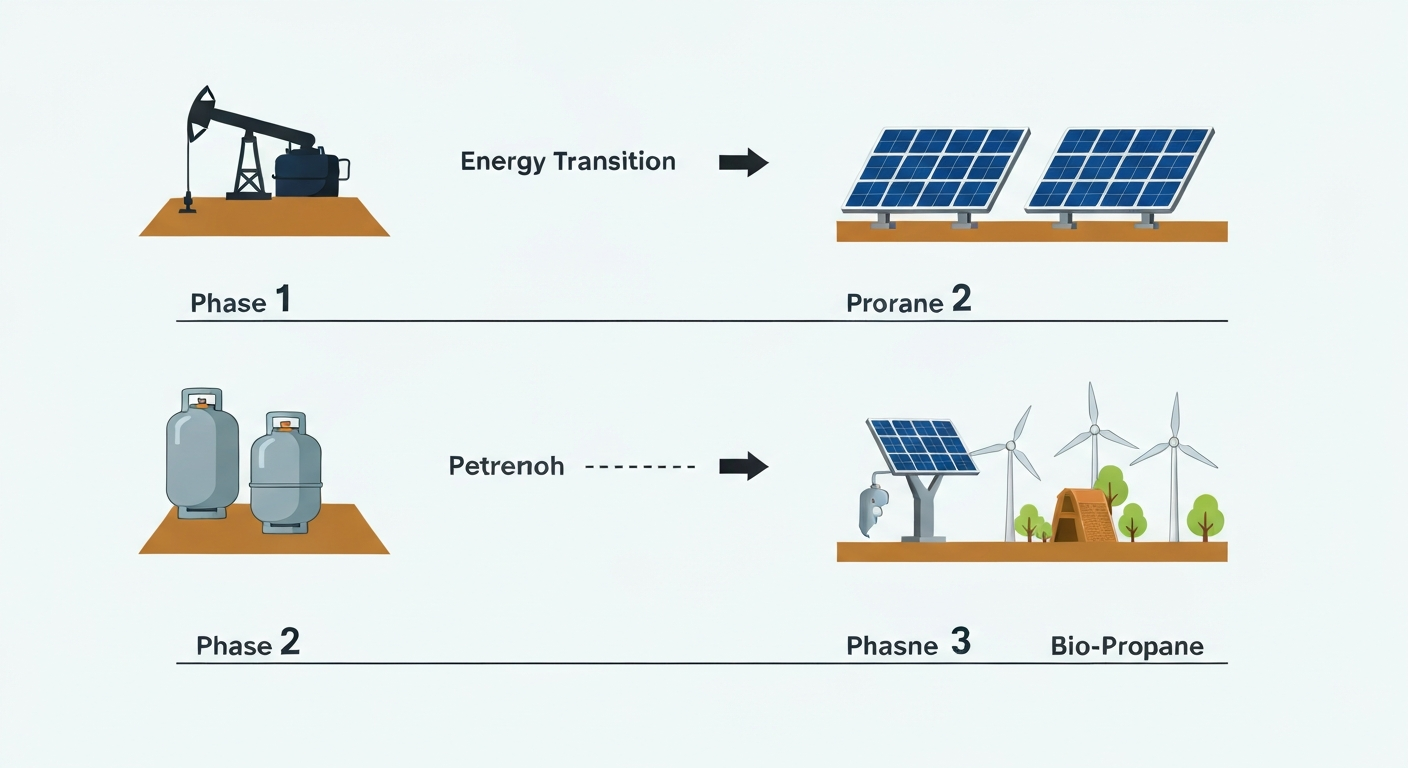
Puerto Rico is in the middle of a long-term energy transition from a petroleum-dominated electrical grid toward a renewable energy future. This transition will take decades. During that period, propane serves a specific and important function as a bridge fuel, providing cleaner, more reliable energy for Puerto Rico families while the island builds out the renewable infrastructure that Act 17-2019 envisions.
What Is a Bridge Fuel?
A bridge fuel is an energy source that is cleaner and more practical than what it replaces, even if it is not the ultimate long-term solution. Bridge fuels allow meaningful environmental and practical improvements today while longer-term renewable infrastructure is built.
In Puerto Rico's context, propane bridges the gap between dependence on petroleum-generated AEE electricity and a future grid powered primarily by solar, wind, and other renewables. For cooking and water heating specifically, switching from AEE electricity to propane today produces fewer lifecycle greenhouse gas emissions while delivering better performance and outage resilience.
Why Puerto Rico's Grid Makes Propane Cleaner Than AEE Electricity
Puerto Rico generates electricity primarily from petroleum at aging plants operating well below modern efficiency standards. When you account for the efficiency losses in generating electricity from petroleum and transmitting it to your home, only about 35% of the original fuel energy reaches your appliance as useful heat.
Propane burned directly in a water heater or stove converts 90% to 95% of its energy to useful heat at the point of use. For heating applications, propane produces fewer lifecycle greenhouse gas emissions per unit of useful heat than AEE electricity in Puerto Rico's current grid mix. This is a verifiable fact that makes propane the cleaner choice today, not just the more resilient one.
Propane's Compatibility with Renewable Energy
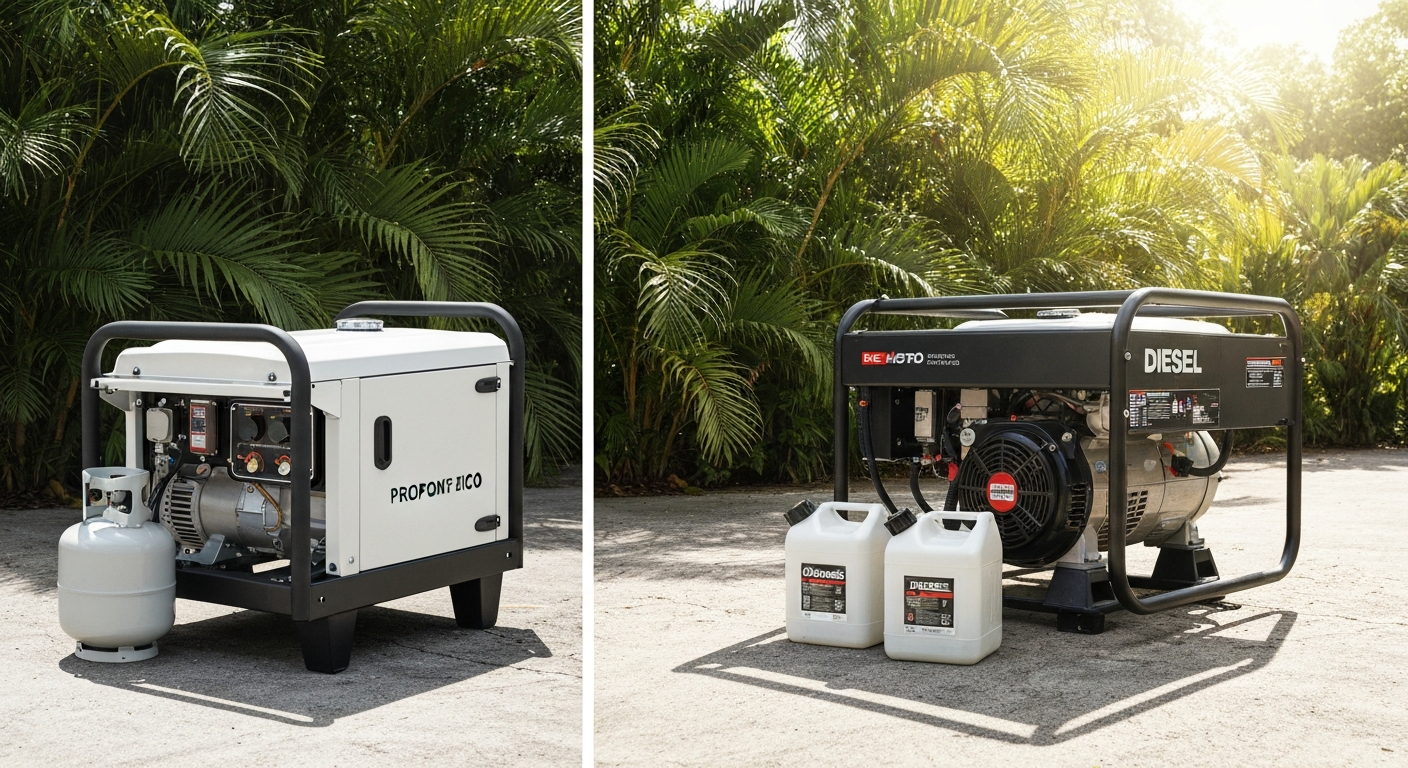
As Puerto Rico adds solar and wind generation, propane-powered backup becomes more important, not less.
Intermittency backup: Solar and wind are intermittent. They produce electricity when the sun shines and wind blows. Puerto Rico's grid requires reliable, dispatchable generation that can activate when renewable production drops. Propane-powered generation provides exactly this capability.
Grid stability: As the share of intermittent renewables on Puerto Rico's grid increases, the grid needs more flexible backup resources. Propane generators at the residential and commercial level contribute to grid resilience by reducing demand during peak periods and providing distributed backup during outages.
Complementary to solar: At the household level, solar and propane work together perfectly. Solar handles daytime electricity during clear weather. Propane handles cooking and water heating continuously, and backup electricity when solar cannot produce. The combination achieves near-zero AEE dependence while maintaining complete resilience.
The Renewable Propane Pathway
The long-term future of propane in Puerto Rico's energy mix includes renewable propane, also called bio-propane, produced from biological feedstocks including animal fats, vegetable oils, and agricultural waste.
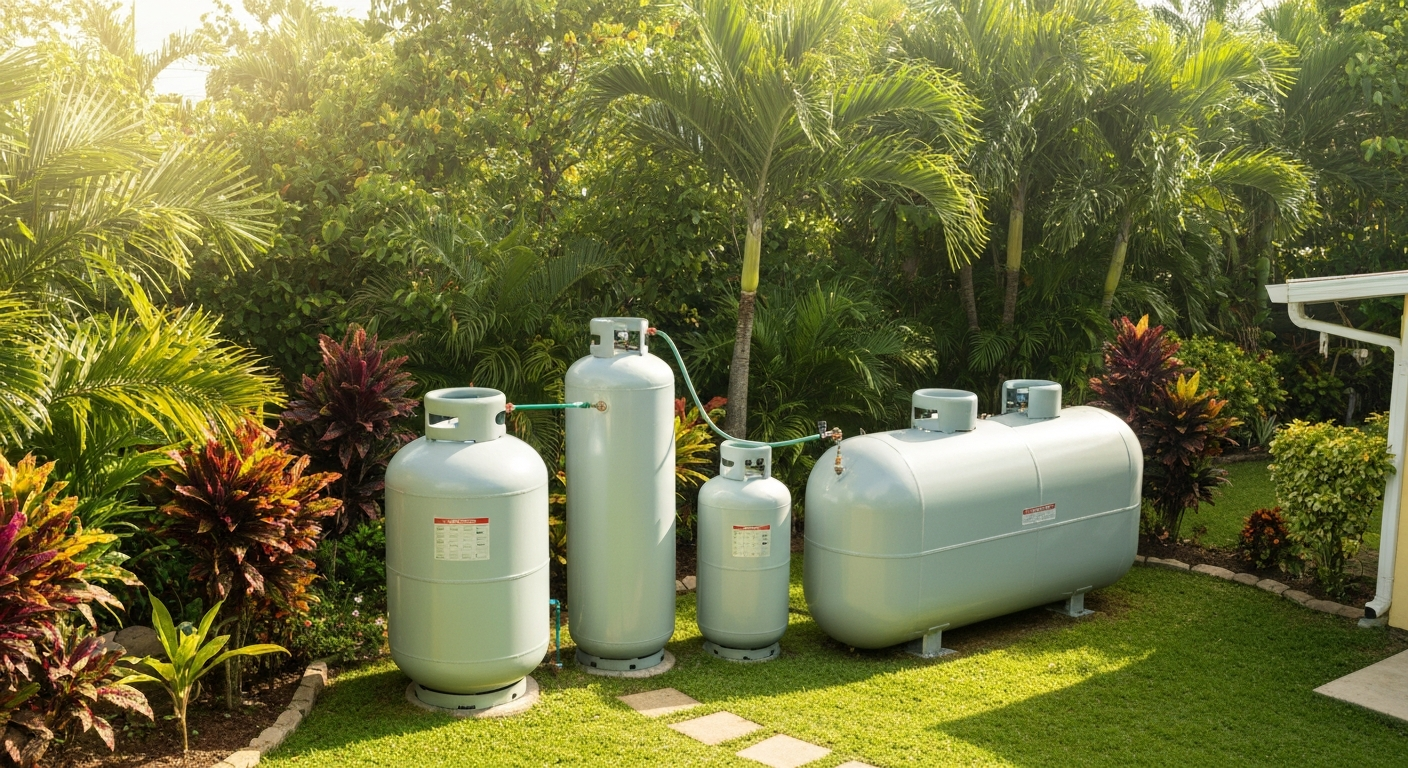
Bio-propane is chemically identical to conventional propane. It works in all existing propane appliances, tanks, and distribution infrastructure without any modifications. The only difference is in how it is produced, using biological feedstocks rather than petroleum byproducts, resulting in a significantly lower lifecycle carbon footprint.
As renewable propane production scales globally and becomes commercially available in Puerto Rico, Tropigas is positioned to transition customers from conventional to renewable propane without any equipment changes. Your current propane appliances and tank will work with renewable propane exactly as they work today.
The Environmental Case for Propane Today
For Puerto Rico homeowners committed to reducing their environmental impact while maintaining energy resilience, propane is not a compromise. It is the environmentally responsible choice given Puerto Rico's current grid reality.
Switching your water heater from AEE electricity to propane reduces your household's effective fuel energy consumption for water heating by approximately 50 to 60%, because you eliminate the 65% generation and transmission losses of the AEE system. This is a meaningful environmental benefit available today, not dependent on future grid improvements.
Frequently Asked Questions
Ing. Rodolfo Leo Quiñones
Operations, Sales and Export Manager , Tropigas / Tropigas SXM
Expert in propane energy systems, NFPA compliance, and industrial gas logistics in Puerto Rico and the Caribbean.