Sustainable Propane Energy in Puerto Rico
Propane as clean, sustainable energy for Puerto Rico. Lower emissions, renewable propane future, and environmental benefits vs AEE electricity.
When most people think of clean energy in Puerto Rico, they think of solar panels. And solar is genuinely important for the island's energy future. But the conversation about sustainable energy in Puerto Rico is incomplete without understanding propane's role, both as a significantly cleaner alternative to the petroleum-based electricity that dominates Puerto Rico's current grid, and as the ideal complement to solar power.
Propane is classified by the U.S. Environmental Protection Agency as an alternative clean fuel. It produces significantly fewer greenhouse gas emissions than diesel, fuel oil, and coal-generated electricity. And in Puerto Rico, where AEE electricity is generated predominantly from petroleum and coal at efficiencies far below modern standards, choosing propane for heating and cooking applications can actually reduce your household's total carbon footprint compared to using AEE electricity for those same applications.
Propane's Environmental Profile
Greenhouse gas emissions
Propane combustion produces approximately 12.7 pounds of CO2 per gallon. This is significantly lower than the CO2 equivalent emissions from coal-generated electricity or oil-generated electricity.
View detailsLower particulate emissions
Propane combustion produces virtually no particulate matter. Diesel combustion and coal-based electricity generation produce significant fine particulate emissions.
View detailsNo spill contamination risk
Propane is stored in sealed pressurized containers. Unlike petroleum products, propane cannot contaminate soil or groundwater if a container is damaged.
View detailsPropane vs AEE Electricity , The Environmental Reality in Puerto Rico
Puerto Rico's electricity generation mix: The AEE generates electricity primarily from petroleum-based fuels and coal at legacy power plants with efficiencies significantly below modern generation technology.
The efficiency factor: When AEE burns petroleum to generate electricity, approximately 65% of the fuel's energy is lost in generation and transmission. By the time electricity reaches your water heater or range, only about 35% of the original fuel's energy remains as useful energy.
Propane burned directly in a water heater or range converts 90% to 95% of its energy to useful heat at the point of use. No generation losses. No transmission losses.
The net result: For applications where heat is the end product (water heating, cooking, clothes drying), using propane in Puerto Rico rather than AEE electricity means consuming significantly less total fossil fuel energy to produce the same result.
Propane as a Bridge Fuel for Puerto Rico's Energy Transition
Immediate improvement
Today, switching from AEE electricity to propane for heating and cooking applications reduces fossil fuel consumption and emissions while the grid remains predominantly petroleum-based.
Compatibility with renewables
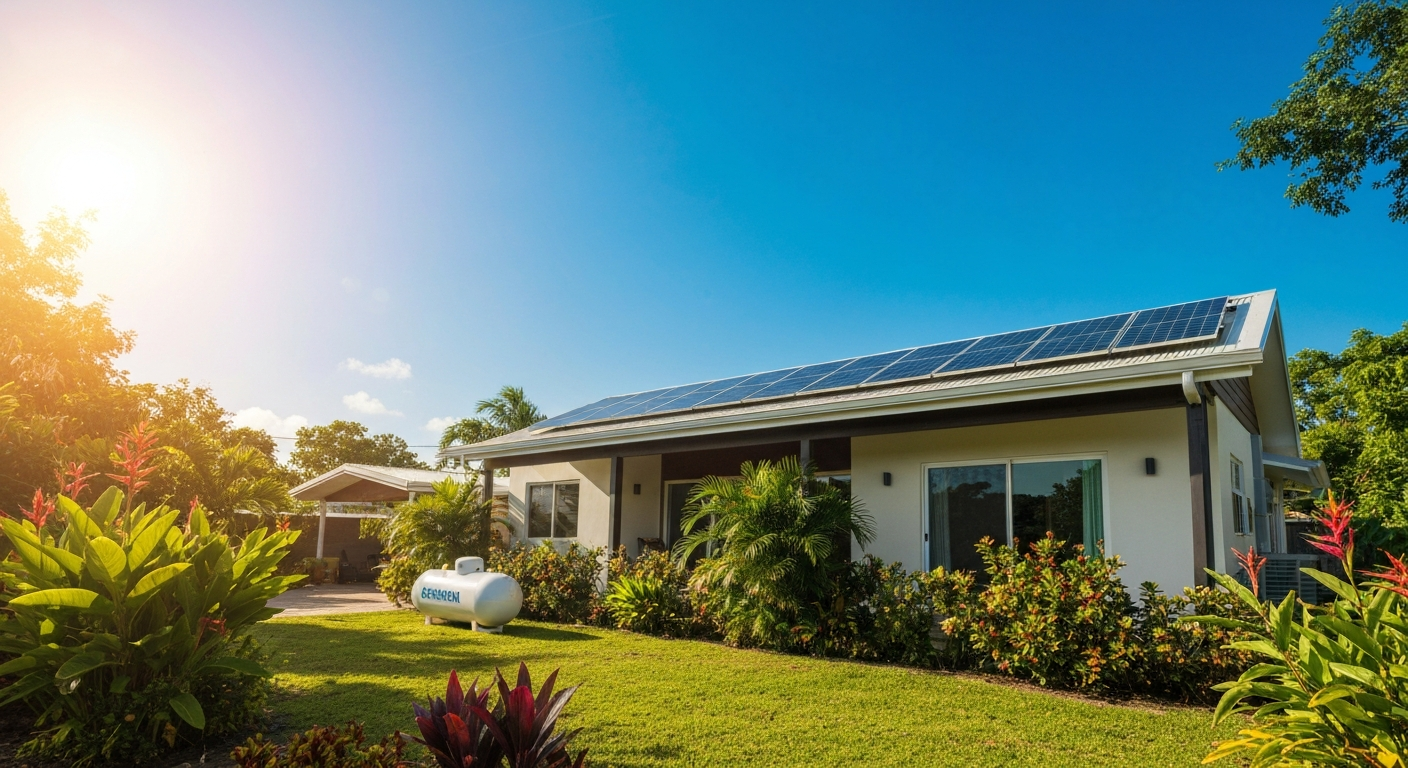
Propane backup systems complement solar installations perfectly. Solar handles daytime electricity generation. Propane handles cooking, water heating, and backup electricity.
Renewable propane pathway
Bio-propane produced from biological feedstocks has the same chemical properties as conventional propane and is fully compatible with existing equipment.
Solar Plus Propane , The Gold Standard for Puerto Rico
What solar contributes
Zero-emission electricity generation during daylight hours from a fuel source that is free, renewable, and abundant in Puerto Rico.
What propane contributes
Reliable energy for cooking, water heating, and clothes drying at significantly lower emissions than AEE electricity. Backup electricity generation through a propane generator.
The combined result
A Puerto Rico home with solar panels plus propane achieves near-zero AEE electricity dependence while maintaining complete energy resilience.
Frequently Asked Questions
¿Listo para instalar tu sistema de propano?
Evaluación gratuita · Sin compromiso · Técnicos certificados NFPA