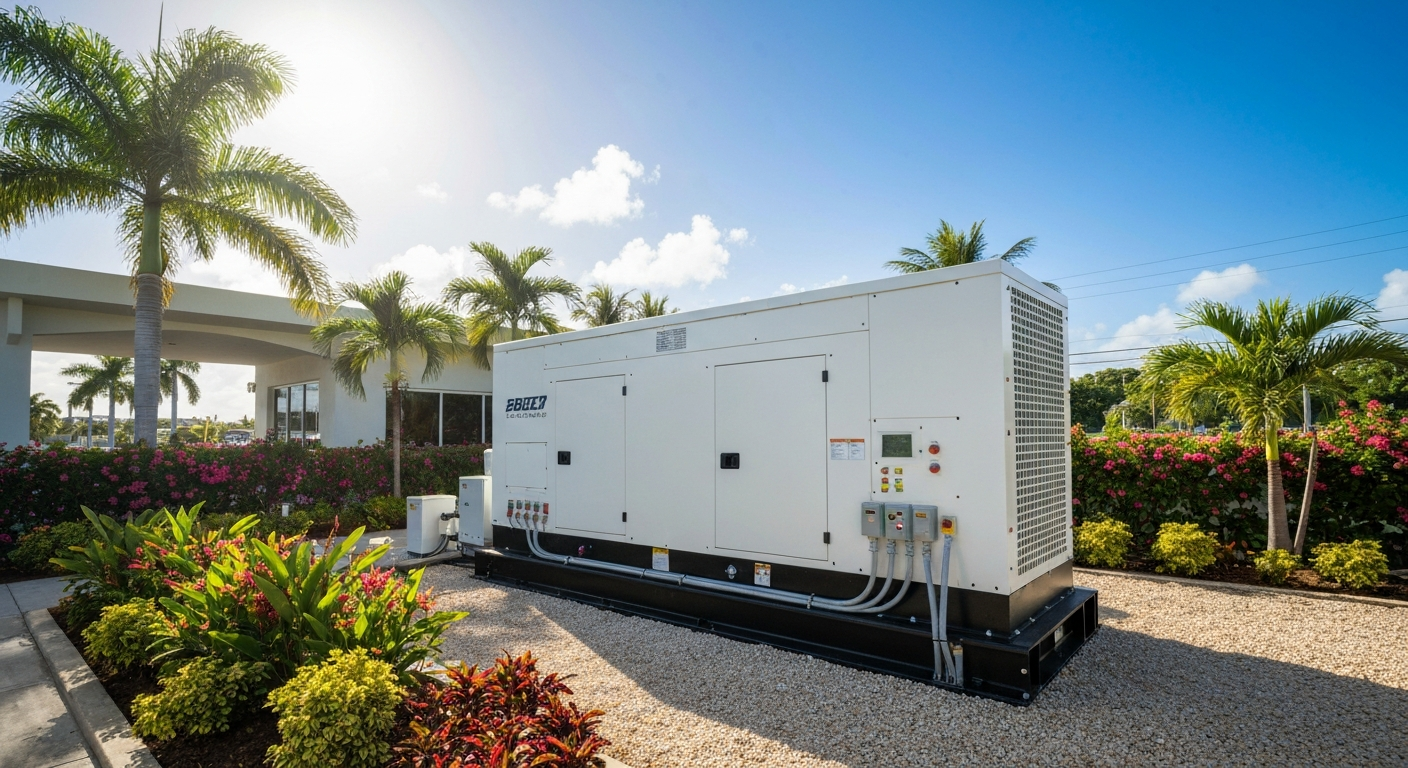
For businesses in Puerto Rico, power outages mean revenue loss, operational disruption, and in some cases, regulatory non-compliance. A hotel without air conditioning loses guests. A restaurant without cooking capability loses service. A pharmacy without refrigeration loses medication inventory. A manufacturing facility without power loses production.
A commercial propane generator system solves this. This guide covers everything Puerto Rico businesses need to know to plan, size, and install a commercial propane backup power solution.
Who Needs a Commercial Propane Generator System?
Any Puerto Rico business where power outages cause meaningful operational, financial, or regulatory consequences should have a backup power solution. Priority applications include:
- Restaurants and food service: Commercial kitchens require continuous power for cooking, refrigeration, and health department compliance. A propane generator keeps kitchens operating during outages while competitors with electric-only setups close. Critically, many restaurant cooking systems are already propane, meaning your cooking keeps working even if your generator only powers refrigeration and lighting.
- Hotels and hospitality: Guest safety and comfort during outages requires continuous AC, lighting, security, and elevator service. Regulatory requirements may mandate backup power in hospitality facilities.
- Supermarkets and cold storage: Refrigeration continuity is not optional. Losing cold chain integrity means losing thousands of dollars of food inventory and possible health department violations.
- Medical clinics and pharmacies: Backup power is a regulatory requirement for most healthcare facilities. Medication refrigeration, diagnostic equipment, and patient care systems must remain operational.
- Manufacturing and industrial: Production line downtime costs are immediate and quantifiable. Even a 4-hour outage during peak production can represent significant losses.
- Data centers and telecommunications: Uptime requirements for data infrastructure are measured in nines. Any interruption is unacceptable.
Commercial Generator Sizing
Commercial generator sizing follows the same basic principles as residential sizing but with higher loads, more critical circuits, and often more complex electrical configurations.
| Business Type | Typical Generator Size |
|---|---|
| Small restaurant, 50 seats | 30 to 45 kW |
| Medium restaurant, 100 to 150 seats | 45 to 60 kW |
| Small hotel, 50 rooms | 60 to 100 kW |
| Medium hotel, 100 to 200 rooms | 150 to 300 kW |
| Supermarket, 15,000 sq ft | 200 to 400 kW |
| Medical clinic | 60 to 150 kW |
| Small manufacturing facility | 100 to 500 kW |
Commercial Propane Tank Sizing
Commercial generators consume significantly more propane per hour than residential units. Tank sizing for commercial applications must account for:
- Daily consumption at expected load: A 60 kW generator at 50% load consumes approximately 7.5 gallons per hour, or 180 gallons per 24-hour period.
- Desired operational independence: Most Puerto Rico businesses target 3 to 7 days of operational independence before requiring a Tropigas delivery.
- Scheduled deliveries: Commercial clients can schedule regular deliveries and receive priority delivery scheduling and proactive storm preparation contact.
| Generator Size | Daily Consumption (50% load) | 3-Day Tank | 7-Day Tank |
|---|---|---|---|
| 30 kW | 91 gallons | 500 gal | 1,000 gal |
| 45 kW | 132 gallons | 500 gal (2 tanks) | Bulk |
| 60 kW | 180 gallons | 1,000 gal | Bulk |
| 100 kW | 300 gallons | Bulk | Bulk |
| 200 kW+ | 600+ gallons | Bulk | Bulk |
For commercial generators above 60 kW, Tropigas recommends bulk propane supply with telemetry monitoring rather than fixed tanks.
⚡ Ready to install?
Call 787-641-8002 for a free commercial evaluation and cost estimate.
Call 787-641-8002Regulatory Compliance for Commercial Installations
Commercial propane generator installations in Puerto Rico must comply with multiple regulatory frameworks:
- NFPA 58: Governs propane storage, handling, and installation. Specifies minimum clearances from buildings, property lines, and ignition sources based on tank capacity. Commercial tank installations above 2,000 gallons trigger additional requirements.
- NFPA 54: Governs gas piping design and installation. Commercial gas lines must be designed and installed by licensed professionals.
- Puerto Rico building codes: Municipal permits are required for commercial generator installations in virtually all Puerto Rico municipalities. Permit requirements vary by municipality and installation scope.
- Industry-specific regulations: Healthcare facilities must comply with NFPA 99 (Healthcare Facilities Code) requirements for backup power. Food service facilities must maintain health department compliance for refrigeration continuity.
Tropigas manages all propane system permitting and guides you through the broader regulatory compliance process for your specific business type.
The Tropigas Commercial Service Program
Commercial propane customers have access to Tropigas's commercial service programs, which provide:
- Telemetry monitoring: For large commercial tanks, Tropigas installs remote monitoring equipment that transmits real-time fuel level data to our operations center. We track your consumption patterns and schedule deliveries before you reach critical levels.
- Priority delivery scheduling: Commercial clients receive priority in Tropigas's delivery queue, including during high-demand periods before and after hurricane events.
- Emergency delivery protocols: For designated critical infrastructure clients, including hospitals, emergency services, and essential food retail, Tropigas maintains emergency delivery protocols that prioritize supply restoration after major events.
- Account management: Commercial accounts receive dedicated account management, including advance notification of scheduled deliveries, documentation for regulatory compliance, and direct contact with our commercial operations team.
Commercial Installation Process
- Phase 1: Site evaluation and engineering (Week 1 to 2) Tropigas commercial engineers conduct a comprehensive site evaluation including electrical load analysis, tank placement planning per NFPA 58, gas line routing, and coordination with your electrical contractor.
- Phase 2: Permitting (Week 2 to 5) Permit applications are submitted to relevant municipal and regulatory authorities. Timeline varies by municipality and installation complexity.
- Phase 3: Site preparation (Week 3 to 4) Generator pad construction, tank excavation if underground, and pre-installation electrical work.
- Phase 4: Installation (Week 4 to 6) Tank installation by Tropigas. Gas line installation by Tropigas. Generator installation and electrical connection by licensed contractors.
- Phase 5: Testing and commissioning (Week 6 to 7) Complete system testing including load bank testing for commercial generators. Pressurized leak test and certification by Tropigas. Transfer switch testing. Full operational documentation.
- Phase 6: Ongoing service Scheduled delivery enrollment. Annual maintenance scheduling. Regulatory compliance documentation updates.
Call 787-641-8002 and ask for our commercial team to schedule your free commercial site evaluation.
Ing. Rodolfo Leo Quiñones
Operations, Sales and Export Manager , Tropigas / Tropigas SXM
Expert in propane energy systems, NFPA compliance, and industrial gas logistics in Puerto Rico and the Caribbean.