Is it safe to place a propane tank or cylinder near your stove in Puerto Rico, and what clearance rules apply? Many homeowners are tempted to place a 20 lb or 100 lb propane cylinder close to the kitchen for convenience, but proximity to the stove, oven, or any ignition source creates a serious fire and explosion hazard. This guide explains exactly why distance matters and the correct placement rules for propane tanks and cylinders relative to kitchen appliances in Puerto Rico homes.
For propane placement guidance in Puerto Rico, call Tropigas at 787-641-8002.
Why Distance Matters Between a Propane Tank and Your Stove
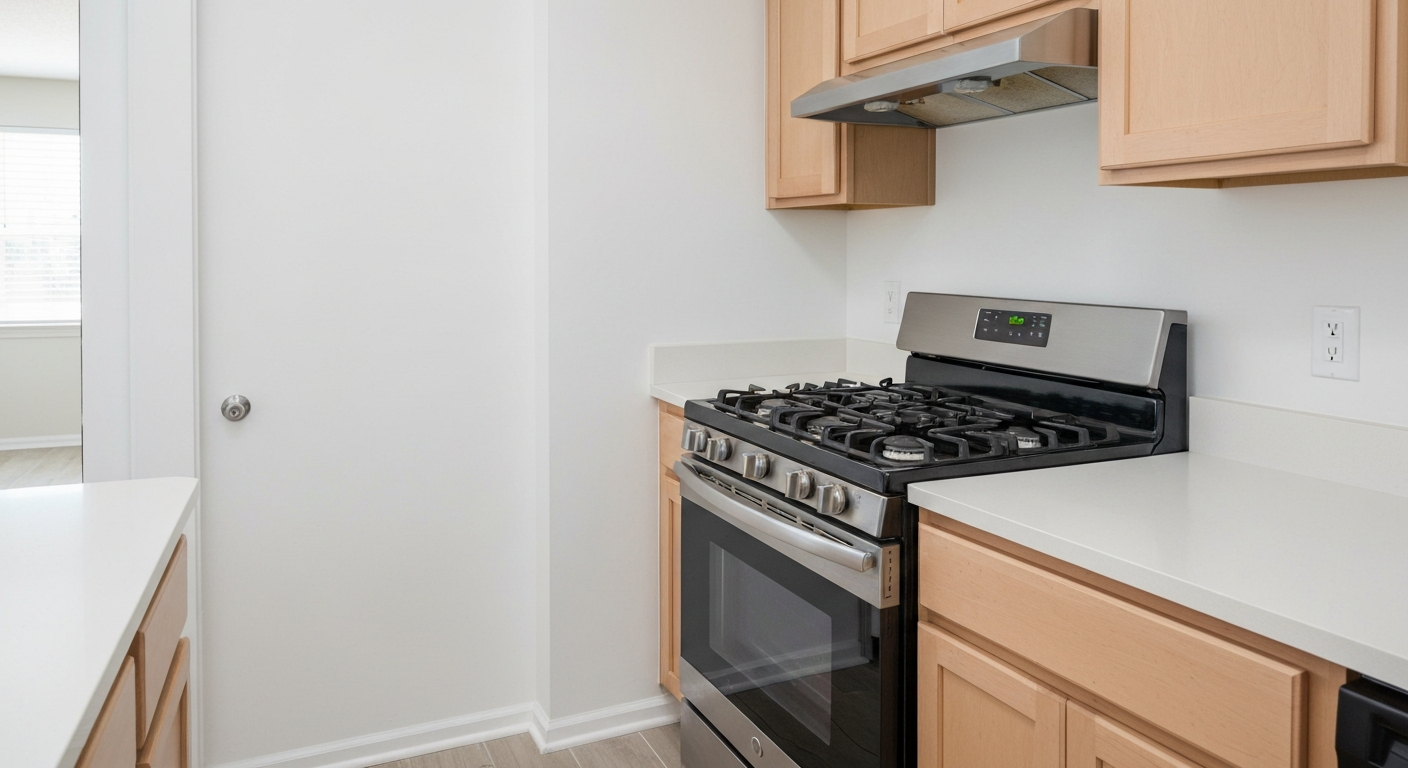
Placing a propane tank too close to a stove, range, or any open flame source creates extreme risk. If even a small leak occurs near an active flame or hot surface, the result can be immediate ignition. This is one of the most dangerous and preventable mistakes a homeowner can make. Tropigas has documented real cases of this exact hazard, explained in detail in our blog post on the risk of placing a propane tank beneath a stove, which remains one of our most-read safety resources. For additional visual guidance, see our blog post on the dangers of transporting propane tanks improperly secured in vehicle seats. Read our blog post on the risk of placing a propane tank beneath a stove here.
Never place any propane tank or cylinder adjacent to or beneath a stove, range, or open flame. Call 787-641-8002 for placement guidance.
NFPA 58 Clearance Rules for Stationary Tanks
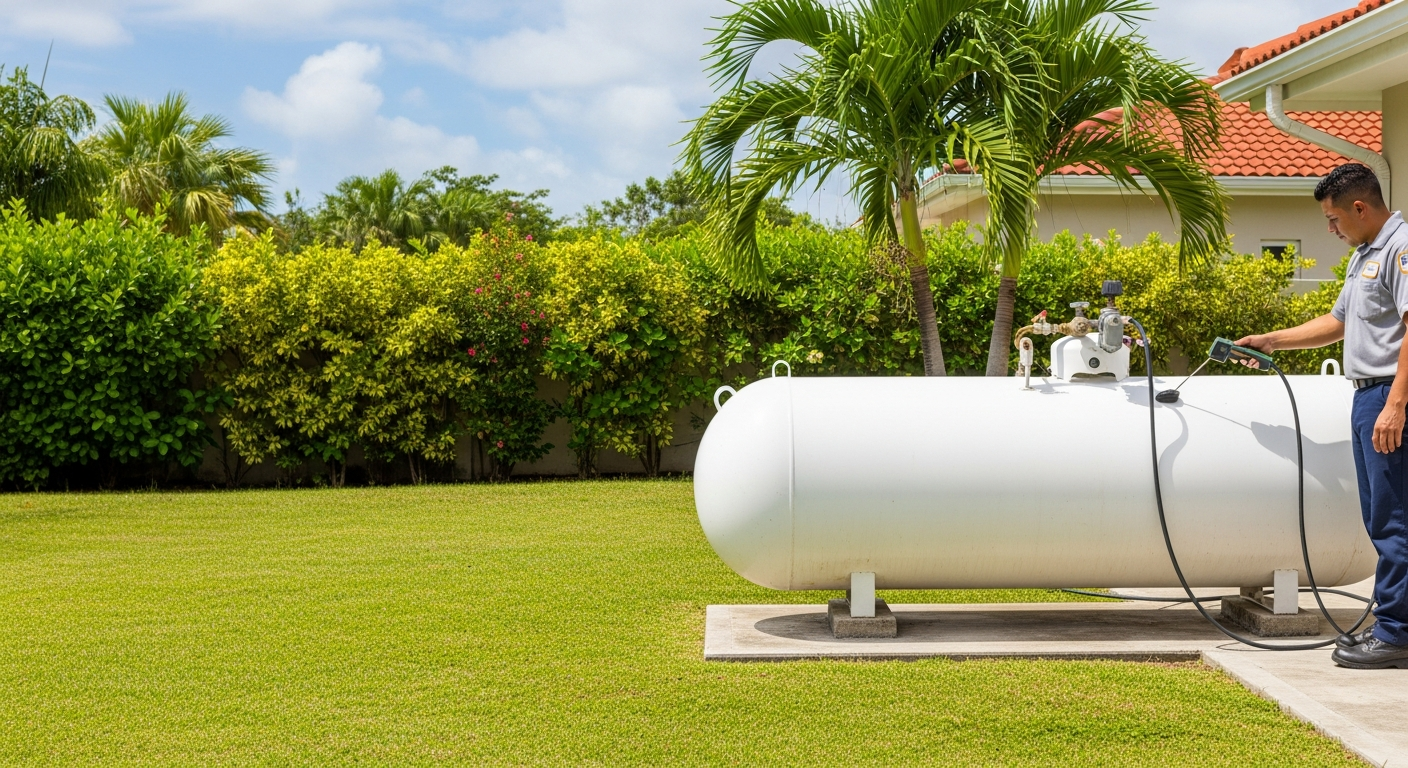
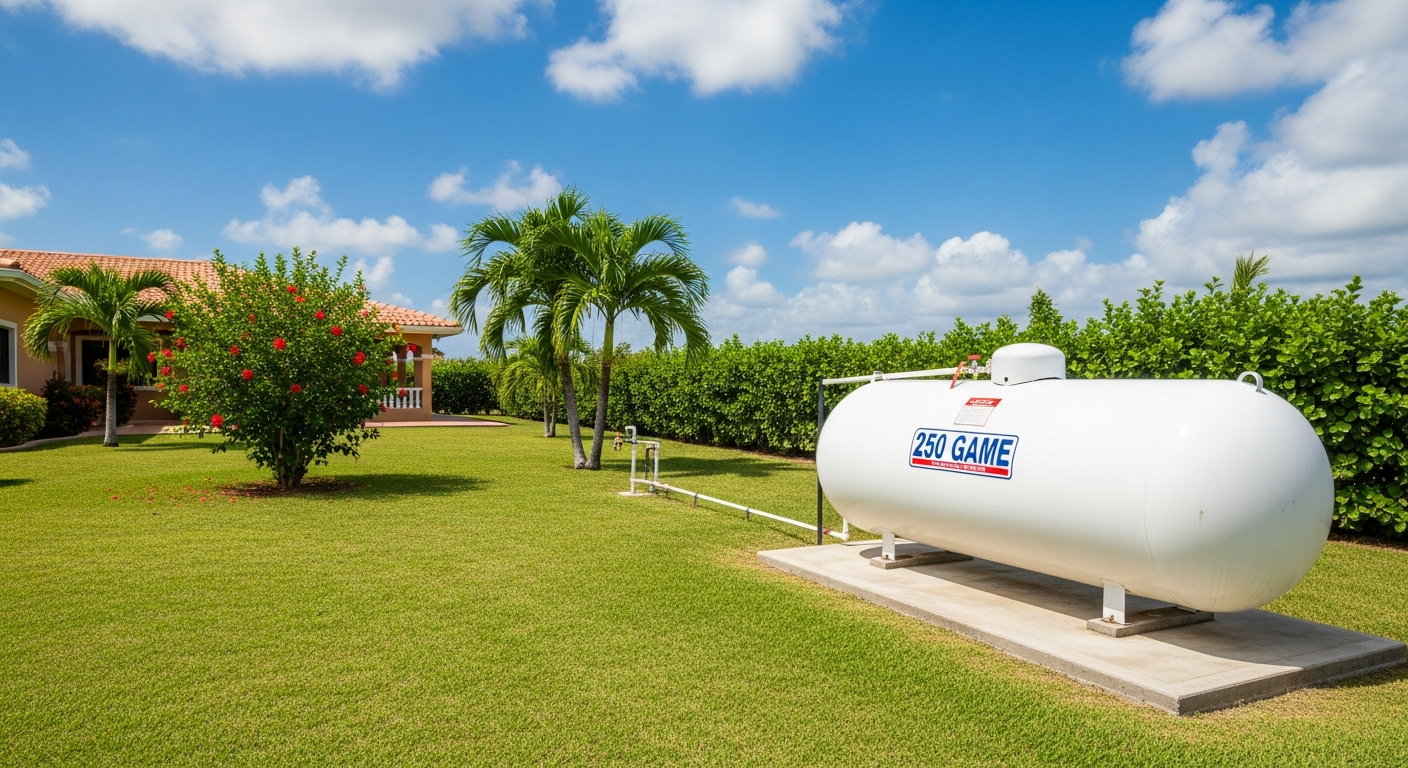
For stationary propane tanks (100 lb and larger), NFPA 58 requires minimum clearance distances from buildings and ignition sources, not just from the stove specifically, but from any opening, vent, or flame source on the property. For tanks up to 500 gallons, this means a minimum of 10 feet from any building opening, including the kitchen. This clearance exists precisely because of the risk illustrated by placing equipment too close to heat and flame sources inside the home.
Call 787-641-8002 for a code-compliant placement assessment.
Indoor Cylinder Storage Risks
Storing or using a 20 lb portable cylinder indoors, especially near a kitchen, presents risks that outdoor stationary tanks do not have in the same way. Indoor spaces concentrate any leaked gas rather than allowing it to disperse. Kitchens contain multiple ignition sources including the stove, oven pilot lights, and electrical appliances. The combination of confined space and ignition sources is particularly dangerous.
Portable cylinders for items like portable grills or heaters should only be used outdoors in well-ventilated areas, never stored or operated near a kitchen stove. Call 787-641-8002 for guidance.
Proper Appliance Connection vs Tank Proximity
It is important to distinguish between a propane appliance, like a gas range, which is correctly and permanently connected to your propane system via fixed piping, and the propane tank itself, which must remain outdoors at the proper distance. Your stove can safely use propane delivered through properly installed gas lines from a tank located the correct distance away. The danger is not using propane for cooking, it is locating the actual tank or cylinder too close to the cooking appliance.
Certified technicians install gas lines correctly so your stove works safely with a tank at the proper distance. Call 787-641-8002 for installation service.
What to Do If Your Tank Is Too Close
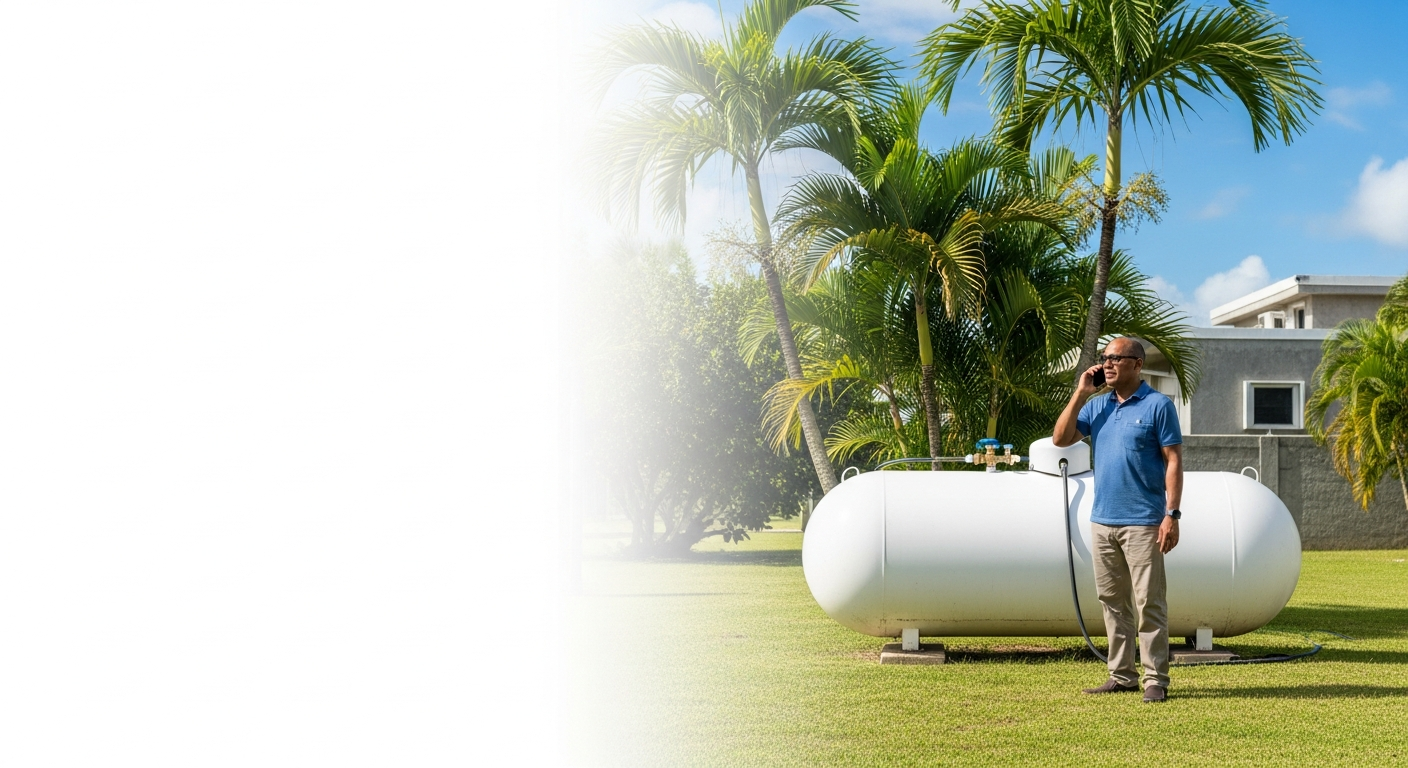
If you discover that your propane tank or cylinder is installed too close to your stove, kitchen, or any ignition source, do not attempt to move it yourself, especially if it is connected to active gas lines. Call Tropigas at 787-641-8002 to schedule a professional assessment and relocation. Our certified technicians will evaluate the current installation, determine the correct new location per NFPA 58, and safely relocate the tank and reconnect piping.
Never delay correcting this hazard once identified. Call 787-641-8002 today.
Frequently Asked Questions
Ing. Rodolfo Leo Quiñones
Gerente de Operaciones, Ventas y Exportaciones
Expert in propane energy systems, NFPA compliance, and industrial gas logistics in Puerto Rico and the Caribbean.