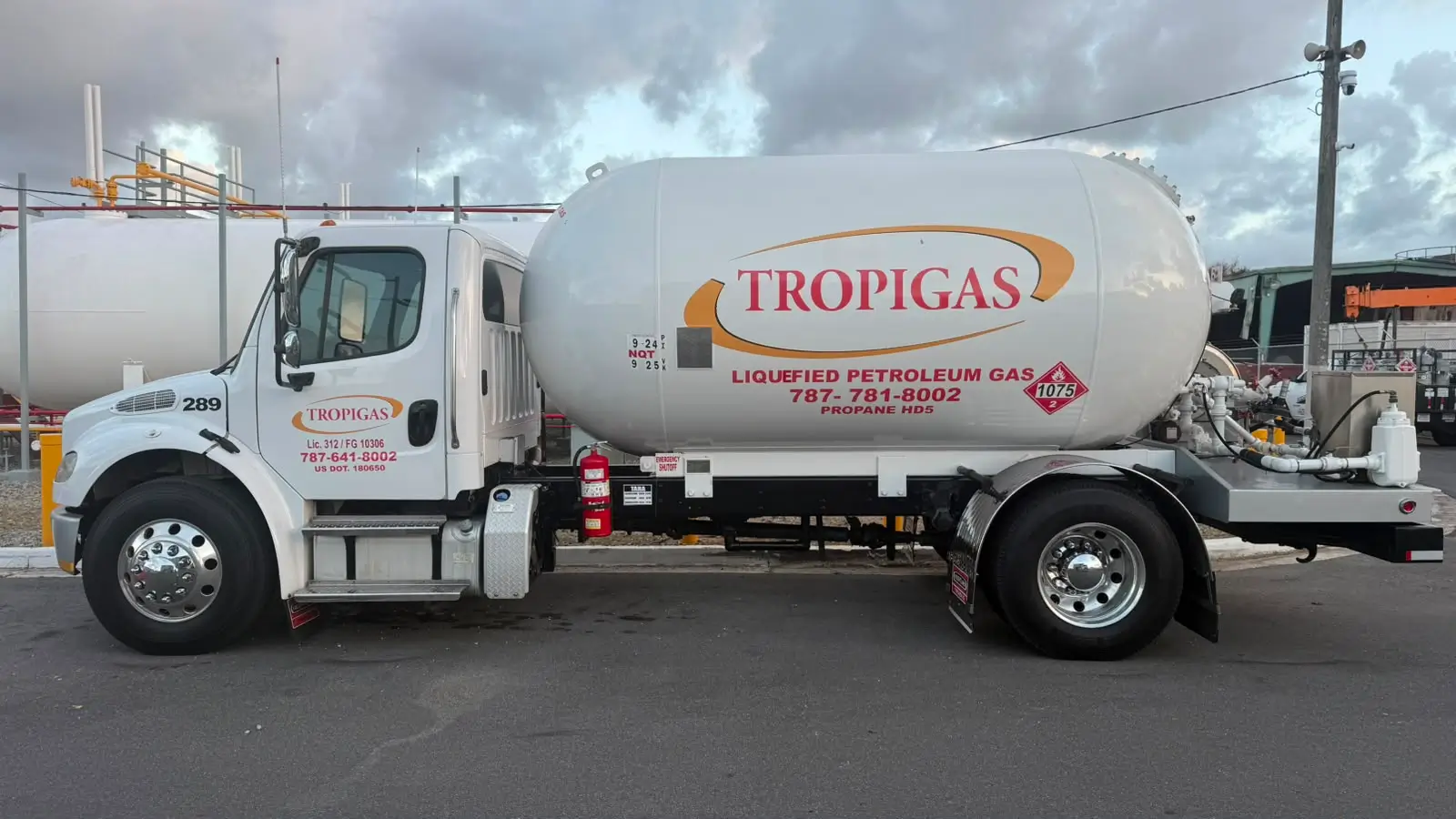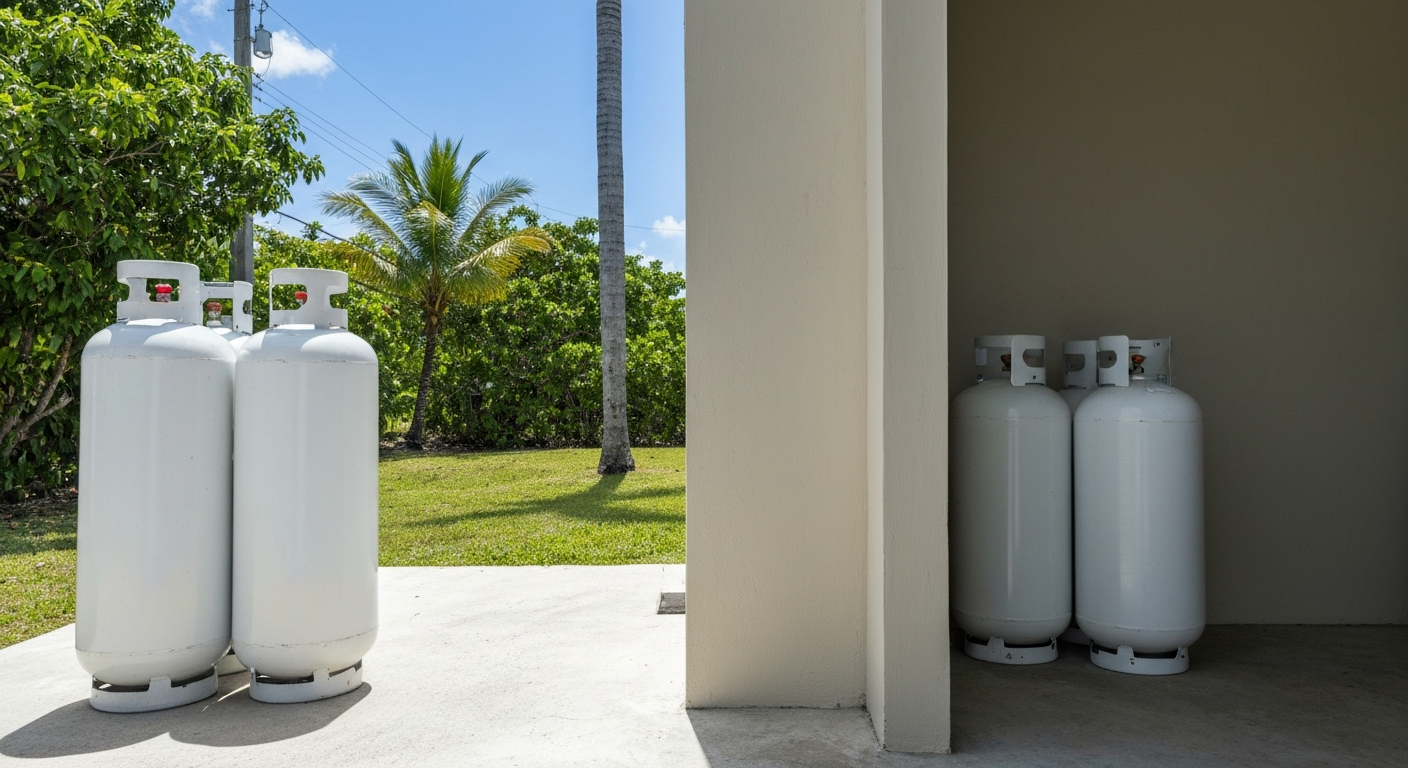
How do you store propane cylinders safely in Puerto Rico, and what are the rules for proper storage at home and at your business? Improper propane storage is one of the most common and preventable safety mistakes Puerto Rico homeowners and business operators make. Whether you have a 20 lb BBQ cylinder, multiple exchange cylinders at a business, or spare cylinders for backup use, the rules for safe storage are specific and non-negotiable. This guide explains propane storage safety for Puerto Rico.
For propane storage safety guidance in Puerto Rico, call Tropigas at 787-641-8002.
The Fundamental Propane Storage Rule
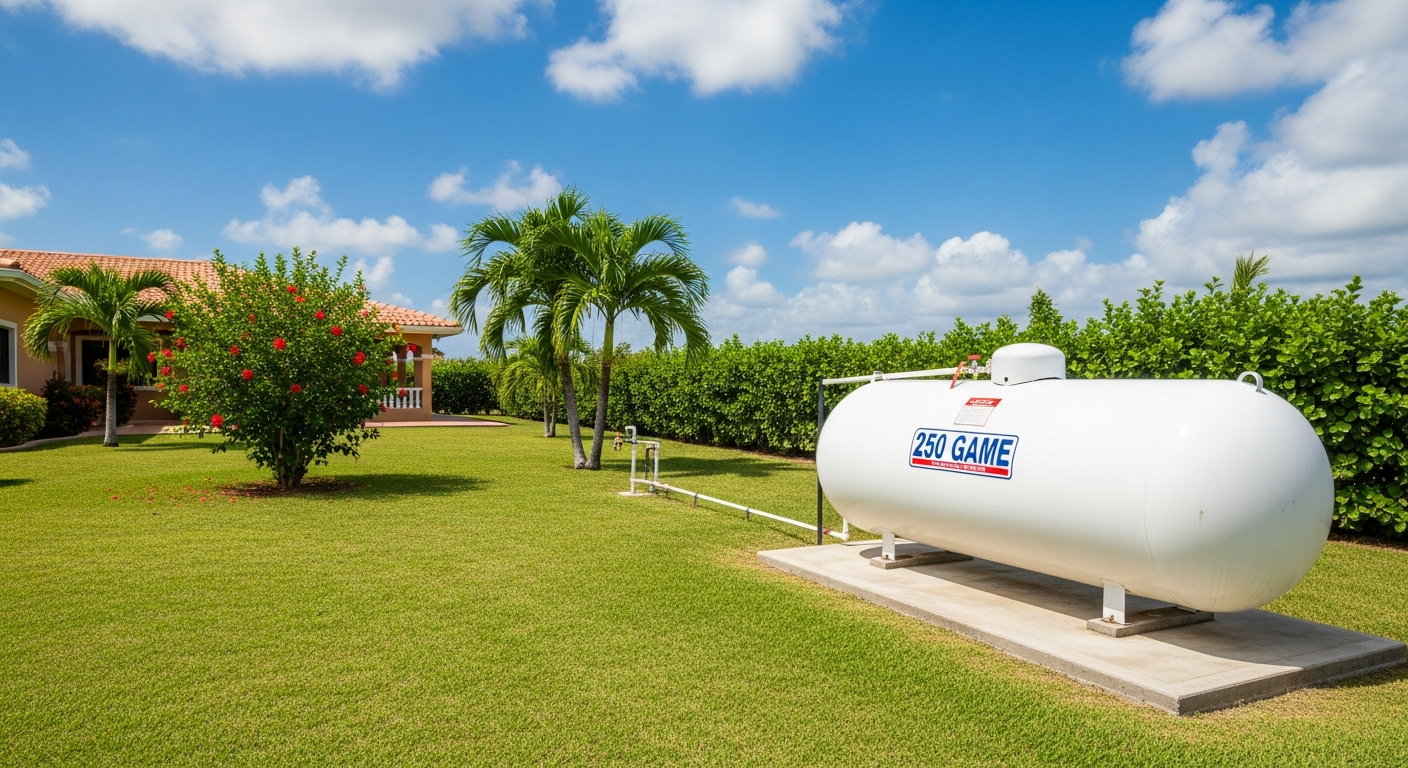
The most important propane storage rule is simple: propane cylinders must always be stored outdoors in a well-ventilated area, never indoors or in an enclosed space. This rule applies to every cylinder size, including empty cylinders. An empty propane cylinder still contains residual propane vapor that can accumulate in an enclosed space and create fire or explosion risk. A garage, basement, storage room, or any interior space is not acceptable for propane cylinder storage.
Store all propane cylinders outdoors in an open or well-ventilated area. Call 787-641-8002 for storage guidance.
Correct Cylinder Position During Storage
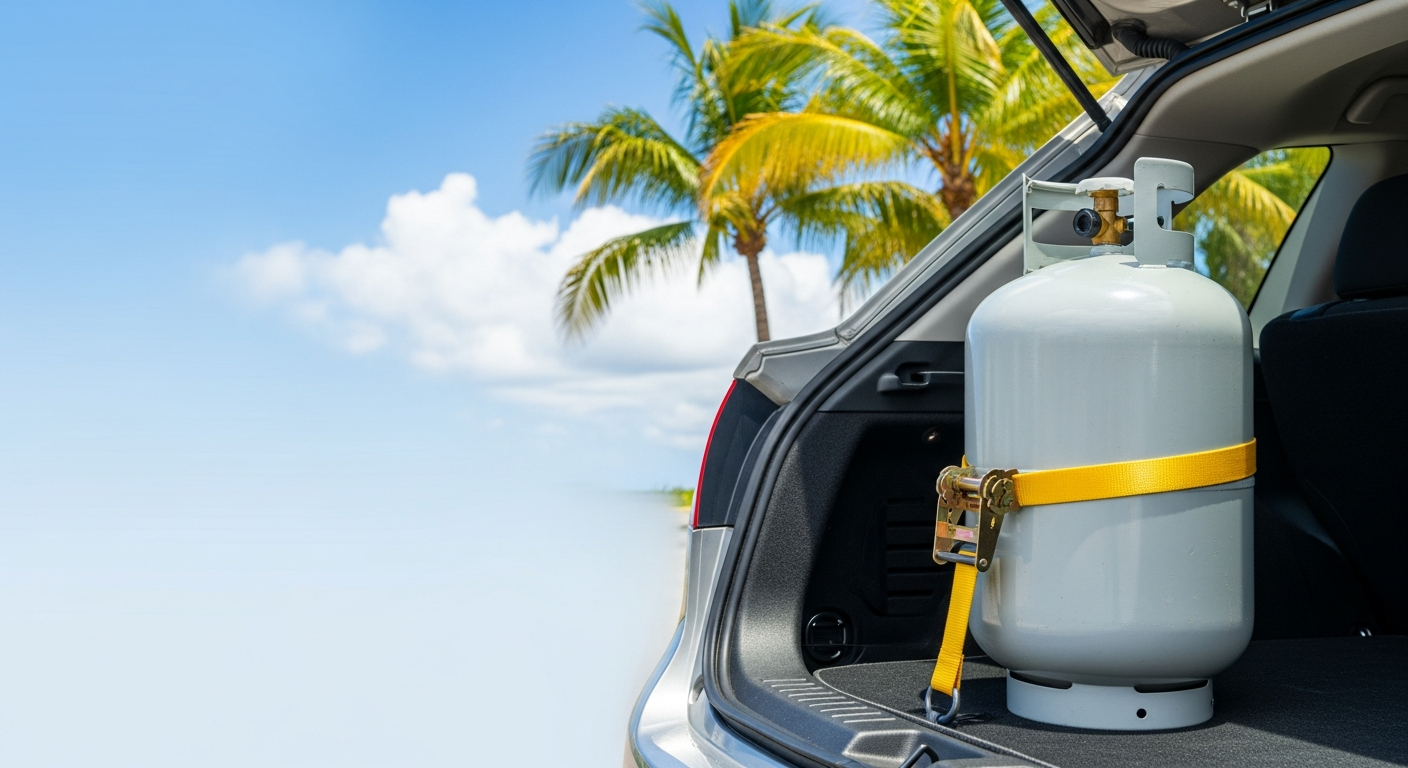
Propane cylinders must always be stored in the upright vertical position with the valve at the top. Storing a cylinder on its side is dangerous because the pressure relief valve, which is designed to vent propane vapor safely from the top of an upright cylinder, can instead discharge liquid propane if the valve is submerged or partially submerged in liquid when the cylinder is on its side. Liquid propane discharge from a relief valve creates a much larger and more dangerous release than vapor discharge.
Keep all cylinders upright during storage, transport, and use. Call 787-641-8002 for guidance.
Temperature and Sun Exposure
In Puerto Rico's tropical climate, heat and direct sun exposure create additional propane storage considerations. Propane pressure increases with temperature, and cylinders left in direct sun can experience higher than normal internal pressure. While cylinders are designed with relief valves to handle normal pressure variations, extended exposure to extreme heat increases stress on the relief valve. Store cylinders in a shaded, ventilated outdoor area rather than in direct sun when possible.
Never store propane cylinders in a car trunk, enclosed vehicle, or any space that can heat up significantly in Puerto Rico's sun. Call 787-641-8002 for storage guidance.
Distance from Ignition Sources
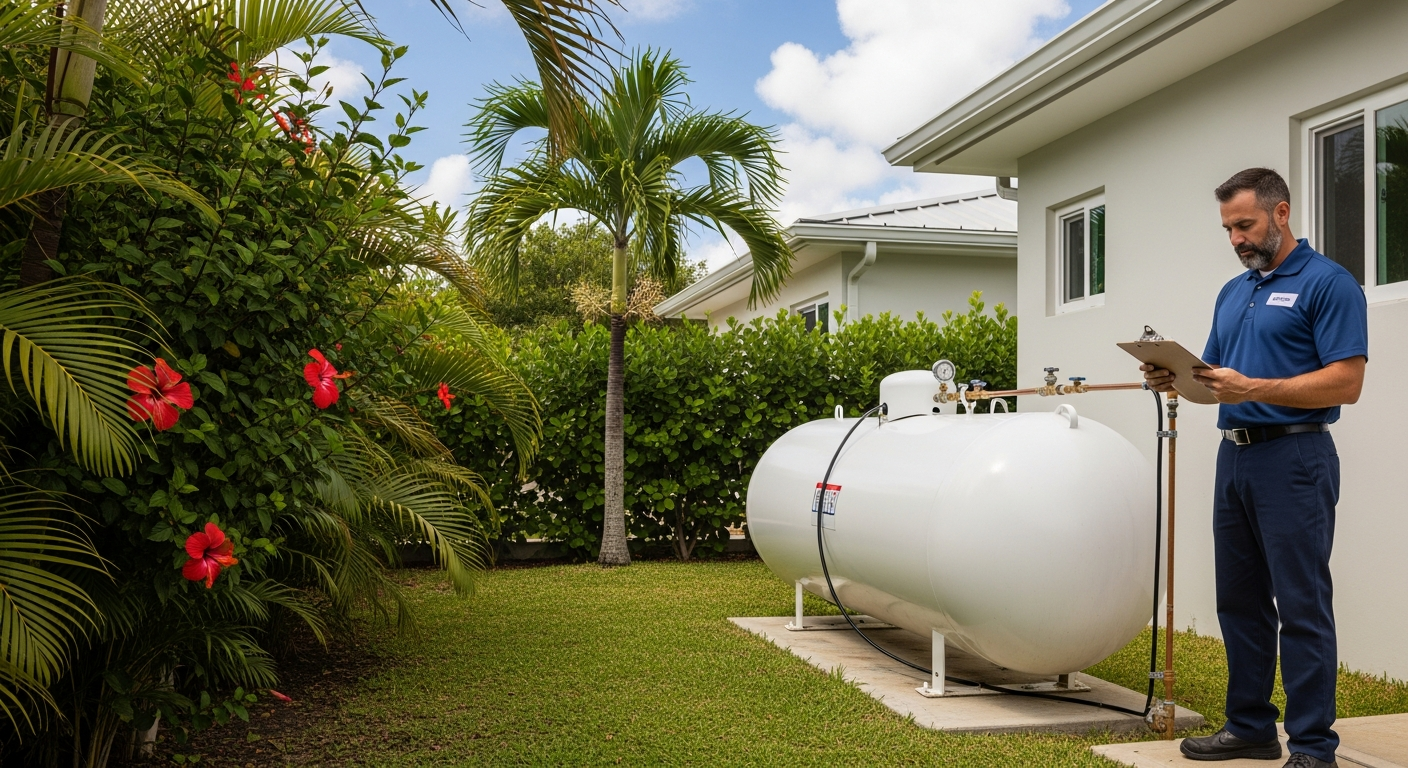
Propane cylinders in storage must be kept away from potential ignition sources. Store cylinders at least 10 feet from any open flame including grills, fire pits, and outdoor burners. Keep cylinders away from electrical panels, meters, and any electrical equipment that could spark. Do not store cylinders near dryers, water heaters, or any appliance with a pilot light or open flame. Keep combustible materials, including wood, paper, and flammable liquids, away from the cylinder storage area.
Call 787-641-8002 if you have questions about safe storage distances.
Storing Multiple Cylinders at a Business
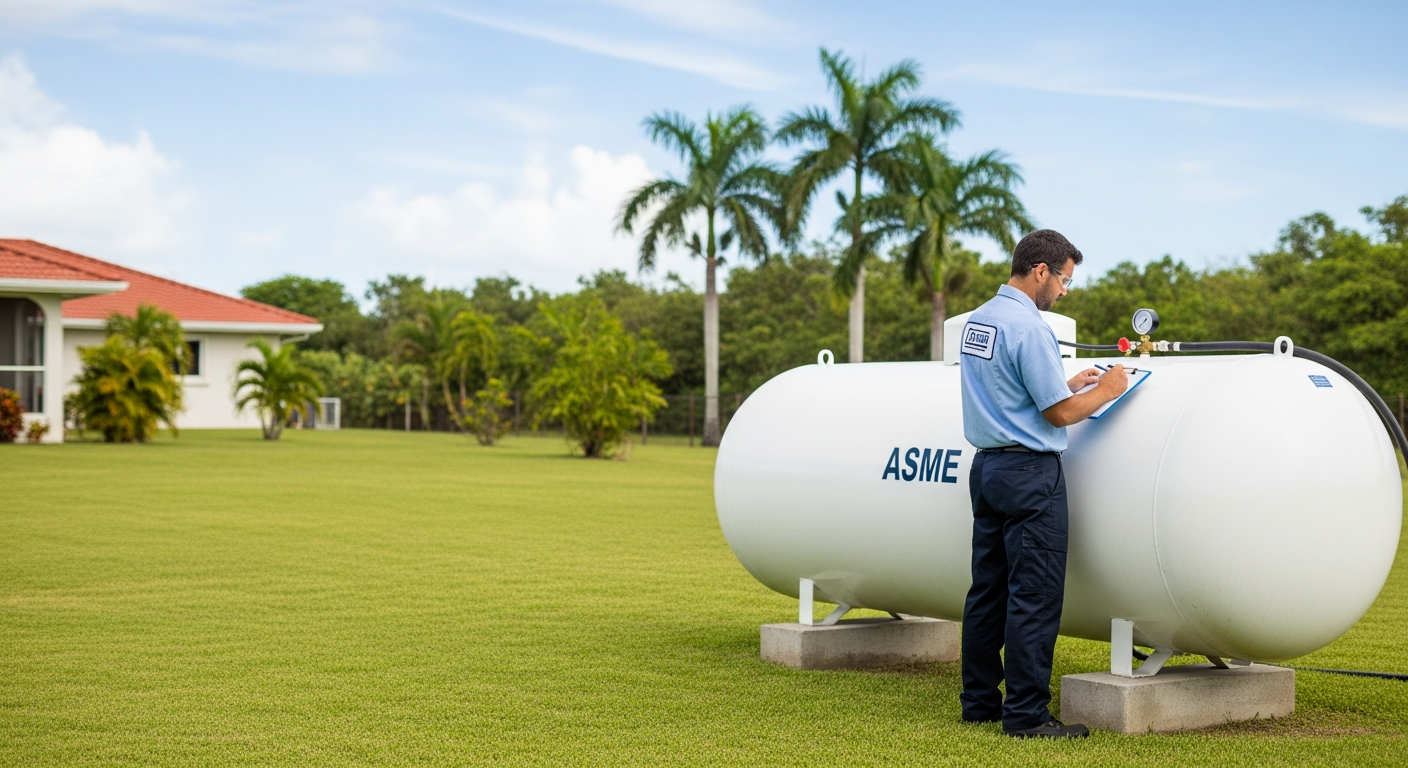
Businesses in Puerto Rico that store multiple propane cylinders, such as hardware stores, restaurants, and propane exchange operations, must comply with NFPA 58 requirements for cylinder storage. These requirements include maximum quantity limits for different storage configurations, required distances from buildings and property lines, signage and marking requirements, secured storage to prevent unauthorized access or tampering, and NTSP authorization for commercial cylinder storage operations.
Call 787-641-8002 for commercial propane storage compliance guidance.
Empty Cylinder Storage
Empty propane cylinders require the same safe storage practices as full cylinders. An empty cylinder still contains residual propane vapor and residual pressure. Never store empty cylinders indoors, never discard them in regular trash, and never attempt to puncture or crush an empty cylinder. Keep the valve cap on empty cylinders during storage. When ready to exchange or refill, transport empty cylinders upright with the valve cap on, in the trunk or cargo area with the window slightly open.
Call 787-641-8002 for cylinder exchange or disposal guidance.
Frequently Asked Questions
Ing. Rodolfo Leo Quiñones
Gerente de Operaciones, Ventas y Exportaciones
Expert in propane energy systems, NFPA compliance, and industrial gas logistics in Puerto Rico and the Caribbean.