Energy resilience is not a single product purchase. It is a plan that matches your household's specific needs, budget, and risk tolerance to the right combination of technologies and fuel sources. For Puerto Rico homeowners, building this plan means honestly assessing your outage exposure, your critical energy needs, and the investment you can make today and over time. This guide walks through the complete planning process.
Step 1, Assess Your Outage Exposure
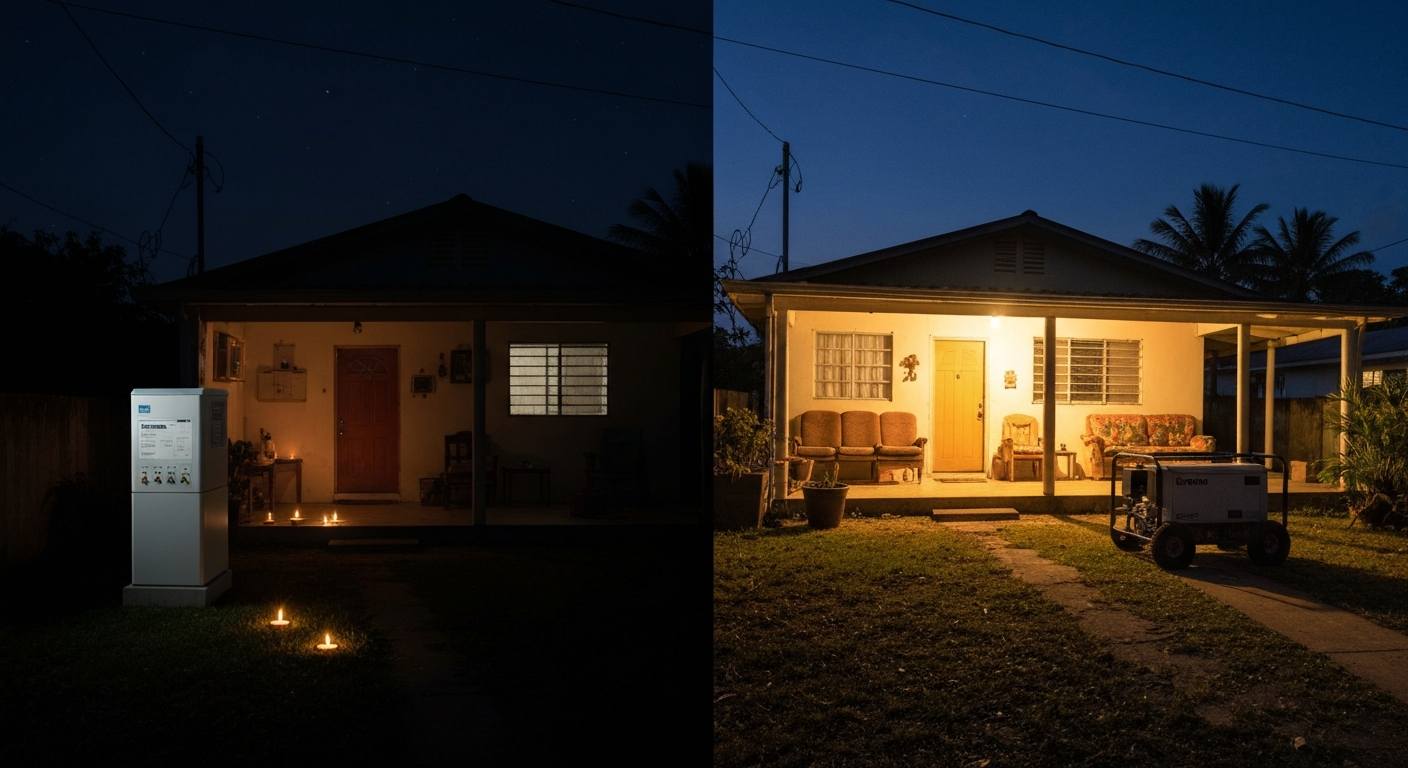
Your energy resilience plan should match the actual outage risk at your specific location, not a generic average.
Questions to assess your exposure: How often does your area lose power in a typical year? How long do outages typically last in your neighborhood? Is your area historically slower to restore after storms? Mountain municipalities, rural barrios, and areas served by single transmission lines are generally slower to restore. Do you have family members with medical needs that make outages particularly dangerous?
Higher risk factors that justify more robust systems: Location in a mountain municipality. History of 7-day or longer outages. Family members dependent on powered medical equipment. Home-based business with income loss during outages. Young children or elderly family members.
Step 2, Identify Your Critical Energy Needs
Not all household energy needs are equal in a resilience context. Identify what your family truly needs to function safely and comfortably during an extended outage.
- Tier 1, Life-safety critical: Medical equipment (CPAP, oxygen concentrators, refrigerated medications). Communication (phone charging, internet for emergency information). Basic lighting.
- Tier 2, Health and comfort critical: Refrigeration (food preservation and medication storage). Cooking (hot meals for health and morale). Hot water (hygiene and health). Climate control in extreme heat conditions.
- Tier 3, Quality of life and productivity: Full home air conditioning. Entertainment and work productivity. Laundry.
A minimum resilience system covers Tier 1 and Tier 2. A complete resilience system covers all three tiers.
Step 3, Choose Your Technology Stack
Based on your outage exposure and critical needs, select the right combination of technologies.
- For Tier 1 coverage only (minimum investment): Battery backup system ($5,000 to $15,000). Covers medical equipment, phone charging, and basic lighting for 8 to 24 hours. Adequate for frequent short outages but not for extended events.
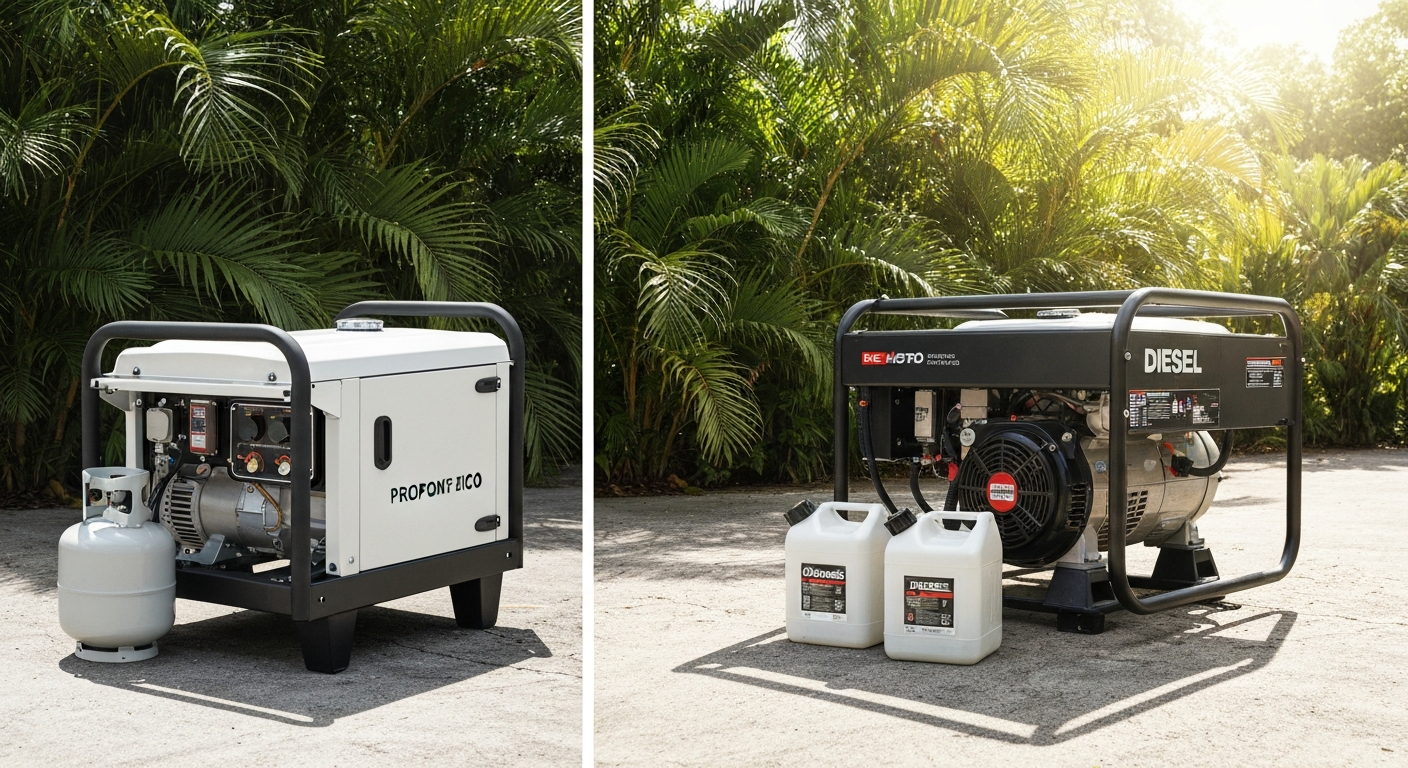
- For Tier 1 and 2 coverage (recommended minimum for Puerto Rico): Propane stove and water heater ($800 to $3,000) plus small propane generator with 250-gallon tank ($10,000 to $15,000). Covers all critical needs. Generator powers refrigeration and essential loads. Propane stove and water heater work independently.
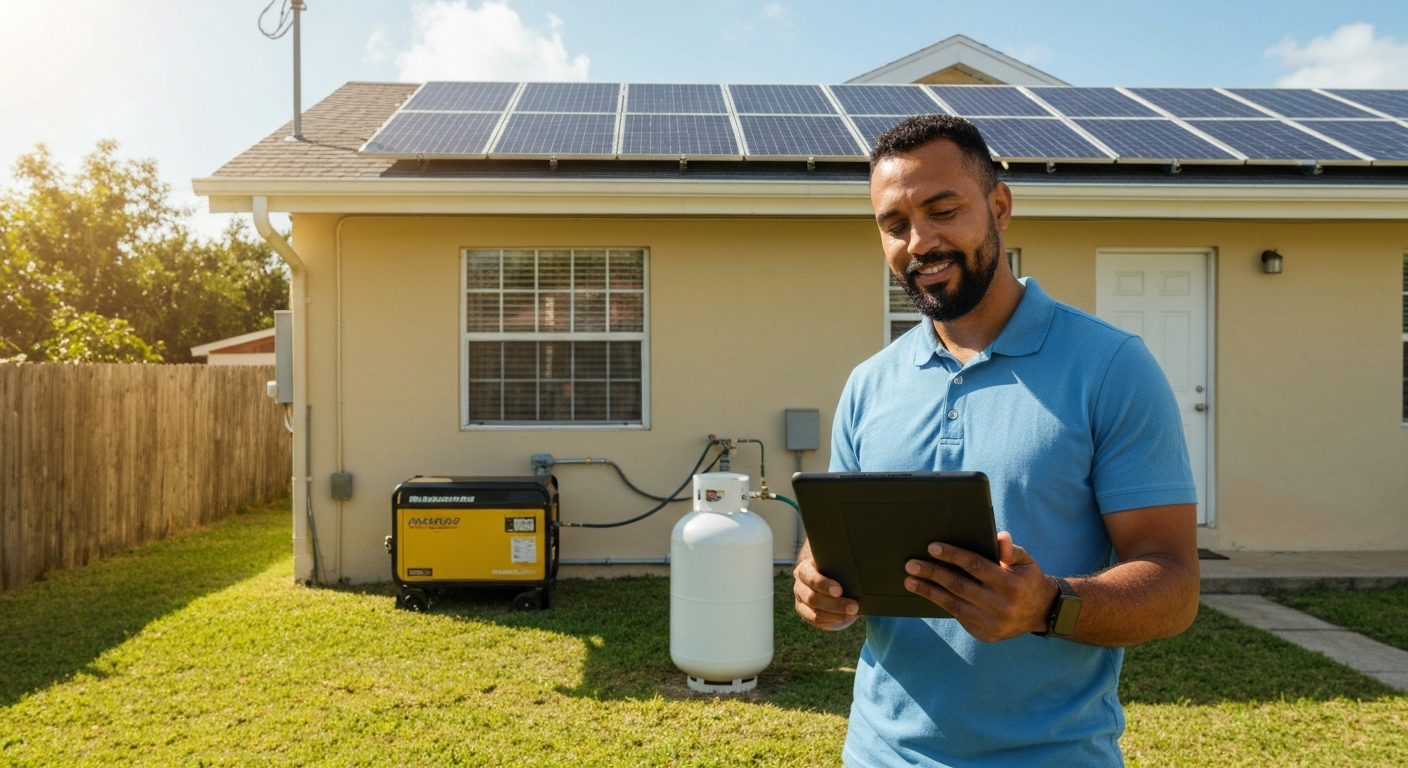
- For complete Tier 1, 2, and 3 coverage: Solar panels plus battery plus propane generator with 500-gallon tank ($25,000 to $45,000). Complete system covers all household needs, reduces monthly AEE bill dramatically, and provides extended outage independence.
Step 4, Size Your Propane System Correctly
Propane system sizing depends on two variables: your generator's power output and your desired outage duration goal.
| Outage Duration Goal | 10 kW Generator | 20 kW Generator | 30 kW Generator |
|---|---|---|---|
| 3 days | 120 gallons | 250 gallons | 375 gallons |
| 7 days | 280 gallons | 500 gallons | 750 gallons |
| 14 days | 560 gallons | 1,000 gallons | 1,500 gallons |
For most Puerto Rico residential applications, a 500-gallon tank with a 20 kW generator provides the right balance of coverage and cost for a 7-day target, which covers most non-catastrophic outage events.
⚡ Start building your plan today
Get a free site evaluation and let our engineers design the right system for your home.
Call 787-641-8002Step 5, Build Your Plan in Phases
You do not need to implement your complete energy resilience plan immediately. A phased approach lets you start with the highest-value actions and expand over time.
- Phase 1 (immediate, lowest cost): Convert water heater and stove to propane ($800 to $3,000). Annual savings: $300 to $500. Outage protection: cooking and hot water independence.
- Phase 2 (within 1 year): Install 250-gallon propane tank and 10 kW standby generator ($10,000 to $15,000). Outage protection: full home backup for 4 to 6 days.
- Phase 3 (within 3 years): Upgrade to 500-gallon tank and 20 kW generator ($5,000 to $8,000 incremental). Outage protection: full home backup for 6 to 7 days.
- Phase 4 (optional): Add solar panels and battery storage ($15,000 to $25,000). Benefit: reduced AEE bills and clean energy integration.
Step 6, Maintain Your System Year-Round
A resilience plan that is not maintained is not actually resilient. Annual maintenance requirements for your propane system: Annual professional inspection by Tropigas certified technician, scheduled each May before hurricane season. Generator annual service including oil change, filter replacement, spark plugs, and full-load test. Tank top-off to maximum capacity before June 1. Transfer switch test to confirm automatic activation. Review of Tropigas emergency delivery contact information (787-641-8002).
Frequently Asked Questions
Ing. Rodolfo Leo Quiñones
Operations, Sales and Export Manager , Tropigas / Tropigas SXM
Expert in propane energy systems, NFPA compliance, and industrial gas logistics in Puerto Rico and the Caribbean.