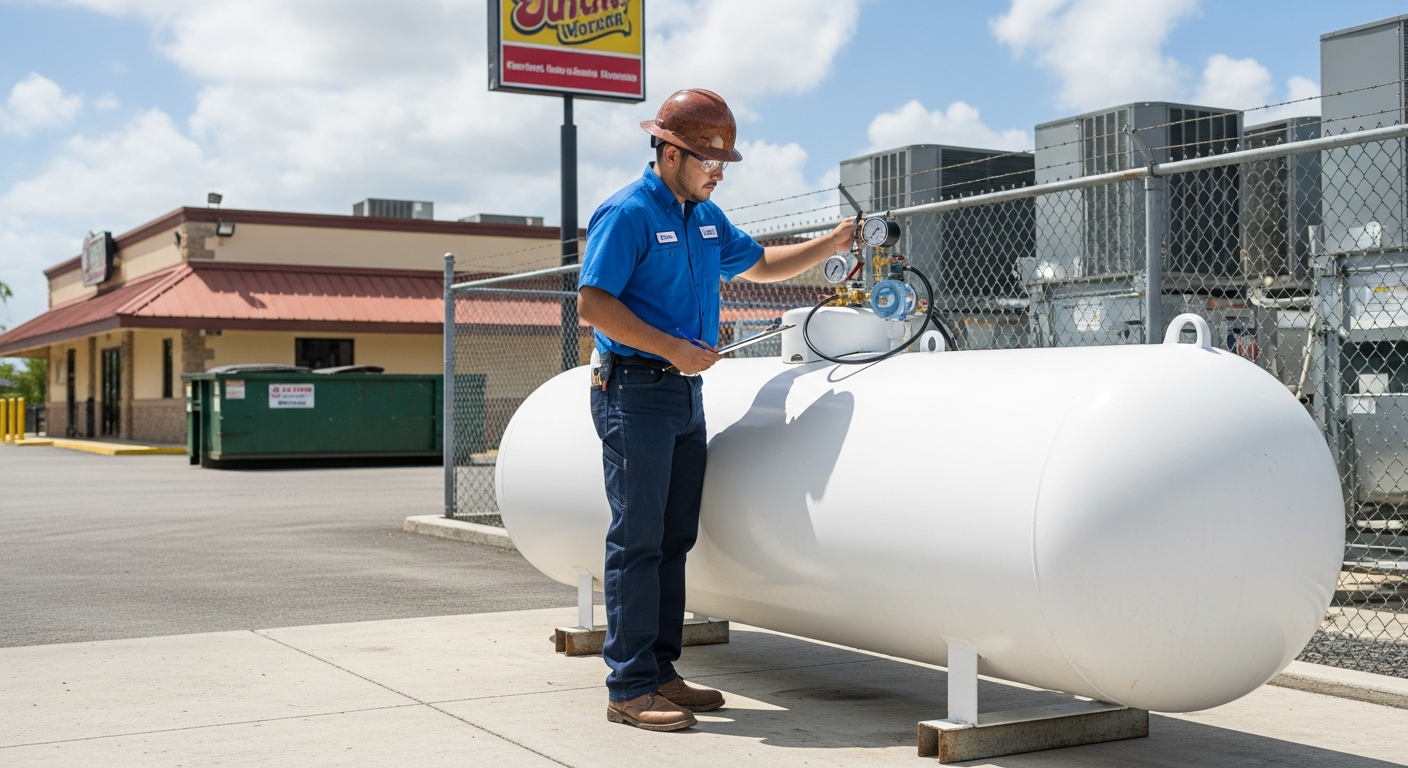
How do businesses maintain commercial propane systems in Puerto Rico, and what should be inspected? Commercial propane equipment runs continuously and under high demand. Without regular maintenance, tanks, regulators, piping, and appliances degrade, creating safety risks and operational disruptions. A consistent maintenance program protects your business, your employees, and your customers. This guide explains what commercial propane maintenance includes in Puerto Rico.
For commercial propane maintenance service in Puerto Rico, call Tropigas at 787-641-8002.
Why Commercial Propane Maintenance Matters
Commercial propane systems handle higher volumes, higher pressures, and more demanding duty cycles than residential systems. Without maintenance, small issues become major problems: leaks develop at connections, regulators drift out of spec, appliances burn inefficiently, safety devices fail to operate, and code compliance lapses.
Regular maintenance catches problems early, extends equipment life, ensures efficient operation, and protects against catastrophic failures.
What Should Be Inspected
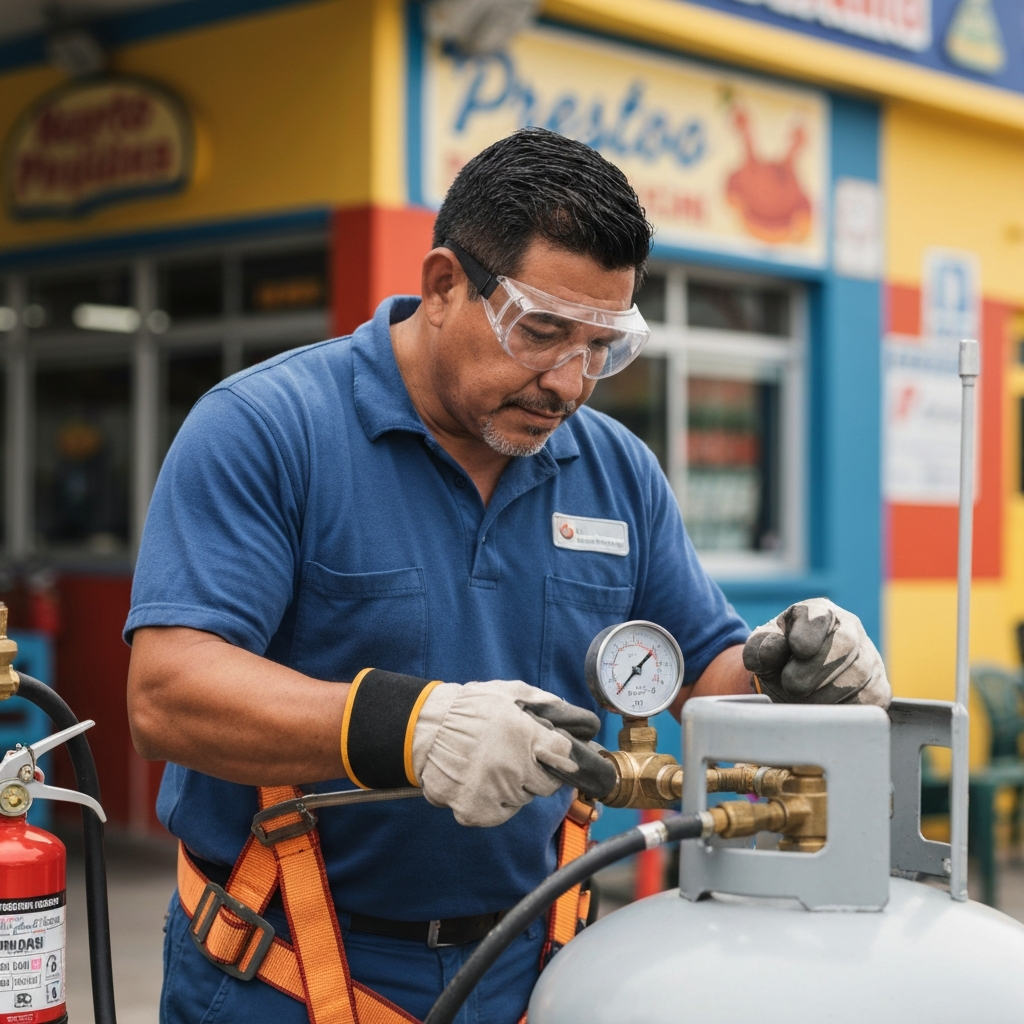
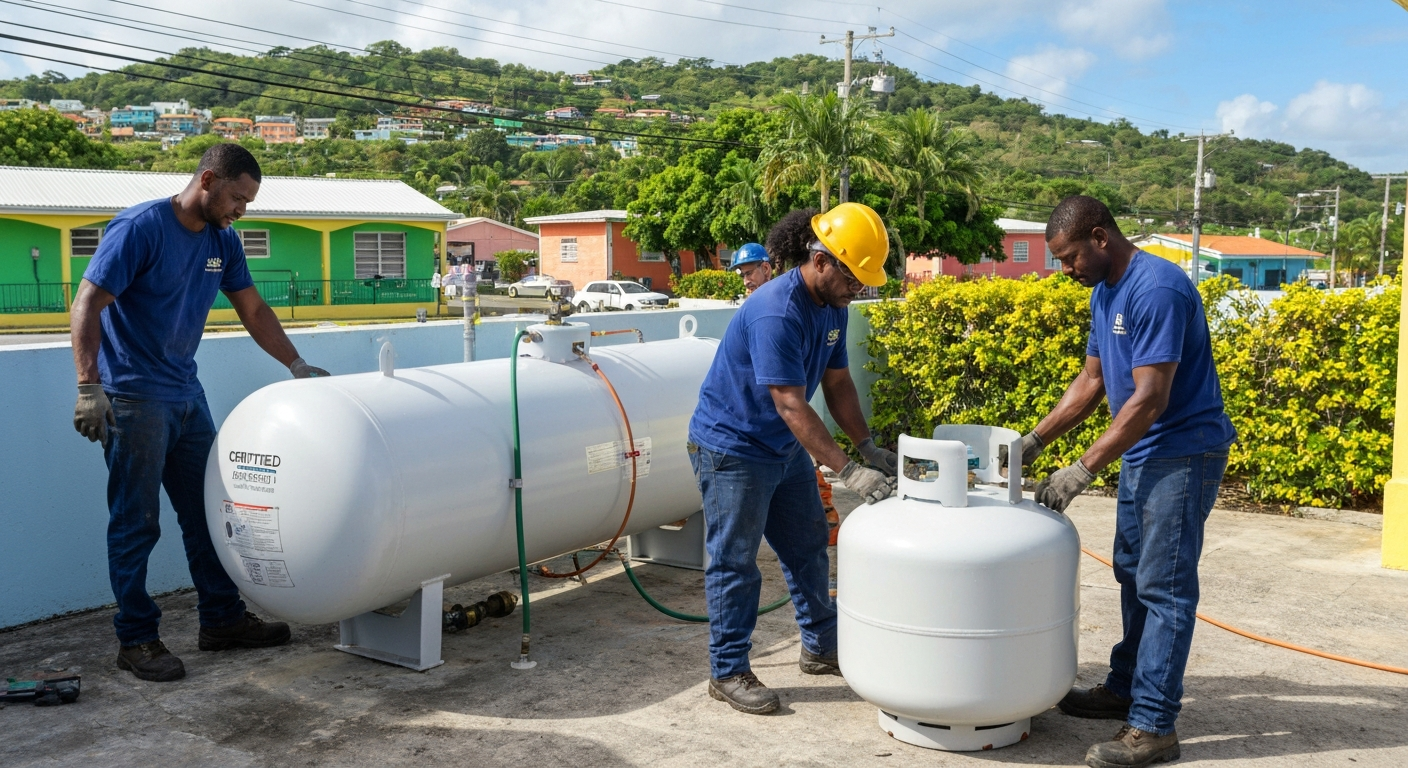
A complete commercial propane maintenance inspection covers: the tank itself for damage, corrosion, and markings, pressure relief valves for proper operation, regulators for pressure consistency, piping and connections for leaks, emergency shutoff valves for accessibility and function, appliance combustion for efficiency, venting systems for blockage and proper draft, gas detection systems where installed, and overall code compliance.
Each item has specific test procedures and documentation. Tropigas works with certified technicians who handle the complete scope. Call 787-641-8002.
Maintenance Frequency for Commercial Systems
Commercial propane systems should be inspected professionally at minimum annually. Higher-usage or higher-risk operations may require more frequent inspection: restaurants and food service typically benefit from semi-annual checks, hospitals and healthcare facilities may require quarterly or more frequent inspection, industrial operations have inspection schedules driven by code and insurance requirements, and any system with historical issues should be inspected more frequently.
Tropigas helps establish the right inspection schedule for your operation. Call 787-641-8002.
What Maintenance Records to Keep
Documentation is critical for commercial propane maintenance: dates of inspections and what was checked, any deficiencies found and corrective actions, pressure tests and leak tests with results, parts replaced and component serial numbers, certifications of personnel performing work, and any incidents or near-misses.
These records support code compliance, insurance claims, and operational continuity. Maintain them in a dedicated facility file.
Signs Your Commercial Propane System Needs Service
Even between scheduled inspections, watch for these signs that immediate service is needed: any smell of propane (rotten egg or skunk), hissing sounds near tanks, regulators, or piping, yellow flames on appliances that should burn blue, soot buildup on appliances or in venting, unexpected drops in tank level, frost or condensation on regulators during normal operation, and pilot lights that will not stay lit.
If any of these appear, call 787-641-8002 immediately. Do not wait for the next scheduled inspection.
Maintenance and Insurance Requirements
Most commercial property and business insurance policies require documented maintenance of propane systems. Skipping inspections can void coverage in the event of an incident. Insurance carriers may also require specific testing intervals or certified technicians.
Tropigas helps you meet insurance and code documentation requirements. Call 787-641-8002.
Frequently Asked Questions
Ing. Rodolfo Leo Quiñones
Gerente de Operaciones, Ventas y Exportaciones
Expert in propane energy systems, NFPA compliance, and industrial gas logistics in Puerto Rico and the Caribbean.