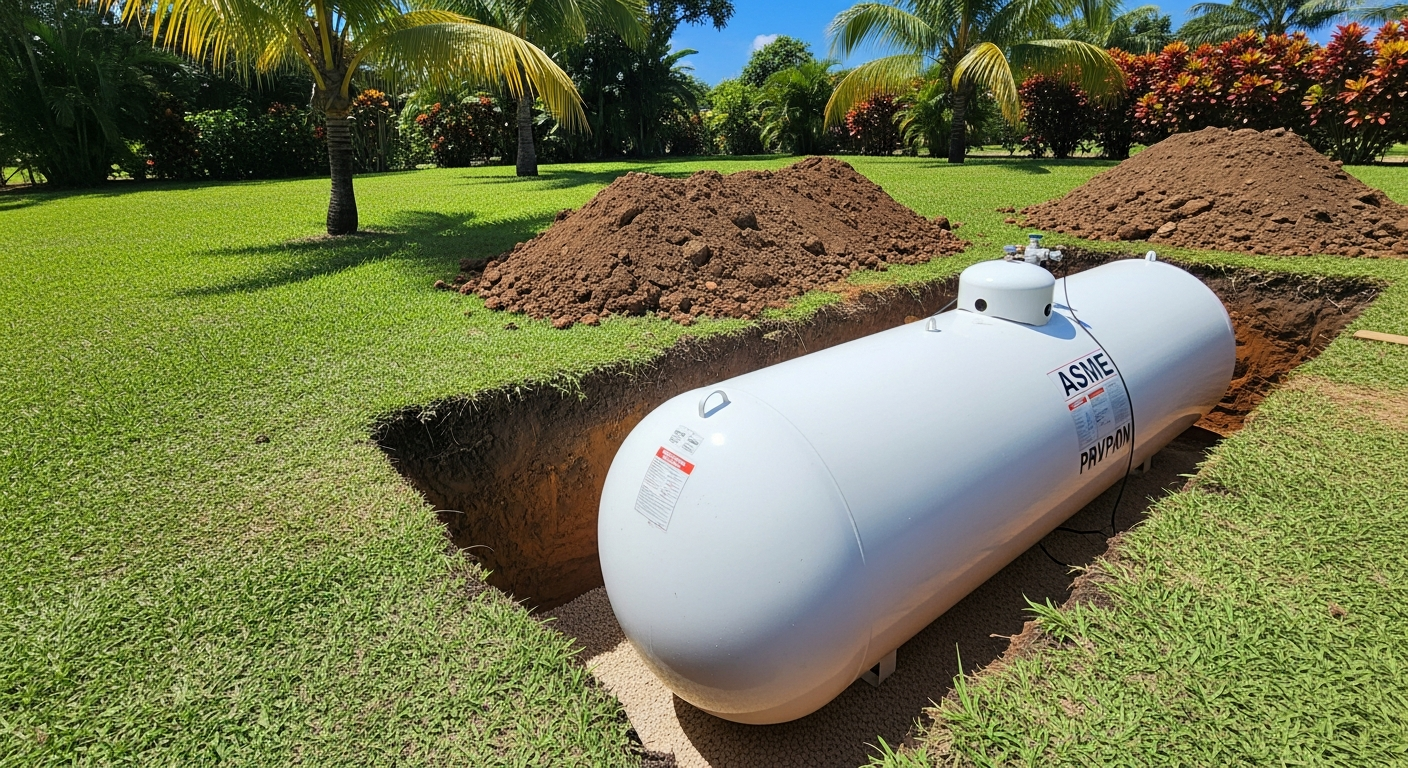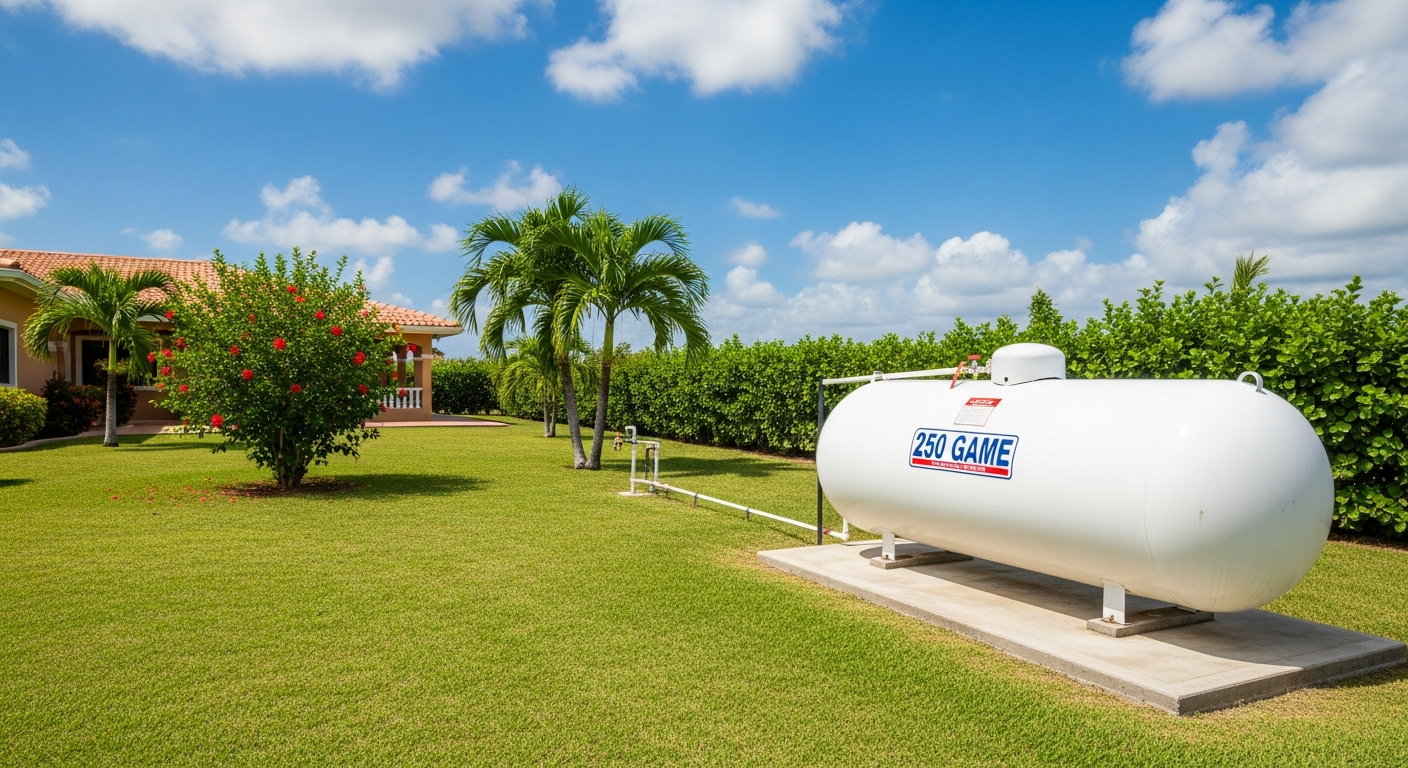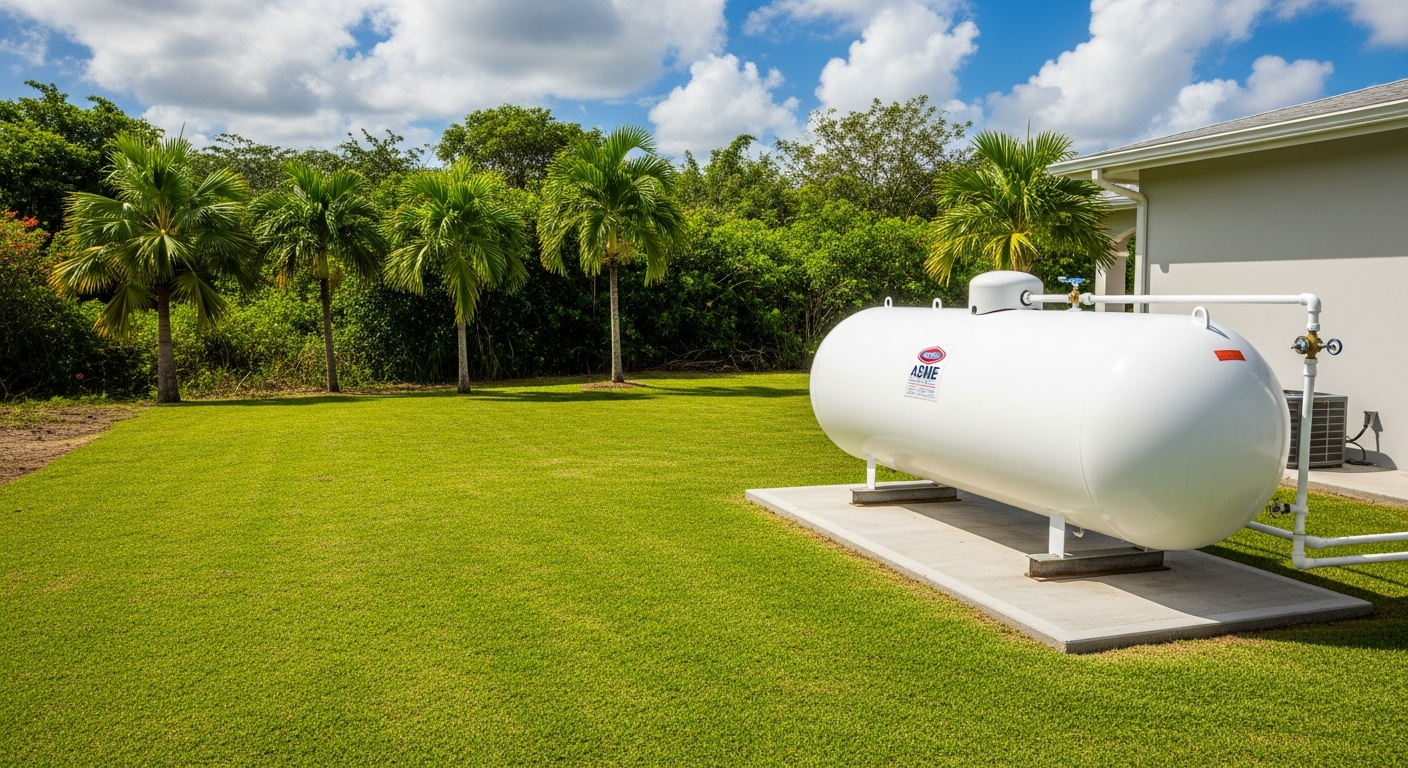
What is an aboveground propane tank, and why is it the most common installation type in Puerto Rico? An aboveground propane tank is a horizontal or vertical ASME pressure vessel installed on a concrete pad at grade level, visible on the property. Aboveground tanks are the standard installation for residential and commercial properties across all 78 municipalities because they are less expensive to install, easier to inspect and service, simpler to refill, and faster to permit than underground tanks. This guide explains aboveground propane tank options, clearance requirements, and best practices for Puerto Rico properties.
For aboveground propane tank service in Puerto Rico, call Tropigas at 787-641-8002.
What Is an Aboveground Propane Tank
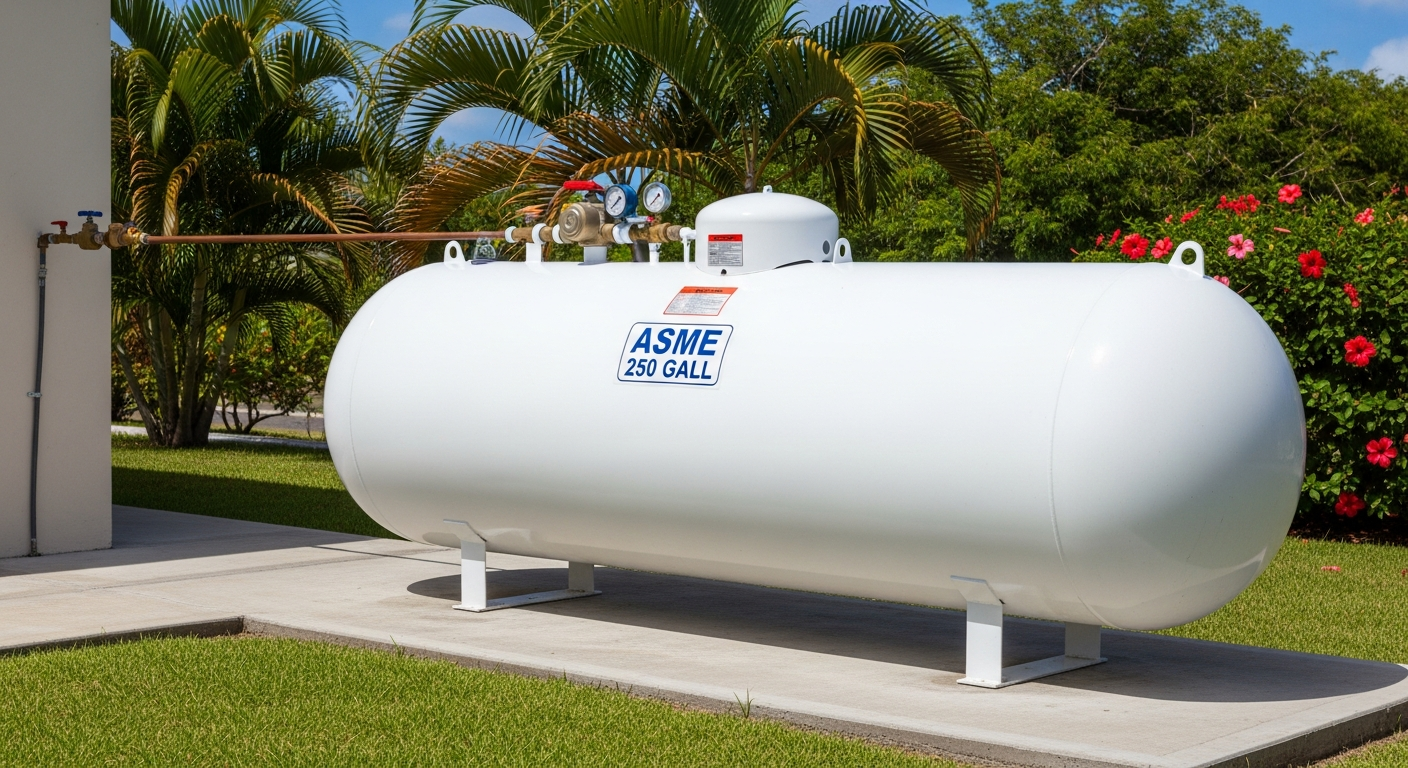
An aboveground propane tank is an ASME-certified steel pressure vessel installed at grade level on a concrete pad, fully visible on the property. Horizontal tanks (250 gallon, 500 gallon, 1000 gallon and larger) sit on two steel saddles on a concrete foundation. Vertical tanks (20 lb, 100 lb, 420 lb Fatboy) stand upright on their base on a concrete pad or flat surface. All aboveground tanks have service valves, a regulator, and a pressure gauge accessible at the top of the tank.
In Puerto Rico, aboveground tanks are the overwhelming majority of residential and commercial propane installations because of their practical advantages and lower cost.
Advantages of Aboveground Propane Tanks
Aboveground propane tanks offer several important advantages over underground installations: lower installation cost with no excavation or cathodic protection required, easier visual inspection at every refill, simpler leak detection since the tank and connections are visible, faster NTSP permit process with less complex documentation, easier and less expensive relocation if property needs change, no cathodic protection system to maintain and test, and direct access to all valves and connections for service and maintenance.
For most Puerto Rico property owners, aboveground is the practical choice. Call 787-641-8002.
NFPA 58 Clearance Requirements for Aboveground Tanks
Aboveground propane tank installations must meet minimum clearance requirements under NFPA 58. For tanks up to 500 gallons, the minimum clearance from any building opening (window, door, or vent) or ignition source is 10 feet. For tanks of 1000 gallons, the minimum clearance from buildings and property lines increases to 25 feet. These clearances must be documented in the NTSP permit application and verified during inspection before first fill.
Tropigas assesses every site before installation to confirm clearance compliance. Call 787-641-8002.
Concrete Pad Requirements
Every aboveground propane tank in Puerto Rico must be installed on a level concrete pad that provides a stable, non-settling foundation. The concrete pad must be sized to fully support the tank and saddles, be level to prevent tank movement, be of adequate thickness and strength for the tank weight when full, be positioned within the clearance-compliant zone, and be accessible to the delivery truck.
For horizontal tanks, the concrete pad also supports the steel saddles that hold the tank at the correct height for service and delivery connections. Call 787-641-8002 for installation guidance.
Aboveground vs Underground in Puerto Rico
The choice between aboveground and underground depends on your priorities and property. For most property owners in Puerto Rico, aboveground is the right choice because it costs significantly less to install, is easier to inspect and maintain, is faster to permit through the NTSP, and is simpler to service over the life of the installation. Underground is appropriate when property aesthetics are the primary concern and the higher cost is acceptable.
Call 787-641-8002 to discuss which option fits your property and budget.
Aboveground Tank Maintenance
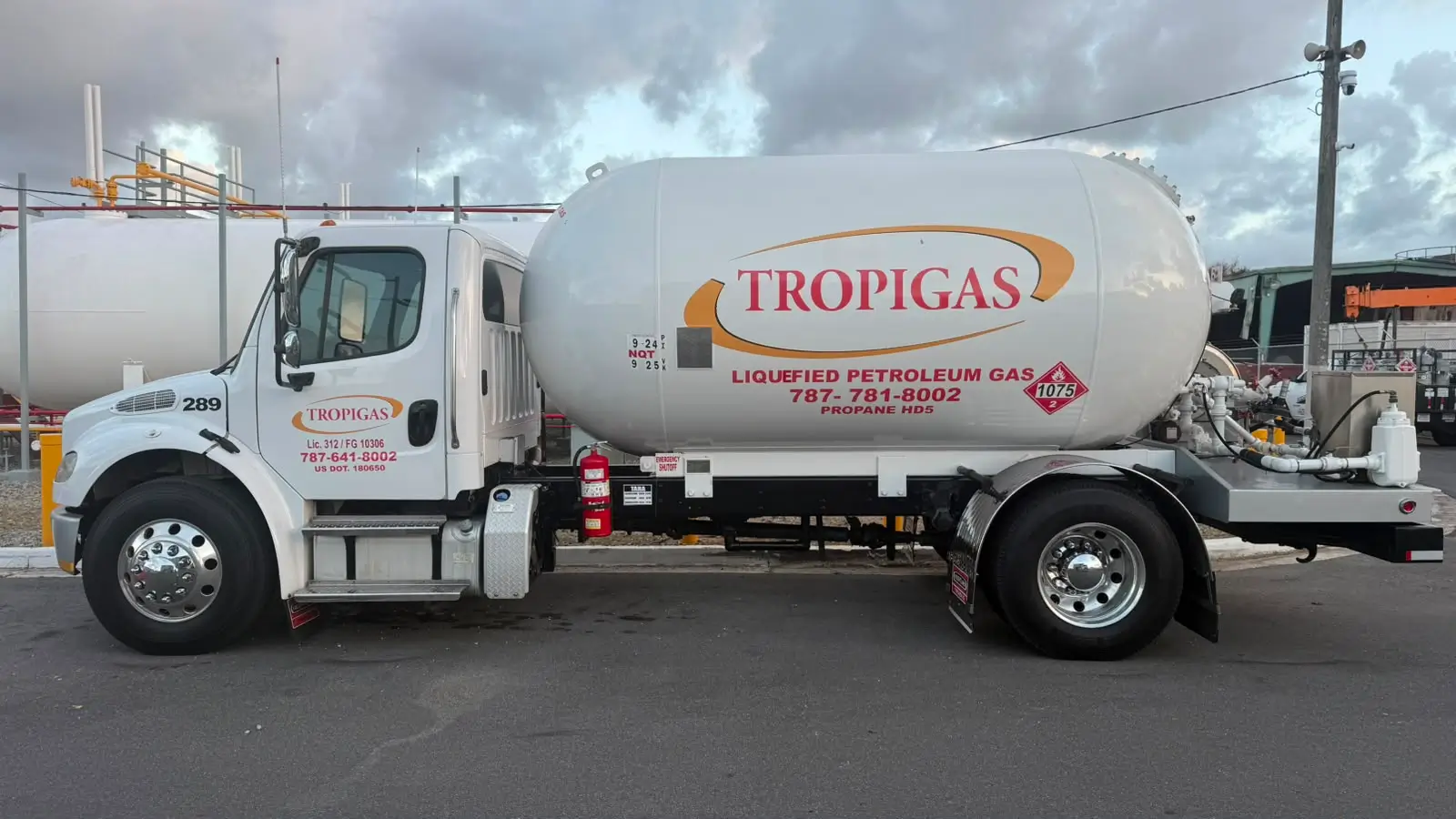
Aboveground propane tanks benefit from visual inspection at every Tropigas delivery. Our technicians check for visible corrosion on the tank exterior, condition of the service valve and regulator, integrity of the gas piping connections, condition of the concrete pad and saddles, and any vegetation or debris that has accumulated near the tank.
Keeping the area around the tank clear, the tank painted or protected from rust, and the connections leak-free extends the service life of the installation. Call 787-641-8002 for maintenance questions.
Frequently Asked Questions
Ing. Rodolfo Leo Quiñones
Gerente de Operaciones, Ventas y Exportaciones
Expert in propane energy systems, NFPA compliance, and industrial gas logistics in Puerto Rico and the Caribbean.